
Table of Contents
- 1. Moisture-wicking, quick-dry and breathability are different
- 2. What controls moisture-management performance?
- 2.1. Fibre choice
- 2.2. Yarn and knit structure
- 2.3. GSM, thickness and finishing
- 3. Why a “quick-dry” claim needs a test condition
- 4. Match the fabric to the activity
- 5. What to put in the supplier brief
- 6. Approval should happen on production-relevant material
Moisture-wicking and quick-dry are often written side by side on a fabric card. They are related, but they do not describe the same behaviour.
A fabric can spread sweat efficiently and still take time to dry. Another may release moisture quickly but leave a concentrated wet patch against the skin. For an activewear buyer, the useful question is not whether a fabric carries both labels. It is how the material handles moisture during the intended activity, after dyeing and finishing, and after repeated laundering.
That distinction matters as brands ask for lighter constructions, softer hand feel and less visible sweat without giving up durability. Moisture management now has to work as part of the whole fabric, not as an isolated finish.
Moisture-wicking, quick-dry and breathability are different
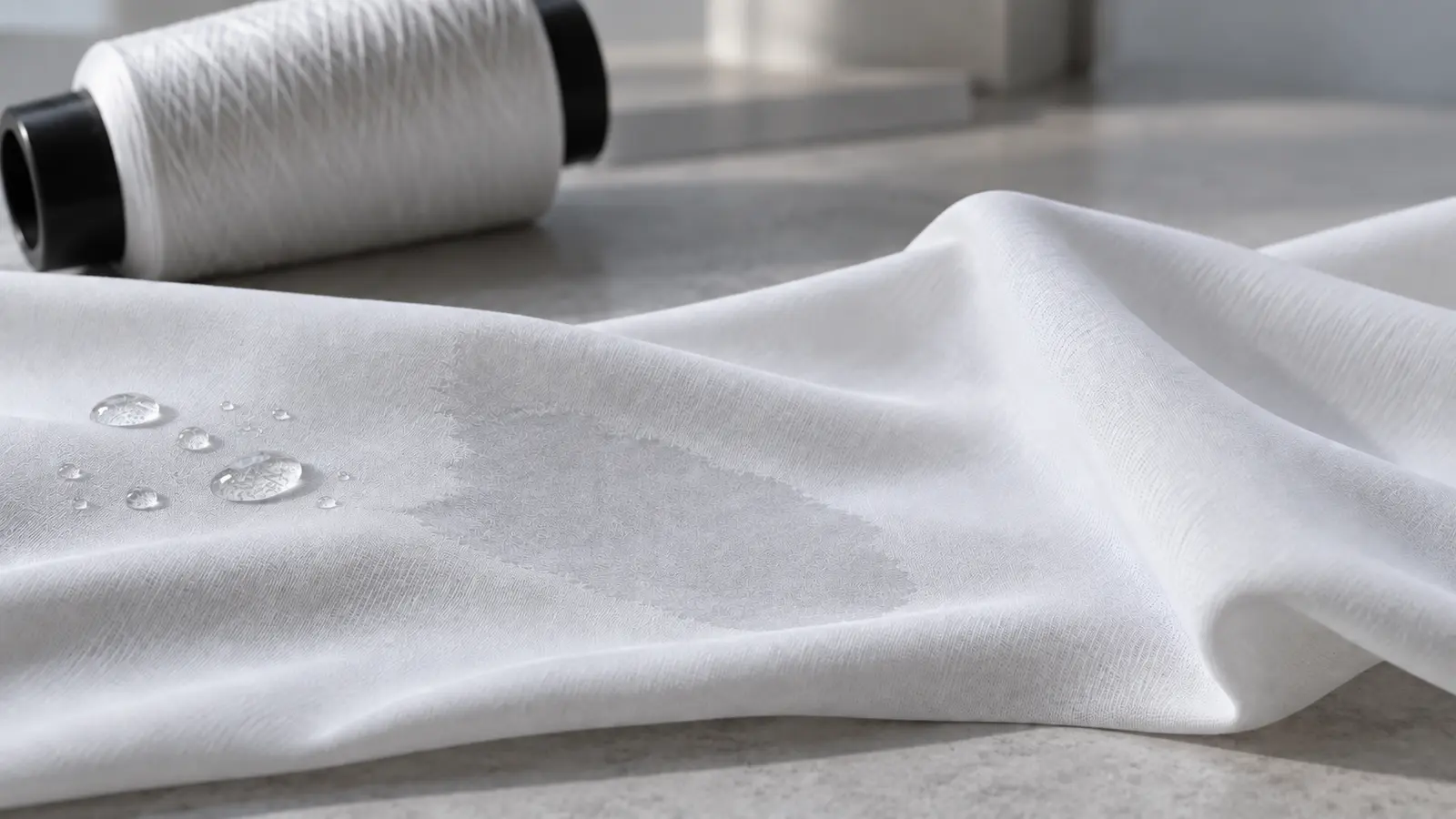
Moisture-wicking is the movement of liquid through or across a fabric, usually by capillary action. In sportswear, the aim is commonly to move sweat away from the skin-facing surface and spread it over a wider area.
Quick-dry describes how rapidly that moisture leaves the fabric under defined conditions. Fibre moisture regain, fabric mass, thickness, structure, airflow and finishing all affect the result.
Breathability is another property. It may refer to air permeability or water-vapour transmission, depending on the specification. A fabric that allows air to pass easily is not automatically good at moving liquid sweat.
These terms should therefore appear as separate requirements in a development brief.
What controls moisture-management performance?
Fibre choice
Polyester absorbs little moisture into the fibre itself, which can support fast drying when the yarn and construction are designed to move liquid. Nylon generally offers a smooth, soft hand and good strength, but its moisture behaviour differs from polyester. Spandex supplies stretch and recovery; increasing its proportion or changing how it is covered can also change fabric density and drying behaviour.
Composition alone is not enough to predict performance. Two fabrics with the same fibre percentages can behave differently because their yarn size, filament count, knit structure and finish are different. Our guide to activewear fibre blends explains why the blend should be read together with the construction.
Yarn and knit structure
Fine filaments create more surface area and more capillary pathways. Textured yarns can improve bulk and moisture transport, while engineered channels or a different inner and outer surface can encourage one-way movement.
Construction controls how close the yarns sit, how much air can circulate and how far liquid can spread. Jersey, interlock, pique and mesh should not be judged by the same expectation. Open structures may improve airflow, while compact double knits may offer better coverage and support.
GSM, thickness and finishing
Lower weight often helps a wet fabric dry faster because there is less material holding water, but it may also reduce coverage or change the way the garment hangs. A heavier fabric can still manage moisture well if its two surfaces are engineered for transport and evaporation. See activewear fabric GSM explained for the relationship between weight, density and coverage.
Brushing, softeners and other finishes can improve touch, but they may alter absorbency, spreading or drying time. A soft first sample is not enough. Performance should be checked on the approved colour and again after the agreed wash cycles.
Why a “quick-dry” claim needs a test condition
There is no useful universal statement such as “dries in ten minutes” without context. Results change with the amount of water applied, specimen size, temperature, humidity, airflow and test endpoint.
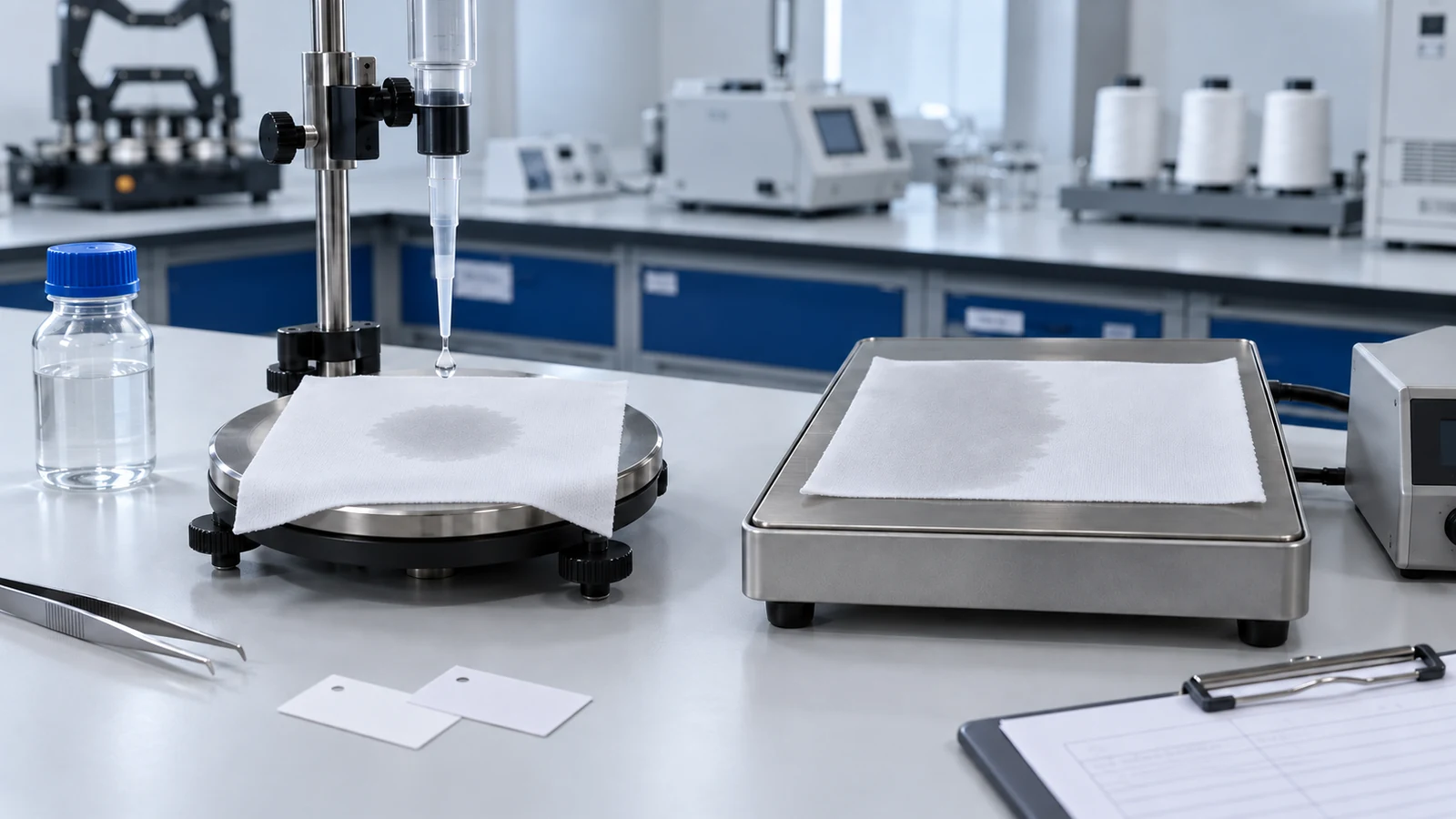
For moisture management, buyers may use methods that evaluate wetting time, absorption rate, spreading speed and one-way liquid transport. AATCC TM195 is one recognised method for liquid moisture management. AATCC TM217-2025 offers an image-analysis method for vertical and horizontal wicking. Drying behaviour can be assessed separately; AATCC TM201 is one method used to measure drying rate at elevated temperature.
The test method should be written into the specification together with the conditioning procedure, laundering stage and acceptance criteria. If a brand has an existing fabric that performs well in wear, testing that benchmark alongside the new development is often more useful than choosing an arbitrary pass value.
Match the fabric to the activity
The same moisture specification does not suit every garment.
Application | Development priority | Points to confirm |
|---|---|---|
Running and training tops | Fast spreading, low wet cling and efficient drying | Weight, airflow, wet appearance and odour-control requirements |
Yoga and Pilates | Soft hand, stretch recovery and comfort during lower-to-medium sweat levels | Brushing, opacity, recovery and wash durability |
Cycling and high-sweat training | Rapid transport in close-to-skin zones | Zonal construction, chafing risk, drying and seam placement |
Outdoor layers | Moisture transfer within a layered system | Drying under realistic temperature, abrasion and weather conditions |
For example, P61005 quick-dry polyester-spandex fabric is a 180 gsm option developed for sportswear and commuter applications, while N91022 ultralight nylon-spandex fabric is a 100 gsm construction intended for lighter hot-weather uses. They should not be compared by the quick-dry claim alone because the end use, weight and material balance are different.
What to put in the supplier brief
A workable moisture-management brief should include:
- garment type and activity level;
- skin fit, ease and key sweat zones;
- preferred fibre family and target GSM range;
- required stretch, recovery, coverage and hand feel;
- whether wicking, drying, air permeability or vapour transmission is the priority;
- test method, pre-treatment and acceptance level;
- colour range, especially dark or saturated shades where wet appearance matters;
- required performance after laundering;
- comparison sample or approved quality reference.
Avoid asking for “maximum wicking and fastest drying” without explaining the garment. A very light open knit may dry quickly but fail the required coverage. A dense brushed fabric may feel excellent for studio wear but retain more moisture than a training top. The right result is a controlled balance, not the highest number in every column.
Approval should happen on production-relevant material
Moisture performance can shift after dyeing, heat setting and finishing. Final approval should therefore use the selected colour, production-relevant finishing route and agreed fabric width. Check the laboratory report against a physical sample, then confirm comfort and wet cling in a garment trial where the programme allows.
At Cofinay, moisture-management development is reviewed together with composition, knitting, finishing, stretch, recovery and end use. If you are comparing quick-dry activewear fabrics, send the garment application, target weight, required test method and an existing benchmark. A clear starting point makes sampling faster and gives both teams a more reliable basis for approval.
Written by Amber, Cofinay Technical Team.
About Cofinay
With over 16 years of expertise, Cofinay is a premier manufacturer of high-end activewear fabrics, certified by global ecological standards. We specialize in engineering premium performance knits for yoga, tennis, equestrian, and golf. Backed by our self-operated vertical weaving and dyeing infrastructure, we provide complete end-to-end services to empower global activewear brands to scale.