
Table of Contents
- 1. The four fibers at a glance
- 2. Polyester: a stable base for many performance fabrics
- 2.1. Polyester is often considered for:
- 3. Nylon: smooth handfeel and close-to-body comfort
- 3.1. Nylon is often considered for:
- 4. Spandex: stretch is only part of the job
- 5. Recycled polyester: recycled content and performance are separate questions
- 6. How the fibers work together in a blend
- 6.1. Polyester + spandex
- 6.2. Nylon + spandex
- 6.3. Recycled polyester + spandex
- 7. What real specifications show
- 8. Why similar compositions can produce different fabrics
- 8.1. Yarn size and filament structure
- 8.2. Knit construction
- 8.3. Fabric weight
- 8.4. Gauge and density
- 8.5. Finishing
- 8.6. Dyeing and color
- 9. Moisture wicking is a fabric property, not a fiber label
- 10. Choosing a blend by garment use
- 10.1. Yoga and Pilates
- 10.2. Running, tennis and golf
- 10.3. Training leggings and supportive pieces
- 10.4. Brushed and cooler-weather activewear
- 11. How to specify a custom activewear fabric
- 12. A practical buyer checklist
- 13. Frequently asked questions
- 13.1. Is nylon better than polyester for activewear?
- 13.2. Does more spandex mean more compression?
- 13.3. Is recycled polyester lower in quality than virgin polyester?
- 13.4. Can fiber content tell me whether leggings will be squat-proof?
- 13.5. Can Cofinay customize certification and performance requirements?
- 14. The right blend starts with the garment brief
The composition line on a fabric specification sheet looks simple: 77% polyester, 23% spandex; 80% nylon, 20% spandex; or perhaps 75% recycled polyester, 25% spandex.
It is useful information, but it is not a complete performance description.
Two fabrics with similar fiber percentages can feel and behave very differently. One may be light, smooth and fluid. Another may feel dense, brushed and supportive. The difference comes from more than the names of the fibers. Yarn size, filament structure, knitting method, fabric weight, stretch direction, heat setting, dyeing and finishing all influence the result.
This guide explains what polyester, nylon, spandex and recycled polyester usually contribute to an activewear fabric—and what buyers should confirm before choosing a blend for a garment.
The four fibers at a glance
Fiber | Common role in activewear | What it does not guarantee on its own |
|---|---|---|
Polyester | Stability, durability, shape retention, color clarity and relatively fast drying | Moisture wicking, softness, breathability or compression |
Nylon | Smooth handfeel, flexibility, abrasion resistance and a refined surface | Opacity, quick drying, cooling or recovery |
Spandex | Stretch and recovery | Support, durability, opacity or a specific compression level |
Recycled polyester | A recycled-content alternative within the polyester family | Certification, traceability or equal performance without validation |
The practical point is straightforward: fiber content describes the ingredients, not the finished performance.
Polyester: a stable base for many performance fabrics
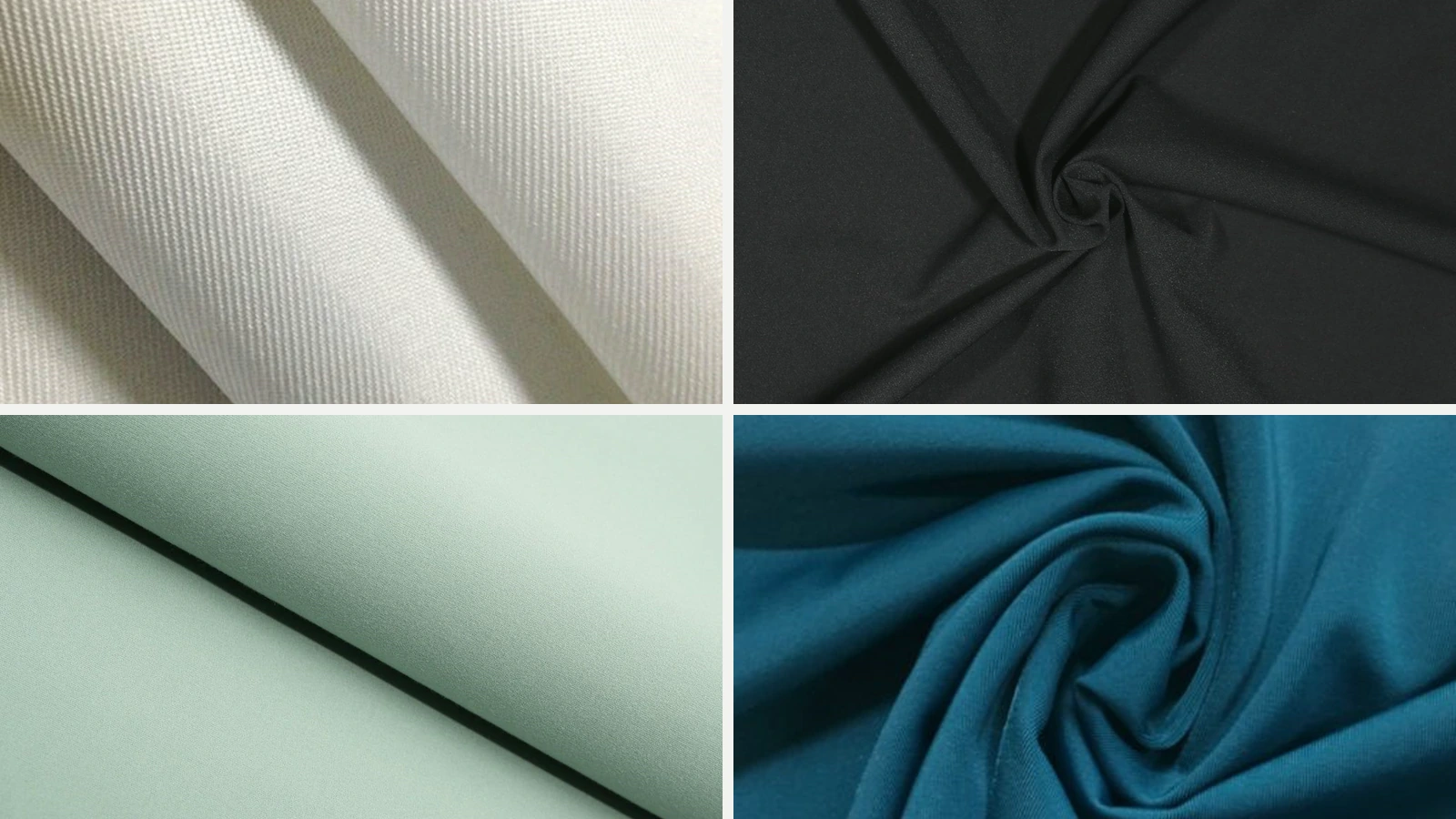
Polyester is widely used in activewear because it can provide a stable framework for the knitted fabric. It is commonly selected when the brief calls for good dimensional stability, durable color, wrinkle resistance and reliable everyday wear.
Because polyester absorbs relatively little moisture into the fiber itself, it can dry efficiently under suitable conditions. However, this should not be confused with automatic moisture-wicking performance. Moving perspiration away from the skin depends on the yarn cross-section, capillary spaces in the knit, fabric density and any applied moisture-management finish.
Polyester can also be engineered into very different tactile directions. A fine-denier construction may feel smooth and light. Brushing or sanding can create a softer, warmer surface. A dense, heavier knit can provide more coverage and a firmer hand.
In the Cofinay catalog, polyester-spandex constructions range from lighter 180 GSM options to fleece and supportive fabrics above 300 GSM. That range is a useful reminder that “polyester blend” is a broad category rather than one fixed type of fabric.
Polyester is often considered for:
- training tops and leggings;
- tennis and golf apparel;
- running and cycling garments;
- athleisure and commuter styles;
- brushed or warmer seasonal activewear;
- products requiring clear, repeatable color development.
Nylon: smooth handfeel and close-to-body comfort
Nylon is frequently chosen for premium yoga, Pilates and next-to-skin garments because it can produce a smooth, supple surface. Fine nylon yarns are often used when the desired handfeel is soft, fluid or “naked-feel” rather than crisp.
Nylon is also valued for abrasion resistance, which can be useful in garments exposed to repeated friction. Its moisture behavior differs from polyester: nylon can absorb more moisture into the fiber, so drying performance should be assessed in the complete fabric rather than assumed from the composition.
Color, luster and touch will also change with yarn selection, fabric construction and dyeing. A nylon-spandex interlock intended for leggings will not behave like a lightweight nylon jersey even when their percentages appear close.
Nylon is often considered for:
- yoga and Pilates leggings;
- sports bras and fitted tops;
- premium studio-to-street garments;
- lightweight stretch layers;
- products where a smooth surface and flexible hand are priorities.
Spandex: stretch is only part of the job
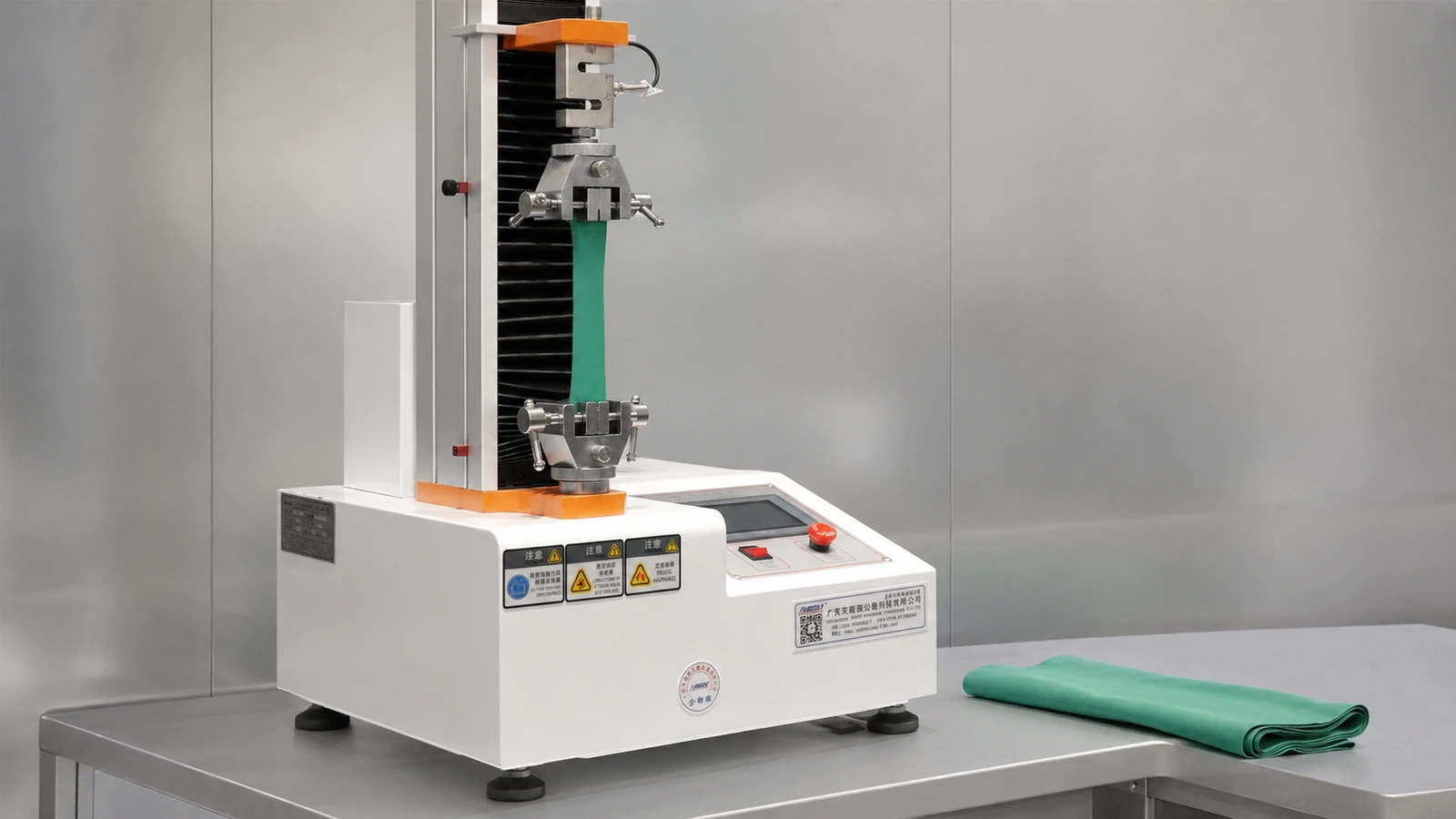
Spandex—also called elastane—is added to help a fabric extend and return toward its original dimensions. It is central to fitted activewear, but the percentage alone cannot predict how supportive a garment will feel.
A fabric containing 30% spandex is not automatically more compressive than one containing 20%. Perceived support also depends on:
- fabric weight and thickness;
- knitting density and loop structure;
- yarn tension during knitting;
- how the spandex is distributed in the construction;
- width and stretch balance;
- heat-setting conditions;
- pattern shape and garment fit.
Higher spandex content can increase stretch potential, but it may also affect dyeing, cost, cutting, sewing and long-term dimensional behavior. The right level is the one that works with the full construction and the intended garment—not simply the highest percentage available.
For development work, buyers should define the expected stretch direction, extension range, recovery, holding power and end use. Those requirements are more useful than asking for “high stretch” without a test method or target.
Recycled polyester: recycled content and performance are separate questions
Recycled polyester belongs to the same polymer family as virgin polyester, but its feedstock and processing route include recovered material. In activewear, it can be used as the main fiber and combined with spandex to create stretch fabrics for leggings, tops, outdoor layers and everyday performance garments.
The use of recycled polyester does not remove the need for normal fabric development. Yarn quality, filament consistency, knitting conditions, dyeing, finishing and heat setting still determine the final handfeel and performance.
It is also important to separate two questions:
- How does the fabric perform? This is established through agreed physical and functional tests.
- How is the recycled content verified? This is established through an applicable certification and chain-of-custody process.
Cofinay is verified under the Global Recycled Standard (GRS) and can discuss the required recycled-content documentation and Transaction Certificate process for an eligible order. The exact certification scope, documentation route and timing should be confirmed during development and before bulk production. A recycled composition should not be presented as certified solely because the word “recycled” appears on a specification sheet.
See Cofinay’s sustainability and traceability information for the current certification workflow.
How the fibers work together in a blend
Most stretch activewear fabrics use a dominant base fiber with spandex added for elasticity. The base fiber establishes much of the surface character and handling, while spandex helps the construction move and recover.
Polyester + spandex
This combination can cover a wide range of uses, from lightweight quick-drying garments to dense leggings and brushed winter fabrics. Polyester contributes stability and color performance; spandex adds extension and recovery. The final result depends heavily on GSM, yarn and finish.
Nylon + spandex
This pairing is often selected when a smooth, soft or refined next-to-skin feel is important. It can be engineered for light flexibility or for denser, more supportive garments. Drying, opacity and compression still need to be checked on the finished fabric.
Recycled polyester + spandex
This blend can provide a recycled-content route for activewear that still requires stretch. It should be developed with the same attention to handfeel, recovery, color, dimensional stability and garment construction as a virgin-polyester blend. Traceability requirements should be written into the order specification from the beginning.
What real specifications show
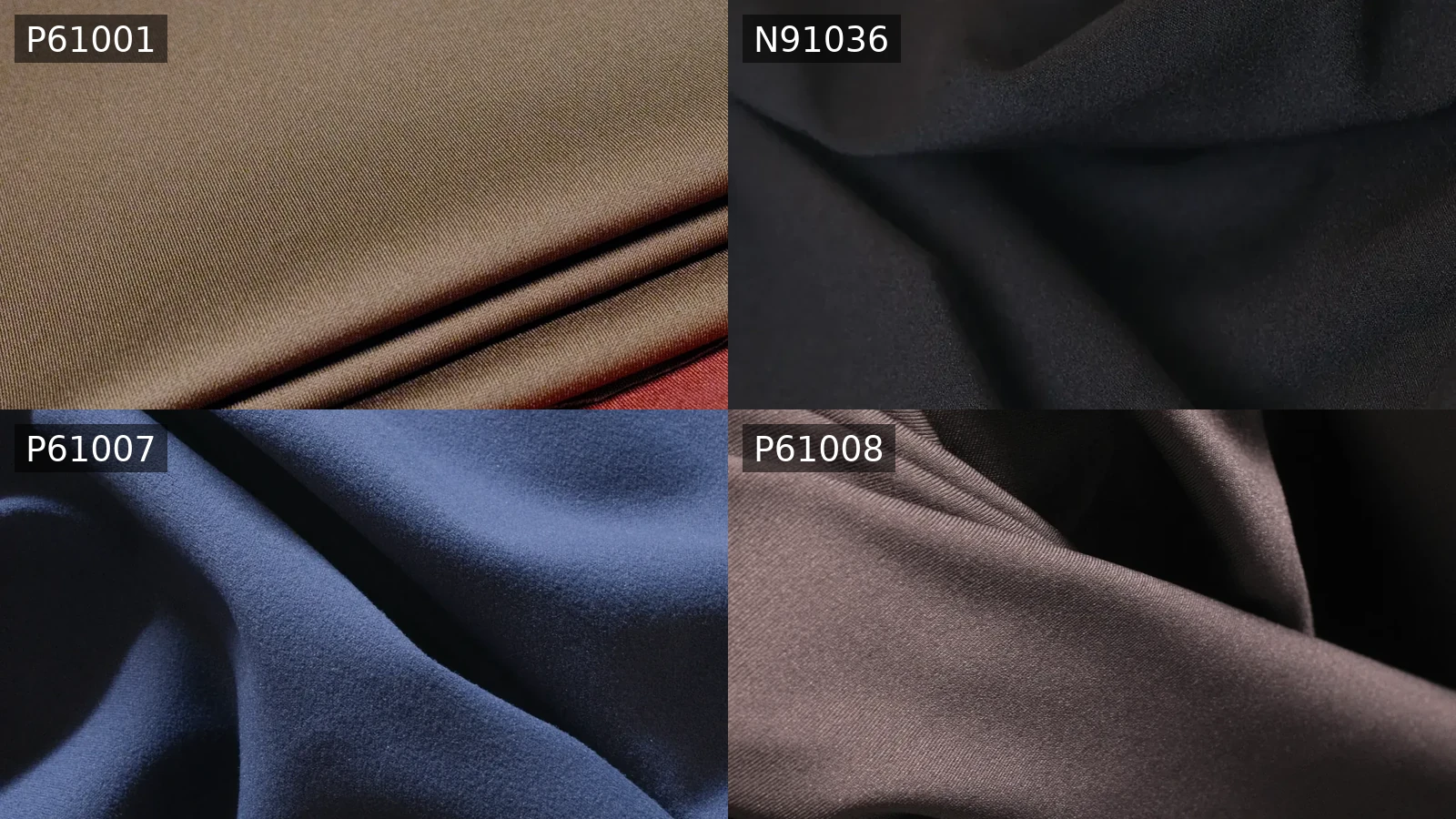
The following products from the Cofinay catalog illustrate how composition and weight can be combined in different ways. They are examples of available constructions, not universal formulas for every application.
Example | Composition | Weight | What the specification indicates |
|---|---|---|---|
77% polyester / 23% spandex | 300 GSM | A heavier polyester-spandex option intended for applications where coverage and a more substantial structure are relevant | |
80% nylon / 20% spandex | 230 GSM | A midweight nylon-spandex construction developed around a smoother, close-to-body handfeel | |
70% recycled polyester / 30% spandex | 220 GSM | A recycled-polyester blend with a relatively high spandex content for stretch-led activewear development | |
75% recycled polyester / 25% spandex | 180 GSM | A lighter recycled-polyester construction suited to projects where lower fabric weight is part of the brief |
These four examples also show why buyers should read composition and GSM together. Even then, the numbers do not fully describe surface feel, stretch force, recovery, opacity or moisture management. A physical swatch remains essential.
Browse the current Cofinay activewear fabric catalog for additional constructions.
Why similar compositions can produce different fabrics
When two specifications list the same fibers, compare the following variables before treating them as substitutes.
Yarn size and filament structure
Fine yarns can create a smoother or lighter surface. Different filament counts and yarn shapes change coverage, touch and the paths through which liquid can move.
Knit construction
Jersey, interlock, rib, pique, mesh and warp-knit structures do not stretch, drape or ventilate in the same way. Construction can change the fabric more noticeably than a small difference in fiber percentage.
Fabric weight
GSM influences substance, coverage and seasonal use, but it is not a direct measurement of compression or opacity. A dense 220 GSM fabric may offer different coverage from a more open 250 GSM construction.
Gauge and density
High-gauge, closely controlled knitting can create a refined surface and more uniform appearance. Density also affects air permeability, stretch resistance and coverage.
Finishing
Brushing, sanding, softening, moisture-management treatments and heat setting can change handfeel and behavior. Some finishes are durable; others may reduce over repeated laundering. The required test method and wash cycle should therefore be agreed before a performance claim is approved.
Dyeing and color
Dark colors, pale colors and high-saturation shades may behave differently during dyeing and finishing. The effect of color on stretch, crocking, colorfastness and appearance should be evaluated on the approved lab dip or sample lot.
Moisture wicking is a fabric property, not a fiber label
“Polyester is moisture-wicking” is a common shortcut, but it is incomplete.
Polyester does not absorb much moisture into the fiber. For sweat to move away from the skin, the fabric needs effective capillary pathways. These can be created by yarn geometry, filament arrangement, knit construction or a compatible finish. A dense polyester fabric without those features may feel less effective than a well-engineered nylon blend.
When moisture management matters, ask for a defined test and target instead of relying on a fiber name. The same applies to quick drying, cooling, antibacterial performance, UV protection and water resistance.
Choosing a blend by garment use
Yoga and Pilates
Priorities often include soft handfeel, four-way movement, recovery, opacity and comfort against the skin. Nylon-spandex is a common direction, but polyester-spandex and recycled-polyester blends can also work when their construction and finish meet the brief.
Running, tennis and golf
Lower weight, drying behavior, freedom of movement and surface durability may be more important than a heavily compressive feel. Fabric structure and garment ventilation should be considered alongside composition.
Training leggings and supportive pieces
Coverage, recovery, stretch force, seam behavior and dimensional stability matter. A higher GSM or spandex percentage can be relevant, but neither should be used as a substitute for sample testing and fit trials.
Brushed and cooler-weather activewear
Brushing can add warmth and a softer touch, while a denser construction can reduce airflow. Buyers should confirm pilling, shedding, recovery and appearance after laundering because the surface finish changes how the fabric wears.
How to specify a custom activewear fabric
Before development starts, a useful brief should include more than a target fiber composition. Cofinay’s technical team works with buyers to translate the intended garment, performance targets and commercial requirements into a practical fabric specification.
Depending on the project, the discussion may cover yarn ratios, knit structure, weight, width, stretch and recovery, handfeel, color, finishes, certification documents and the test methods used for approval.
The following points should be agreed where relevant:
• Intended garment and activity
• Target composition or acceptable composition range
• GSM and usable width
• Knit structure and surface finish
• Stretch direction, extension and recovery requirements
• Desired handfeel and level of support
• Opacity or coverage expectations
• Moisture-wicking and drying requirements
• Pilling and abrasion requirements
• Dimensional stability after laundering
• Colorfastness and crocking requirements
• UV protection, antibacterial, anti-odor or other functional targets
• Applicable test methods and pass/fail values
• Chemical compliance and market-specific restricted-substance requirements
• Recycled-content certification and Transaction Certificate requirements
• Sample, lab-dip and bulk-approval procedures
Certifications, functional finishes and special product requirements can be discussed as part of a custom project. Availability and final compliance depend on the selected yarn, construction, processing route, order scope, test method and certification pathway.
Requirements should be confirmed in writing and validated on the developed sample before bulk production. An existing fabric sample, garment reference or technical specification can also help the team understand the target more accurately.
These are development options, not a claim that one standard construction already satisfies every requirement. Each performance and compliance target must be confirmed for the specific project.
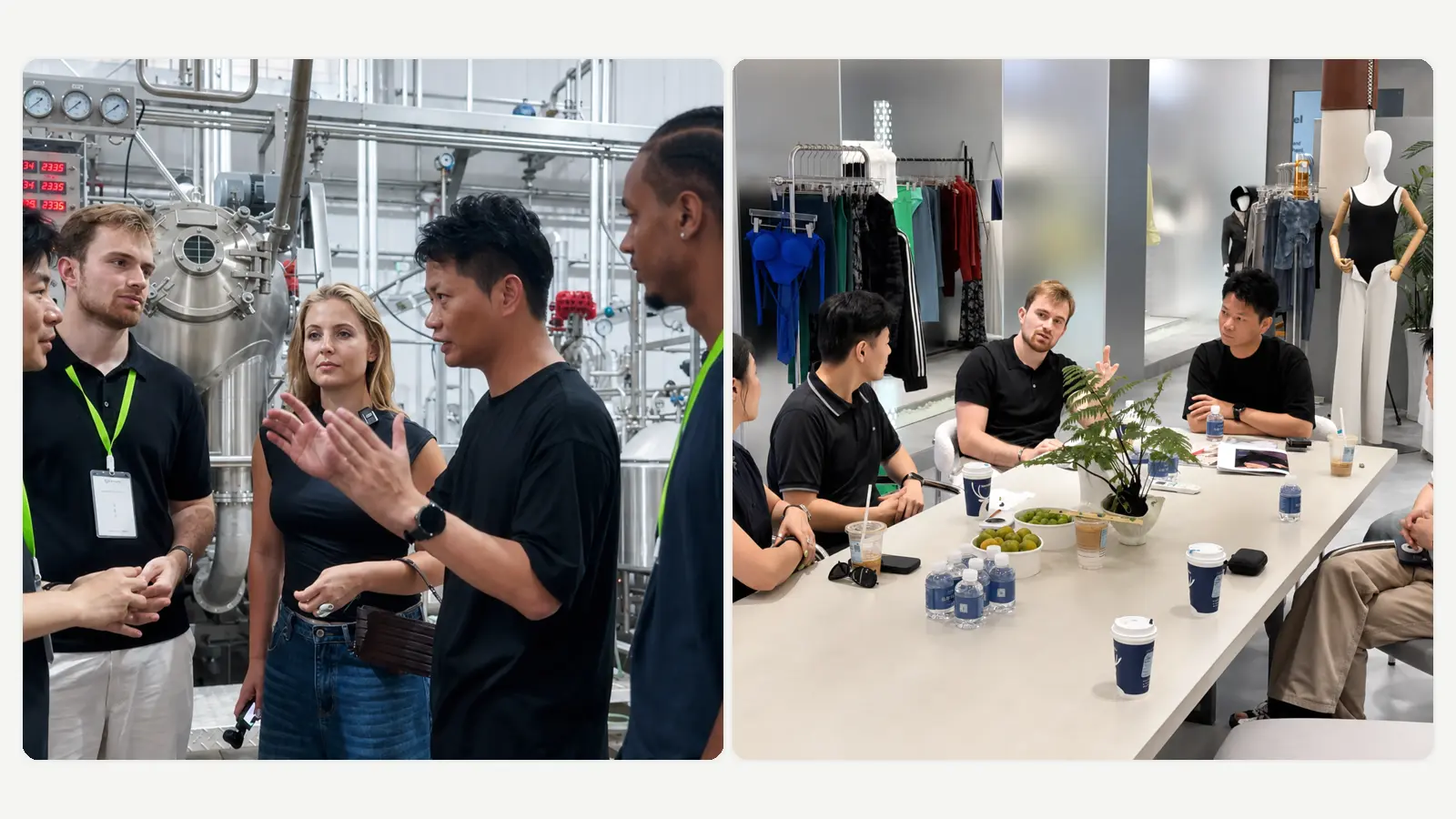
From production review to showroom discussion, Cofinay works with international buyers on project-specific activewear fabric requirements.
A practical buyer checklist
Before approving an activewear fabric, ask:
- Is the fiber composition verified on the current specification?
- What are the GSM, usable width and knit structure?
- Is the fabric tested in the final color and finish?
- What test method defines stretch and recovery?
- Has opacity been checked on the intended garment and color?
- Are moisture-wicking or quick-dry claims supported by an agreed test?
- What happens after repeated washing?
- Are pilling, abrasion and colorfastness targets written into the specification?
- Which certification documents are required for this order?
- Has the sewing factory tested cutting, seams and fit using the actual fabric?
Composition helps narrow the search. Approval should come from the full specification, a physical swatch, garment trials and the tests relevant to the intended market.
Frequently asked questions
Is nylon better than polyester for activewear?
Not in every application. Nylon is often chosen for a smoother, softer handfeel, while polyester is often chosen for stability, color clarity and efficient drying. Yarn, construction, weight and finishing can outweigh the general differences between the fibers.
Does more spandex mean more compression?
No. Spandex percentage affects stretch potential, but support also depends on fabric density, weight, construction, heat setting and garment fit. Compression should be evaluated on the finished fabric and garment.
Is recycled polyester lower in quality than virgin polyester?
Not necessarily. Recycled polyester can be developed for demanding activewear applications, but yarn quality and manufacturing control still matter. Performance and recycled-content verification should be assessed separately.
Can fiber content tell me whether leggings will be squat-proof?
No. Opacity depends on color, fabric density, structure, weight, stretch level and garment fit. It should be checked at the intended extension and in the actual color.
Can Cofinay customize certification and performance requirements?
Cofinay can discuss certification documentation, functional finishes, test items and special performance targets during product development. Feasibility and the final route must be confirmed for the selected construction and order. Samples should be tested and approved before bulk production.
The right blend starts with the garment brief
Polyester, nylon, spandex and recycled polyester each bring useful characteristics to activewear. Their real value appears when the fiber choice is coordinated with yarn, knit construction, weight, finishing and garment design.
Rather than searching for one universally “best” percentage, start with the movement, handfeel, support, durability, care and compliance requirements of the garment. Then develop and validate the fabric against those requirements.
Explore Cofinay’s performance fabric catalog, review our sustainability and recycled-content workflow, or contact the Cofinay technical team to discuss a custom activewear fabric brief.
Technical note: Fiber characteristics and example specifications in this article are provided as general development guidance. Final fabric performance depends on the complete construction, color, finish, test method and production conditions. Confirm project-specific requirements on approved samples before bulk production.
About Cofinay
With over 16 years of expertise, Cofinay is a premier manufacturer of high-end activewear fabrics, certified by global ecological standards. We specialize in engineering premium performance knits for yoga, tennis, equestrian, and golf. Backed by our self-operated vertical weaving and dyeing infrastructure, we provide complete end-to-end services to empower global activewear brands to scale.