
Table of Contents
- 1. “Buttery-soft” describes a sensation, not a fibre
- 2. Four layers create a buttery-soft activewear fabric
- 2.1. Fibre type and filament fineness
- 2.2. Yarn construction and elastane integration
- 2.3. Knit structure, density and finished weight
- 2.4. Dyeing, heat setting and surface finishing
- 3. Not all buttery-soft fabrics should feel the same
- 3.1. Brushed, warm and matte
- 3.2. Smooth, cool and second-skin
- 3.3. Compact, creamy and supportive
- 4. The technical trade-offs behind an impressive first touch
- 4.1. Pilling, fuzzing and abrasion
- 4.2. Stretch, recovery and fabric growth
- 4.3. Opacity and visual coverage
- 4.4. Moisture behaviour and drying
- 4.5. Colour, finish and bulk repeatability
- 5. How to write a usable buttery-soft fabric specification
- 5.1. Start with the garment and wearer
- 5.2. Use an approved physical reference
- 5.3. Describe the hand in more than one word
- 5.4. Record the finished construction
- 5.5. Define the surrounding performance
- 5.6. Approve the hand after relevant care
- 6. A practical test plan for buttery-soft activewear
- 7. Selecting the right softness for the activity
- 8. Questions to ask before approving bulk production
- 9. How Cofinay approaches buttery-soft development
- 10. Conclusion
- 11. Sources and standards referenced
“Buttery-soft” describes a sensation, not a fibre
Two leggings can both be sold as buttery-soft and feel nothing alike.
One may have a fine, lightly brushed surface that feels warm and powdery. Another may be smooth, cool and almost slippery. A third may feel dense and creamy, with enough resistance to provide support. All three descriptions can be commercially valid. None tells a developer how the fabric was made or how it will perform after use.
That distinction matters because buttery-soft is not a recognised fibre category, knit construction or performance standard. It is a sensory description used for a group of tactile impressions: low surface roughness, easy bending, gentle compression, smooth movement against the skin and an absence of scratchiness or stiffness.
In textile development, this broader sensation is usually discussed as fabric hand. Hand is not limited to softness. It also includes properties such as smoothness, fullness, stiffness, drape, warmth, dryness and resilience. AATCC TM202, for example, treats relative hand value as an instrumental comparison between a reference fabric and a comparable candidate rather than as an absolute “softness score.” AATCC TM202: Relative Hand Value of Textiles
For a brand, the practical consequence is simple: “buttery-soft” is a useful creative direction, but it is not a complete fabric brief.
Four layers create a buttery-soft activewear fabric
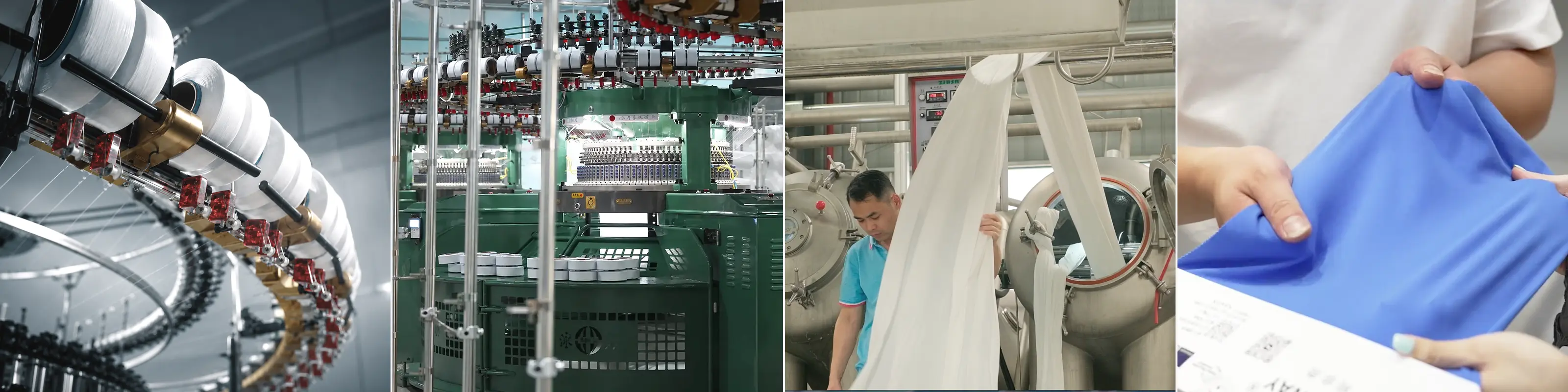
The final hand feel comes from a system. Fibre and filament selection set the starting point. Yarn construction changes the surface and bulk. Knitting determines density, mobility and support. Dyeing and finishing then refine the sensation. Altering one part of this system can affect the others.
Fibre type and filament fineness
Polyester and nylon can both be engineered into soft activewear fabrics, but they do not automatically produce the same touch.
Nylon is often selected when a smooth, supple and cool next-to-skin feel is wanted. Polyester offers broad design flexibility and can be engineered for soft, dry, brushed or moisture-managing surfaces. In both families, filament fineness, cross-section, texturing and yarn package affect the result. A fine multi-filament yarn presents many small contact points to the skin and can create a smoother surface than a coarser yarn at a comparable construction.
Fibre name alone is therefore a weak predictor of hand feel. “Nylon-spandex” may describe a sleek, lightweight yoga fabric or a dense, supportive double knit. “Polyester-spandex” may describe a warm brushed legging or a cool training jersey. The polymer is only one decision in the chain.
Recycled input does not define a single touch either. The hand depends on the quality and consistency of the yarn, how it is processed, and the fabric and finishing route built around it. A recycled-content requirement should be written alongside—not in place of—the target hand and performance specification.
Yarn construction and elastane integration
Yarn determines how the material meets the skin before the fabric is dyed or finished.
Textured filament yarns can add bulk, cover and a less glassy touch. Filament count, linear density, texturing level and twist influence smoothness, fullness and surface definition. The relationship is not always linear: using a finer yarn does not guarantee a better fabric if the knit becomes unstable, excessively light or difficult to control in finishing.
Elastane contributes extension and recovery, but its percentage should not be read as a direct softness rating. A higher elastane content may help create close fit and dense stretch, yet perceived support also depends on knit structure, fabric weight, loop length, elastane feeding and finishing width. Two fabrics with the same fibre percentages can have noticeably different stretch force and recovery.
This is why composition should be treated as identification, not as a complete performance prediction.
Knit structure, density and finished weight
Knitting determines how the yarns are organised and how easily the fabric bends, compresses and extends.
A compact structure can create a smooth face, stronger coverage and a more substantial hand. If it becomes too tight, however, the fabric may feel boardy or restrict movement. A more open construction may feel lighter and more breathable but can raise questions about opacity, snagging or dimensional stability. Single-knit and double-knit constructions also distribute thickness, stretch and surface character differently.
Finished GSM is part of this discussion, but it should not be used alone. Two fabrics at the same GSM can differ in thickness, density, opacity and support because their yarns and structures are different. Finished width matters as well: changing the width during setting can alter weight per square metre, stretch behaviour and hand feel.
The useful specification is therefore not simply “220 GSM and soft.” It is a controlled combination of finished weight, width, construction, stretch behaviour, surface and approved hand reference.
Dyeing, heat setting and surface finishing
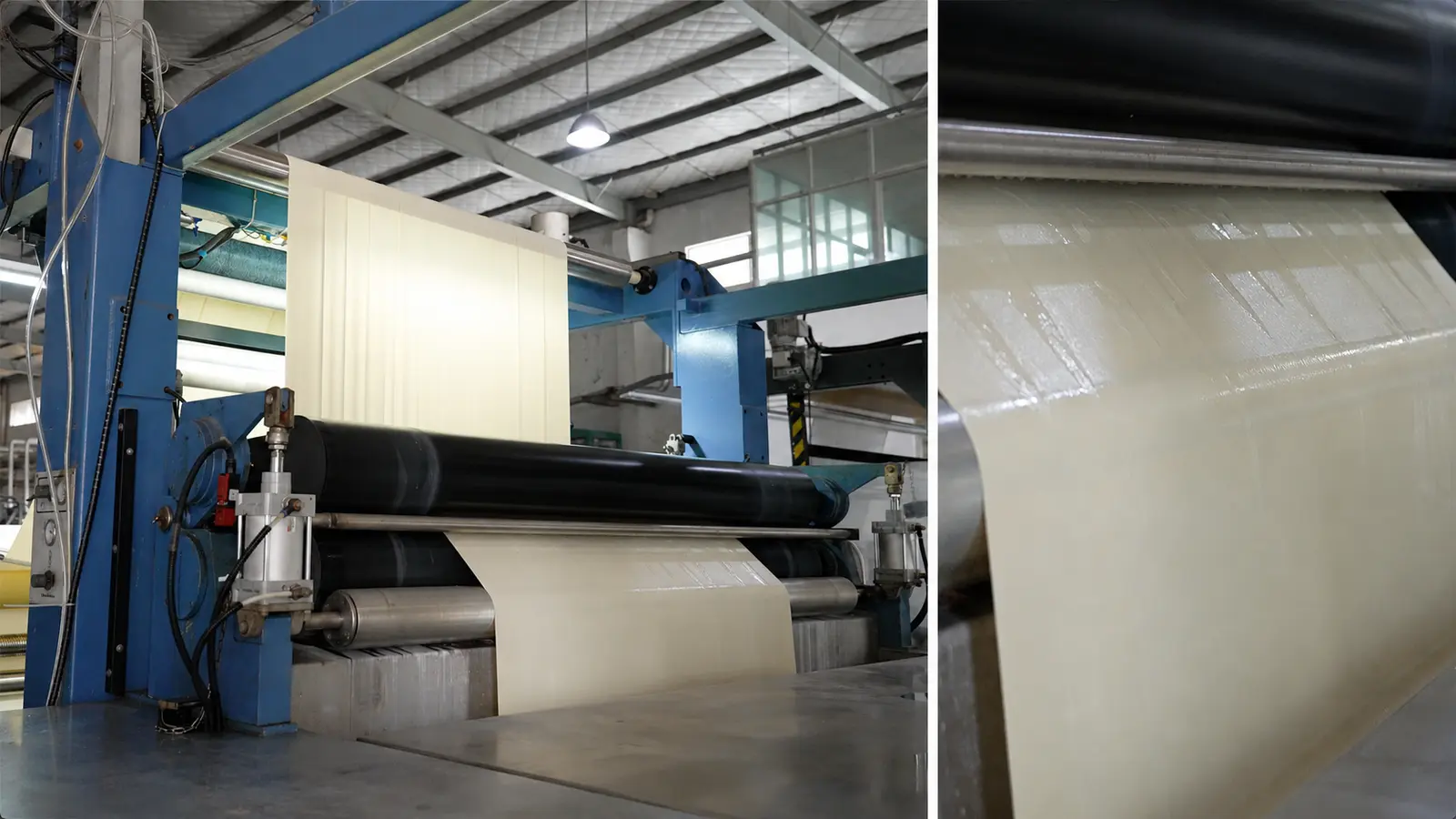
Finishing is where many buttery-soft fabrics gain their most obvious tactile character.
Processes such as peaching, sanding or brushing raise or modify surface fibres to create a suede-like, powdery or warm touch. Chemical softeners can reduce friction and improve flexibility. Heat setting stabilises synthetic and elastane-containing fabrics, helping control width, dimensional behaviour and surface appearance. Washing and relaxation steps can also change fullness and drape.
These operations need to be balanced rather than maximised. More brushing can create a richer first touch, but it can also increase loose fibre on the surface. More softener may improve glide, while affecting absorbency, sewability or consistency if the recipe is not controlled. Setting conditions can influence width and recovery. Dark and light shades may not respond identically because dyeing and finishing conditions can vary.
The best result is not the strongest possible finish. It is the finish that reaches the approved hand while preserving the properties required by the garment.
Not all buttery-soft fabrics should feel the same
It is more useful to define the intended type of softness than to ask for the softest available fabric.
Brushed, warm and matte
This type has a peachy or powdery surface, low visual shine and a cosy next-to-skin feel. It is often considered for yoga leggings, Pilates sets, studio layers and cooler-season athleisure.
The main development checks are surface pilling, lint or fibre release, shade appearance after brushing, recovery and drying behaviour. The finish should be judged after laundering, not only on the first production swatch.
Smooth, cool and second-skin
Here, softness comes less from visible surface fibre and more from fine yarns, a clean face and low friction. The fabric can feel cool and light while still providing coverage. It may suit warm-weather yoga, fitted training tops, running pieces or styles intended to slide easily under another layer.
Coverage at extension, snagging, wet cling and seam response deserve attention. A fabric that feels excellent while relaxed may appear different when stretched over the body.
Compact, creamy and supportive
This version feels smooth and substantial, with more resistance during stretch. The objective is not compression for its own sake, but a stable, held-in sensation with a soft surface. It may be appropriate for supportive leggings, cycling applications or structured studio garments.
Stretch force, recovery, fabric growth and comfort over time become as important as surface touch. If the structure is too dense or the elastane system is poorly balanced, a premium hand can turn into fatigue or restriction during wear.
These three groups are not formal industry classifications. They are a practical way for design, sourcing and technical teams to discuss the target without relying on one ambiguous adjective.
The technical trade-offs behind an impressive first touch
A swatch can be optimised for a sourcing table and still disappoint in a garment. The most common problems appear when the soft-hand target is approved separately from the properties surrounding it.
Pilling, fuzzing and abrasion
Brushing and peaching intentionally change the surface. That can improve softness while creating more exposed fibre ends. During wear, friction may form fuzz, pills or polished areas, particularly between the thighs, beneath straps, at the underarm or where equipment contacts the garment.
Pilling and abrasion are related but not identical. ISO 12945-2 uses a modified Martindale method to assess resistance to pilling, fuzzing and matting, while the ISO 12947 series addresses abrasion resistance. A fabric may perform well in one assessment and less well in the other, so the test should match the anticipated failure mode. ISO 12945-2:2020 and ISO 12947-2:2016
The approval should also include visual comparison after washing. Some surface changes are easier to recognise on a full swatch or garment than on a small test specimen.
Stretch, recovery and fabric growth
Softness is often associated with easy stretch, but easy stretch does not guarantee recovery.
Fabric stretch describes extension under a defined force or load. Recovery describes the return after that force is removed. Growth is the residual dimensional change that remains. In a legging, weak recovery can appear as bagging at the knee, seat or waistband even when the original fabric felt flexible and comfortable.
ISO 20932-1 describes strip methods for elasticity and related fabric properties. ASTM D2594/D2594M addresses stretch and growth in low-power knitted fabrics and notes the relevance of growth under prolonged stress in form-fitting apparel. The correct method depends on the construction and intended support level; ASTM D2594 should not be treated as a universal method for high-power compression fabrics. ISO 20932-1:2018 and ASTM D2594/D2594M-21
Testing should be completed in the required directions and at agreed conditions. A single maximum-stretch demonstration by hand cannot replace this information.
Opacity and visual coverage
A buttery-soft fabric may look opaque on the table and become translucent when extended. The risk depends on colour, structure, thickness, filament coverage, stretch level and what is worn underneath.
Coverage should be reviewed at an extension representative of the garment rather than only in the relaxed state. Light and saturated colours may behave differently from black. Approval in one shade should not automatically be extended to an entire colour range without review.
Instrumental light-blocking methods can add consistency, while garment fitting remains valuable because seams, panel direction and body curvature alter the result. The specification should state the condition being assessed instead of relying on the phrase “squat-proof,” which has no single universal test condition.
Moisture behaviour and drying
A soft surface can feel pleasant when dry yet become clingy or heavy after sweating. Brushed fibres, fabric thickness, hydrophilic treatments and knit structure all influence wetting, spreading, retention and evaporation.
“Moisture-wicking” should therefore be separated into the behaviour that matters for the garment. AATCC TM195 measures and classifies liquid moisture management properties of textile fabrics. Other AATCC methods address vertical or horizontal wicking and drying rate. These methods describe different parts of moisture behaviour and should not be presented as interchangeable. AATCC moisture-management test methods
For low-sweat Pilates or all-day wear, the preferred balance may differ from a running top or high-intensity training legging. The test plan should follow the use case.
Colour, finish and bulk repeatability
Hand feel is sensitive to process conditions. A lab dip, sample lot and bulk lot can differ if yarn source, machine settings, dyeing route, finishing recipe, finished width or heat-setting conditions change.
The approved standard should identify the exact fabric, colour and finish version. Colourfastness to laundering, perspiration and rubbing may also be relevant for next-to-skin activewear, particularly in deep shades. Examples include ISO 105-C06 for laundering and ISO 105-E04 for perspiration. The buyer and laboratory should confirm the current method, test conditions and acceptance criteria for the destination market. ISO 105-C06:2010 and ISO 105-E04:2013
How to write a usable buttery-soft fabric specification
A fabric mill cannot reliably reproduce an adjective unless it is attached to references and measurable boundaries.
The following elements make the brief more useful.
Start with the garment and wearer
State the product first: high-rise yoga legging, Pilates unitard, fitted training top, cycling short or all-day lounge layer. Include the expected climate, sweat level, fit and support. This prevents a soft but unsuitable fabric from entering development.
Use an approved physical reference
Identify a sealed reference swatch or approved development sample. Record the side being evaluated, since face and back may have different finishes. If the standard is a competitor garment, clarify which qualities are being referenced rather than asking for an exact copy.
Describe the hand in more than one word
Useful combinations include:
- finely brushed, dry and matte;
- smooth, cool and lightweight;
- compact, creamy and moderately supportive;
- soft with low surface drag;
- soft after washing, without visible fuzz increase.
Terms such as warm, cool, dry, slick, peachy, dense and resilient reduce ambiguity when used with a reference.
Record the finished construction
The specification should include the agreed fibre composition, finished GSM, usable width, construction reference and colour. Where commercially appropriate, it may also retain yarn and machine information needed for repeatability. The approved values should refer to finished fabric, not only greige fabric.
Define the surrounding performance
Stretch, recovery, growth, pilling, abrasion, dimensional stability, coverage and moisture-related requirements should be chosen according to end use. A test method without an acceptance requirement is incomplete; an acceptance requirement without an agreed method is equally difficult to enforce.
Approve the hand after relevant care
If the customer will wash the garment before repeated wear, the development team should review the fabric after an agreed laundering sequence. This is particularly important for raised surfaces and chemical softening systems. The untouched swatch and laundered swatch should remain traceable to the same colour and lot.
A practical brief might read:
Develop a 220–240 GSM nylon-spandex fabric for a high-rise Pilates legging. Target a smooth, lightly peachy and matte hand based on approved swatch BS-01, with moderate support rather than high compression. The fabric must maintain coverage at the agreed extension, recover without visible knee growth, and retain an acceptably clean surface and comparable hand after the agreed laundering and pilling evaluations. Finished width, colour, test methods and acceptance criteria to be confirmed during development.
The range above is only an illustration of how to structure a brief. It is not a universal specification for Pilates leggings.
A practical test plan for buttery-soft activewear
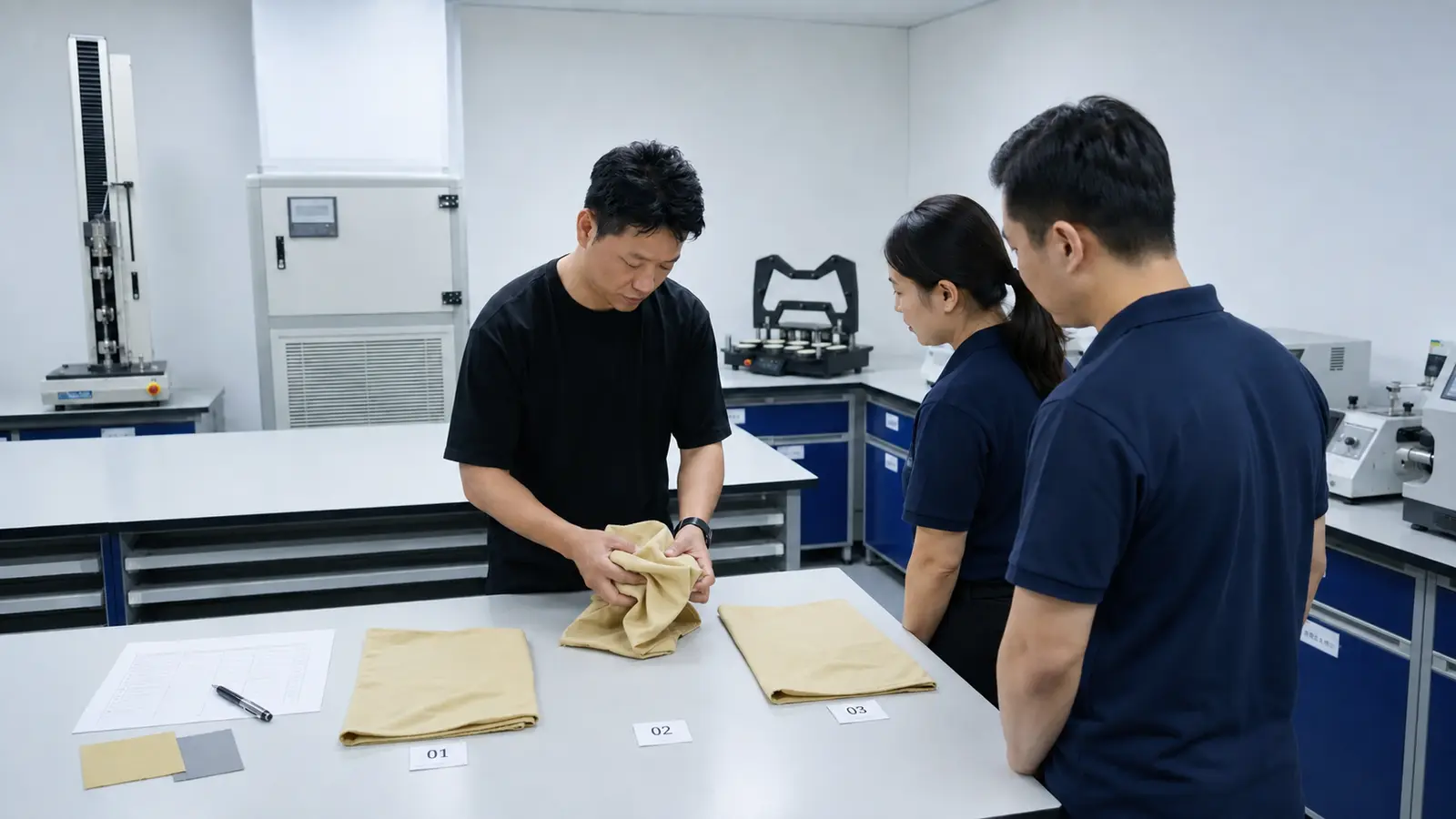
There is no single “buttery-soft test.” A useful programme combines hand evaluation with tests for the properties most likely to fail in the intended garment.
What needs to be verified | Possible evaluation route | Why it matters |
|---|---|---|
Hand-feel match | Conditioned panel comparison against an approved swatch; instrumental relative hand comparison where appropriate | Reduces dependence on memory and vague adjectives |
Stretch, recovery and growth | ISO 20932 series or another agreed method suited to the fabric; ASTM D2594/D2594M for applicable low-power knits | Distinguishes easy extension from stable recovery |
Pilling and surface change | ISO 12945-2 or an agreed equivalent, plus visual review after care | Checks whether the soft surface remains clean |
Abrasion resistance | Relevant part of ISO 12947 or an agreed equivalent | Evaluates wear from repeated rubbing |
Dimensional stability | Agreed laundering and dimensional-change method | Confirms width, length and shape stability after care |
Liquid moisture behaviour | AATCC TM195 or specific wicking methods when relevant | Separates wetting and transport from a generic wicking claim |
Drying behaviour | An agreed drying-rate method suited to the claim | Helps evaluate retained wetness and wet comfort |
Colourfastness | Methods selected for laundering, perspiration and rubbing as required | Protects appearance and reduces transfer risk |
Coverage | Agreed instrumental and/or garment assessment at a defined extension | Tests the fabric in a condition closer to use |
The test names above are examples, not a fixed protocol. Standards are revised, and customer manuals may prescribe different methods or conditions. The responsible approach is to confirm the current version, specimen direction, conditioning, load, cycle count and acceptance criterion with the buyer or nominated laboratory before testing.
Hand evaluation also needs discipline. Samples should be conditioned and presented without identifying information where possible. Panel members should compare the same side of each fabric under the same handling sequence. A simple internal scale can be useful, but it should be anchored by physical references rather than numbers alone.
Selecting the right softness for the activity
Softness should support the use case instead of overriding it.
Application | Suitable hand direction | Performance that should remain visible in the brief |
|---|---|---|
Yoga | Smooth or lightly brushed, low distraction, gentle next-to-skin feel | Four-way movement, recovery, opacity and low surface friction |
Pilates | Compact-soft, matte and controlled | Moderate support, shape retention, coverage and pilling resistance |
Gym training | Smooth-soft or cool-touch rather than heavily brushed | Moisture movement, faster drying, recovery and abrasion resistance |
Running | Light, smooth and low-cling | Airflow, wet comfort, drying and friction control |
Cycling | Smooth, compact and supportive | Recovery, abrasion resistance, moisture management and seam compatibility |
Athleisure | Soft, full and comfortable over extended wear | Shape retention, easy care and appearance after repeated washing |
This table is a starting point. Garment pattern, season, price level and brand identity may justify a different balance.
Questions to ask before approving bulk production
Before approving a buttery-soft fabric, a sourcing or product team should be able to answer the following:
- What creates the softness: yarn, construction, mechanical finishing, chemical finishing or a combination?
- Is the approved hand tied to a named swatch and exact fabric side?
- Has it been reviewed after the relevant laundering condition?
- Does the surface remain acceptable after pilling or abrasion evaluation?
- Are stretch, recovery and growth specified separately?
- Has coverage been checked at a defined extension and in the intended colours?
- Does the fabric still feel comfortable when wet?
- Are finished GSM and usable width linked to the approved hand?
- Can the mill trace the yarn, knitting, dyeing and finishing route used for the approved sample?
- Are all performance claims supported by an agreed method and identifiable test sample?
If several answers are missing, the development may still produce an attractive sample. It is not yet a controlled bulk specification.
How Cofinay approaches buttery-soft development
At Cofinay, buttery-soft development is treated as a balance between tactile direction and end-use performance. The discussion begins with the garment, intended activity, target support, preferred surface and commercial priorities. Fibre blend, yarn selection, knitting structure, dyeing and finishing can then be adjusted around that brief.
For one project, the priority may be a lightly brushed matte surface with strong shape retention. Another may require a smooth cool touch, lower wet cling and faster drying. A third may need cost control while preserving an approved hand and the most important wear properties. These projects should not be forced into the same recipe simply because all three use the phrase buttery-soft.
Final composition, weight, width, finishing route, lead time and test requirements depend on the actual custom-development details. Bulk approval should be based on the agreed physical reference and specification rather than on descriptive language alone.
Conclusion
The most convincing buttery-soft fabric is not necessarily the one that feels softest for five seconds.
It is the one whose touch makes sense for the garment, whose structure supports movement and recovery, whose surface remains acceptable after care, and whose colour and finish can be repeated in production. That result comes from the complete route—fibre, yarn, knitting, dyeing, finishing and testing—not from a single softener or marketing term.
For brands, the better question is not “Can you make this softer?” It is:
Can you reproduce this specific hand without losing the performance the garment needs?
That question gives both the brand and the fabric manufacturer something concrete to develop.
Sources and standards referenced
- AATCC TM202 — Relative Hand Value of Textiles: Instrumental Method
- ISO 20932-1:2018 — Determination of the Elasticity of Fabrics: Strip Tests
- ASTM D2594/D2594M-21 — Stretch Properties of Knitted Fabrics Having Low Power
- ISO 12945-2:2020 — Fabric Propensity to Pilling, Fuzzing or Matting
- ISO 12947-2:2016 — Abrasion Resistance by the Martindale Method
- AATCC Moisture Management Test Methods
- ISO 105-C06:2010 — Colour Fastness to Domestic and Commercial Laundering
- ISO 105-E04:2013 — Colour Fastness to Perspiration
About Cofinay
With over 16 years of expertise, Cofinay is a premier manufacturer of high-end activewear fabrics, certified by global ecological standards. We specialize in engineering premium performance knits for yoga, tennis, equestrian, and golf. Backed by our self-operated vertical weaving and dyeing infrastructure, we provide complete end-to-end services to empower global activewear brands to scale.