
Table of Contents
- 1. Pilling and abrasion are not the same
- 2. Why activewear creates demanding friction zones
- 3. What controls pilling and abrasion performance?
- 3.1. Fibre and yarn construction
- 3.2. Knit density and surface structure
- 3.3. Brushing and soft finishing
- 4. Use the correct test for the question
- 5. Approve appearance as well as a number
- 6. What to include in the supplier brief
- 7. Build durability into development
A fabric can feel excellent in the first fitting and still disappoint after several weeks of wear. For leggings, fitted shorts and training tops, the earliest complaint is often not a broken seam. It is a surface that looks older than it should.
Pills may appear between the thighs. A brushed face can become matted. A cycling short may turn shiny at a contact point. A lightweight top may lose colour or texture where a bag repeatedly rubs against it.
These problems are often grouped under “durability,” but pilling and abrasion describe different changes. Treating them as one requirement makes it difficult to choose the right test—or understand why a sample failed.
Pilling and abrasion are not the same
Pilling begins when loose fibre ends work their way out of the fabric surface. Friction encourages those fibres to entangle into small balls. Whether the pills remain visible depends partly on how strongly they stay attached and how quickly they break away.
Abrasion is the progressive wearing of a surface through rubbing. It may appear as loss of fibres, thinning, glazing, colour change, a smoother patch or, eventually, specimen breakdown.
A fabric can resist breakdown while still developing visible pills. Another may show little pilling because surface fibres detach quickly, even though abrasion is gradually weakening it. A single “anti-pilling” claim therefore does not describe the complete wear profile.
Why activewear creates demanding friction zones
Activewear is exposed to repeated movement under stretch, heat and moisture. That combination can be harder on a knitted surface than a simple first-touch assessment suggests.
Common high-contact areas include:
- the inner thighs and seat of leggings;
- waistbands and underarm panels;
- the saddle zone of cycling shorts;
- areas beneath backpack straps or outer layers;
- brushed interiors that repeatedly contact the body;
- garment surfaces exposed to rough benches, studio equipment or hook-and-loop trims.
The garment pattern matters too. A fabric that is stretched further on the body presents a different surface geometry to friction. Seam placement, fit and panel direction can concentrate rubbing even when the base fabric is unchanged.
What controls pilling and abrasion performance?
Fibre and yarn construction
Longer, well-controlled fibres are generally less likely to work loose than poorly secured fibre ends, but fibre type alone cannot predict the result. Filament structure, yarn twist, filament fineness and the way spandex is covered all affect how the surface responds.
Strong fibres can keep pills attached for longer, making them more visible. Softer or finer yarns may improve hand feel but create more opportunities for surface disturbance if the knit and finish are not balanced. This is why composition percentages should be read together with yarn and construction, not used as a durability score.
Knit density and surface structure
A compact, stable knit can help hold fibres in place. Looser loops, raised structures and open surfaces provide more points that can catch during rubbing. However, simply increasing density can change stretch, weight, drying and comfort.
Fabric direction also matters. The face and back may behave differently, and the wale and course directions may not respond identically. Test specimens should therefore be cut and identified consistently.
Brushing and soft finishing
Brushing creates the warm, soft surface that many studio and lifestyle collections now seek. It also raises fibres deliberately. The first swatch may feel luxurious while its later appearance depends on brushing intensity, fibre control, finishing and laundering.
This is an important follow-on to the buttery-soft activewear trend: softness should be approved together with surface durability, not before it.
Use the correct test for the question
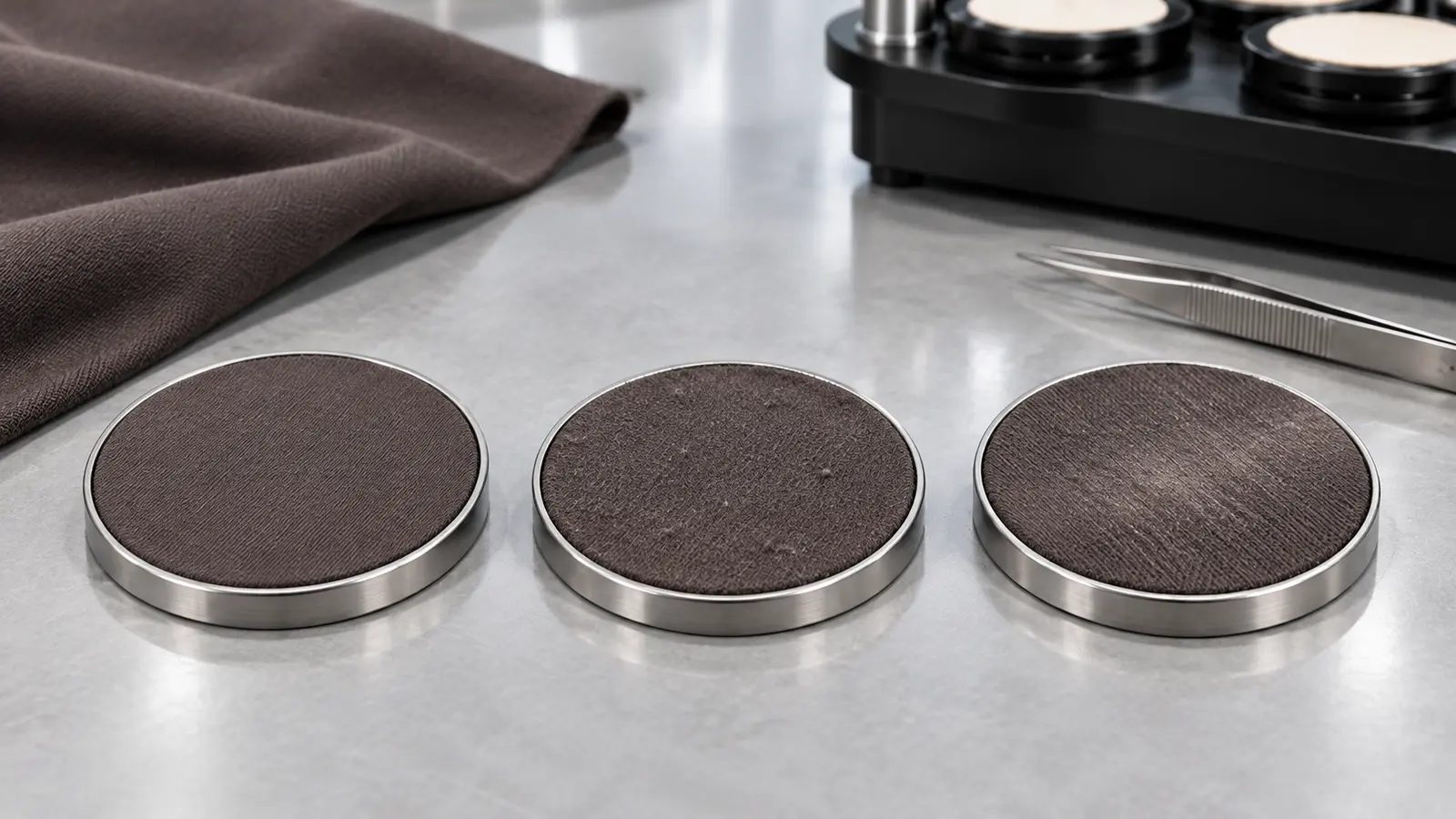
A pilling test applies controlled rubbing and then assesses fuzzing, pills and surface matting. ISO 12945-2:2020 uses a modified Martindale method for this purpose.
Abrasion testing asks a different question. ISO 12947-2:2016 describes the Martindale procedure for determining specimen breakdown through inspection at defined intervals. Other parts of the ISO 12947 series address mass loss and appearance change.
The machine may look similar, but the specimen setup, abradant, pressure, movement, inspection interval and endpoint must follow the selected method. A result has little value if a quotation says only “Martindale tested” without stating what was measured.
Buyers should record:
- the full test method and edition;
- specimen face, direction and conditioning;
- abradant, load and inspection stages;
- laundering or pre-treatment before testing;
- rating scale or endpoint;
- approved reference sample and acceptance level.
Do not copy a cycle count from an unrelated fabric category. A soft yoga legging, a cycling short and an outdoor reinforcement panel do not need the same surface or the same endpoint.
Approve appearance as well as a number
Laboratory results are most useful when they are connected to a visible standard. For dark, matte or brushed fabrics, a technically intact specimen may still show glazing, whitening or texture change that is unacceptable for the garment.
Review samples under consistent lighting and compare them with the untested original. For coloured developments, approve the final shade and finish rather than assuming an undyed or early lab sample will behave identically. Laundering can remove loose fibres, alter the surface or expose problems that were not visible before washing.
The fabric should also be assessed in garment form. A wear trial can reveal rubbing caused by fit, seam placement or contact with trims—variables that a flat specimen cannot reproduce fully.
What to include in the supplier brief
A practical surface-durability brief should specify:
- garment type and intended activity;
- expected friction zones and fit level;
- face and back surface requirements;
- brushed, peached or smooth finish;
- chosen pilling and abrasion methods;
- pre-wash condition and number of agreed wash cycles;
- colour or finish stage used for approval;
- acceptable visual change and physical endpoint;
- benchmark fabric or approved garment, where available.
Avoid asking for the “highest abrasion resistance” without context. A construction developed only to maximise a test number may become too dense, stiff or heavy for the intended garment. As with fabric GSM, the useful specification is the one that supports the complete product.
Build durability into development
Pilling and abrasion should be reviewed before bulk approval, not after customer complaints appear. Start with the garment’s real contact points, choose the relevant method, and compare the test result with the actual surface appearance.
At Cofinay, fabric durability is considered together with yarn, knitting, dyeing, finishing, stretch, recovery and end use. If a project includes a preferred benchmark, sending the physical garment or fabric helps the technical team define a more meaningful comparison than a generic “anti-pilling” request.
Written by Amber, Cofinay Technical Team.
About Cofinay
With over 16 years of expertise, Cofinay is a premier manufacturer of high-end activewear fabrics, certified by global ecological standards. We specialize in engineering premium performance knits for yoga, tennis, equestrian, and golf. Backed by our self-operated vertical weaving and dyeing infrastructure, we provide complete end-to-end services to empower global activewear brands to scale.