
Table of Contents
- 1. Colourfastness is not one test
- 2. Four exposures that matter in activewear
- 2.1. Perspiration
- 2.2. Washing
- 2.3. Rubbing
- 2.4. Light
- 3. Why a shade passes one test and fails another
- 4. Dark shades and colour blocking need a separate plan
- 5. Build the requirement into the development brief
- 6. Control colour through bulk production
- 7. Treat colour as a performance property
A pair of leggings can retain its stretch and still fail in use. A deep navy shade may transfer to a light seat. A red contrast panel may stain a pale lining after washing. A black sports bra may lose depth where sweat and friction meet.
These are colourfastness problems, but they do not all come from the same cause. “Good colourfastness” is not a single property, and one passing result cannot represent every exposure a garment will meet.
For activewear buyers, the useful question is not simply whether the colour is fast. It is whether the final fabric, in the approved shade and finish, resists the conditions relevant to the garment.
Colourfastness is not one test
Colourfastness describes how well a textile resists colour change or colour transfer under a defined exposure. Those two outcomes should be reviewed separately:
- Colour change is fading, darkening or a shift in the original fabric shade.
- Staining is colour transferred from the test fabric onto an adjacent material.
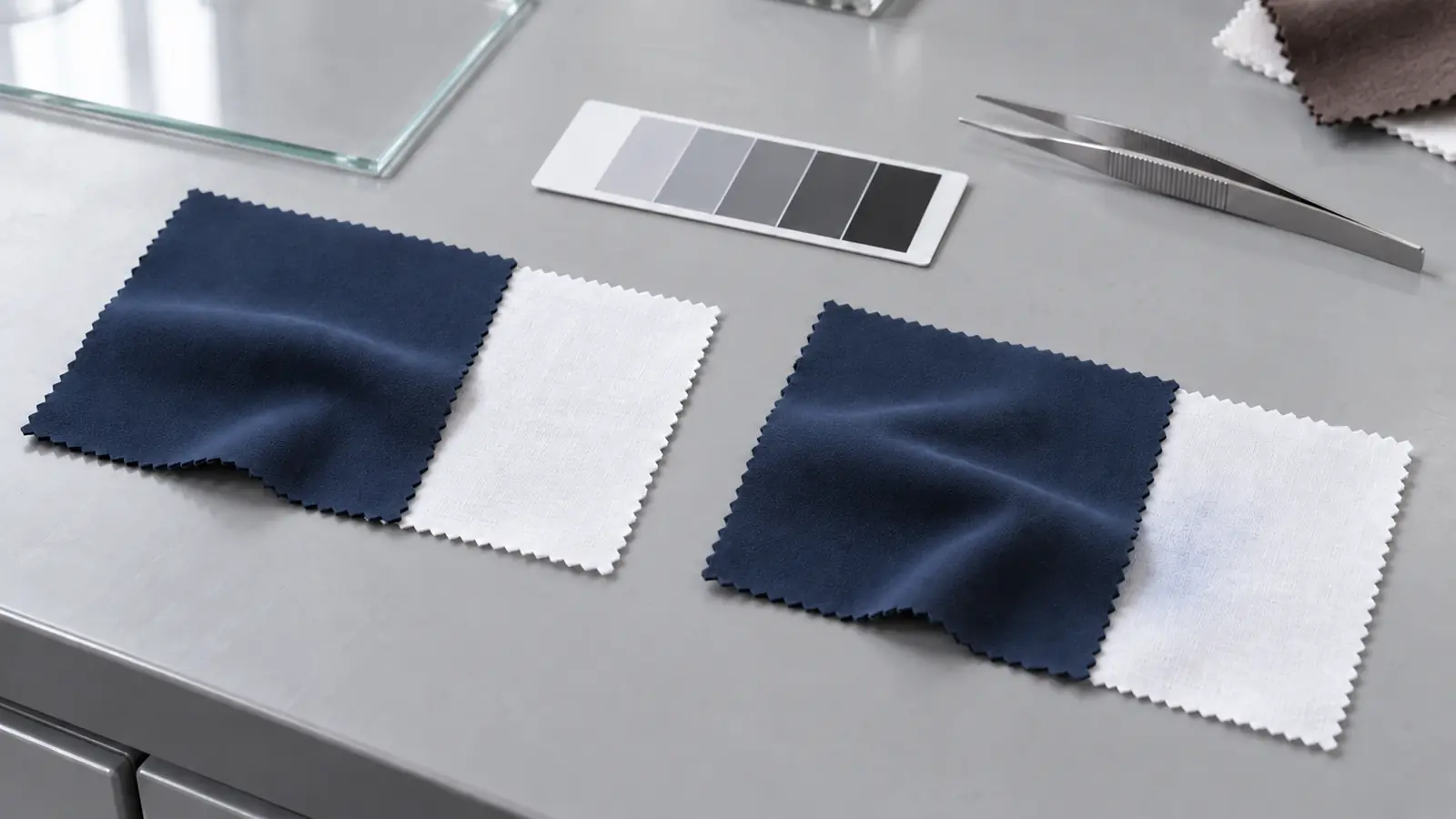
A fabric may keep its own shade but stain a white lining. It may perform well in laundering yet transfer colour during wet rubbing. This is why a report should identify the test method, test condition and assessed result rather than state only “colourfastness passed.”
Four exposures that matter in activewear
Perspiration
Close-fitting tops, bras, leggings and base layers remain in contact with sweat for long periods. Perspiration can affect the shade itself and transfer colour to lining, elastic, labels or another garment.
ISO 105-E04:2013 evaluates textile colour resistance to human perspiration. For activewear, it is particularly relevant to underarm, waistband, back and under-bust areas. It should be considered together with drying behaviour rather than treated as a substitute for moisture-wicking and quick-dry evaluation.
Washing
Repeated laundering exposes the fabric to water, detergent, agitation and temperature. ISO 105-C06:2010 covers colourfastness to domestic and commercial laundering using specified reference conditions.
The selected condition should reflect the care instruction and product use. A mild wash result should not be presented as evidence for a more demanding wash routine. When a garment combines dark and light panels, the assembled colour combination also deserves a wash check.
Rubbing
Rubbing, also called crocking, examines whether colour transfers through surface contact. ISO 105-X12:2016 provides dry and wet rubbing procedures.
Wet rubbing is often the harder condition for deep shades. It matters where the garment touches pale upholstery, socks, underwear, bags or another layer. Raised and brushed surfaces need attention because their greater surface contact can influence transfer behaviour.
Light
Running, tennis, cycling and outdoor training garments can receive prolonged daylight exposure. ISO 105-B02:2014 uses a xenon arc source to evaluate resistance to artificial light representative of daylight.
Lightfastness is not equally critical for every product, but it should not be overlooked for saturated colours, uniforms, outdoor collections or garments expected to keep a matched appearance across panels.
Why a shade passes one test and fails another
Colour performance begins with the relationship between fibre and dye. Polyester, nylon and other fibres use different dye classes and processing routes. In a blend, the colourist must manage more than the headline composition; yarn structure, spandex content, knit density and target shade also affect development.
Deep colours usually require more careful control than pale shades. Fixation, reduction clearing or washing-off, rinsing and neutralisation all influence how much unfixed colour remains available to migrate. Finishing can then alter the surface again. Brushing, peaching, softeners and heat-setting may improve hand feel or dimensional stability while changing the way the surface meets water and friction.
This is also why testing an early undyed fabric, a lab dip or a different shade is not enough. The approval sample should represent the final construction, colour and finish.
Dark shades and colour blocking need a separate plan
Black, navy, burgundy and saturated fashion colours are common in activewear because they offer coverage and strong visual impact. They also create higher concern when paired with white, pastel or marl components.
For a colour-blocked garment, review every meaningful contact combination—not just each fabric in isolation. Consider:
- shell fabric against lining or bra cups;
- dark panels beside pale panels;
- body fabric against elastic, binding and labels;
- prints or transfers applied over dyed fabric;
- wet garments packed together after exercise;
- garments washed with other colours under the stated care conditions.
A fabric result cannot predict every garment interaction. A simple assembled wash or contact trial can reveal risks that remain invisible when components are approved separately.
Build the requirement into the development brief
Do not wait until the production report to decide what “pass” means. The development brief should record:
- garment type, activity and expected contact conditions;
- fibre composition, construction and surface finish;
- exact colour, including whether it is a dark or fluorescent shade;
- contrast materials that may be stained;
- required test method and edition;
- dry and wet conditions where applicable;
- pre-treatment or laundering before testing;
- separate acceptance criteria for colour change and staining;
- approved physical reference or benchmark garment.
There is no useful universal grade for every sportswear product. The acceptance level should match the market, garment design, care label and foreseeable use. If a retailer or brand has its own protocol, provide it before sampling so the supplier can test on the same basis.
Control colour through bulk production
A successful lab dip approves a target, not every future metre of fabric. Bulk dyeing introduces lot size, machine loading, water conditions, process timing and finishing variables. Colour should therefore be controlled at several points:
- Approve the lab dip under the agreed light sources.
- Confirm a bulk shade standard and tolerance.
- Test the final dyed and finished fabric, not only the development sample.
- Keep dye lots identifiable and avoid mixing visible garment panels across lots without approval.
- Review shade continuity, staining risk and surface appearance before cutting.
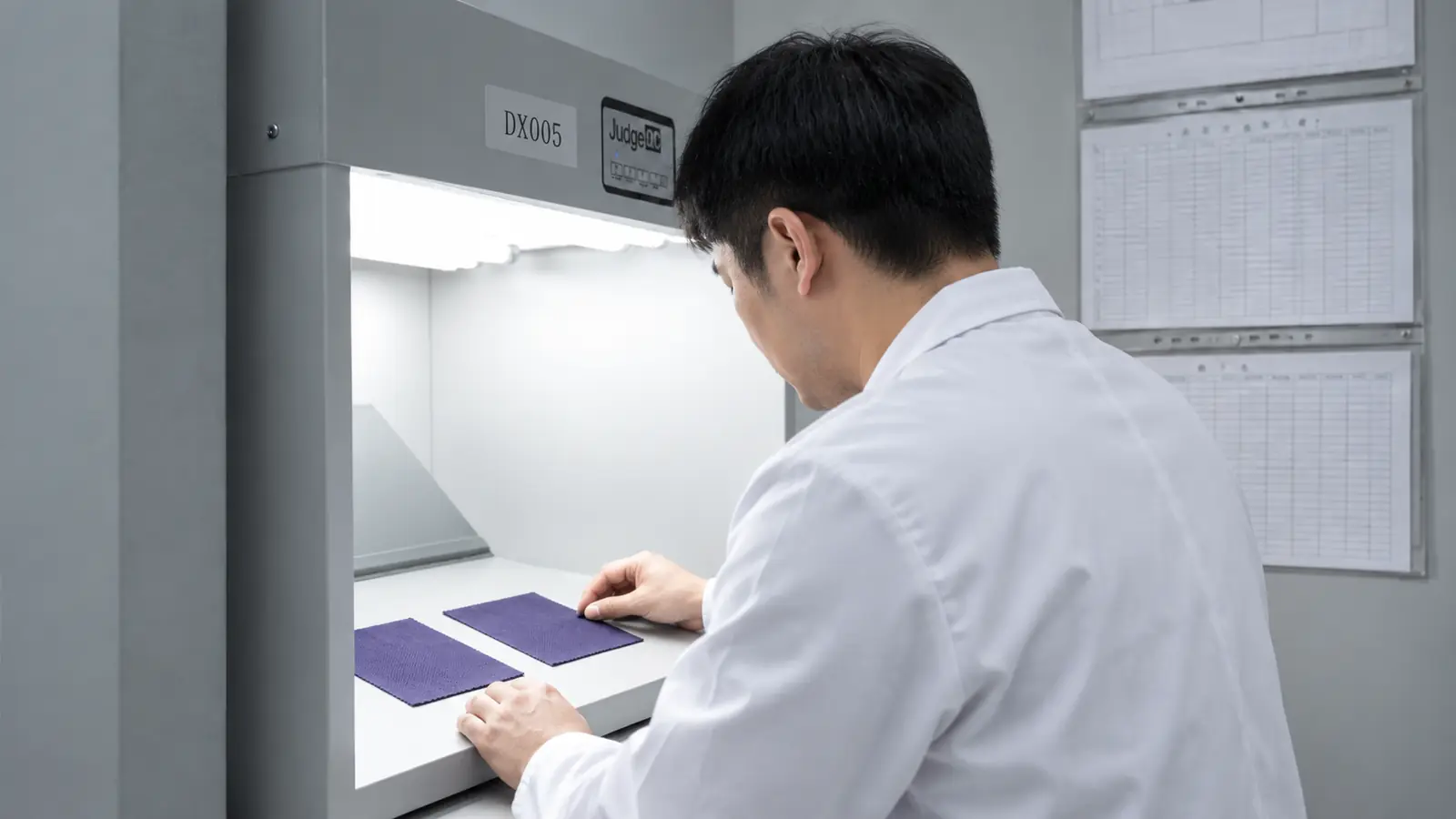
The retained standard should stay linked to the test report, dye lot and final approval. This creates a traceable reference if a later shipment looks different or a garment shows colour transfer.
Treat colour as a performance property
Colourfastness is not only a visual concern. It affects how a garment interacts with skin, trims, other clothing and the environments where it is worn. The right test plan starts with the product’s real exposure, then connects laboratory results to the finished garment.
At Cofinay, colour development is reviewed together with fibre blend, knitting, dyeing, finishing and end use. Sending the intended colour combinations, care requirements and benchmark sample at the start gives the technical team a clearer basis for development than a general request for “high colourfastness.”
Written by Amber, Cofinay Technical Team.
About Cofinay
With over 16 years of expertise, Cofinay is a premier manufacturer of high-end activewear fabrics, certified by global ecological standards. We specialize in engineering premium performance knits for yoga, tennis, equestrian, and golf. Backed by our self-operated vertical weaving and dyeing infrastructure, we provide complete end-to-end services to empower global activewear brands to scale.