
Table of Contents
- 1. What Does GSM Mean?
- 2. Weight, Thickness, Density, and Coverage Are Different
- 3. Why Fabrics with the Same GSM Can Feel Different
- 3.1. Yarn size and filament structure
- 3.2. Knit structure and gauge
- 3.3. Spandex integration
- 3.4. Finishing and relaxation
- 4. How GSM Relates to Activewear Performance
- 4.1. Drape and garment shape
- 4.2. Coverage under stretch
- 4.3. Support and recovery
- 4.4. Thermal and moisture comfort
- 4.5. Yield and commercial planning
- 5. Select a Weight Profile for the End Use
- 6. How to Compare GSM and Thickness Reliably
- 7. Common GSM Misunderstandings
- 8. What to Include in a Development Brief
- 9. Use GSM as One Coordinate, Not the Destination
GSM appears on almost every fabric specification sheet. It is easy to compare, easy to quote and often one of the first numbers a buyer checks.
It is also one of the most frequently overinterpreted.
A higher GSM fabric is not automatically thicker, more supportive or more opaque. A lower GSM fabric is not necessarily weak or transparent. Two knitted fabrics can have the same composition and nominal weight yet feel, stretch and perform differently because their yarns, loop structures, finished widths and surface treatments are different.
GSM is useful when it is read as part of a fabric system—not as a quality grade.
What Does GSM Mean?
GSM stands for grams per square metre. It describes the mass of a fabric over a defined area.
In practical testing, a specimen of known area is cut, conditioned and weighed. The result is converted to grams per square metre. ASTM D3776/D3776M covers methods for measuring fabric mass per unit area and applies to most fabrics.
GSM tells a buyer how much material is present in an area of finished fabric. It does not reveal how that material is arranged.
That distinction matters. The same mass can be formed into a compact, smooth knit; a bulkier brushed fabric; an open mesh; or a highly elastic construction. The number remains comparable, but the physical experience does not.
Weight, Thickness, Density, and Coverage Are Different
These terms are related, but they should not be used interchangeably.
Property | What it describes | What it does not prove |
|---|---|---|
GSM | Mass per unit area | Thickness, opacity or support |
Thickness | Distance between the two fabric surfaces under stated pressure | Weight or knit compactness |
Density | How closely yarns and loops are arranged | Finished garment compression |
Coverage | How effectively the fabric blocks the body or background, especially under extension | Recovery or durability |
Thickness is particularly sensitive to the way it is measured. According to ASTM D1777, apparent thickness changes with the pressure applied to the specimen. A thickness result is therefore incomplete unless the measuring pressure and method are known.
A brushed fabric may feel thick because its raised surface traps air, even when its structural mass is moderate. A tightly knitted fabric may carry more mass while remaining visually flat. An open construction can be relatively substantial in the hand but still allow light through.
Why Fabrics with the Same GSM Can Feel Different
Yarn size and filament structure
Fine multifilament yarns can create a smooth, flexible surface with a different drape from coarser yarns at a similar finished weight. Textured yarns may add bulk or surface character without producing the same compactness as a flat yarn.
Fibre type also changes the perception of weight. Nylon, polyester, recycled fibres and blends with spandex differ in surface friction, moisture behaviour and hand feel. Composition should be considered together with yarn construction rather than read as a complete performance description.
Knit structure and gauge
Loop shape controls how yarn is distributed across the fabric. A compact interlock, a single-knit construction and an engineered mesh can reach similar weights through different combinations of yarn size, loop length and machine gauge.
These structures do not respond identically. They may differ in extensibility, edge curl, dimensional stability, airflow and coverage. The face and reverse may also behave differently when the fabric is brushed, printed, laminated or bonded.
Spandex integration
Spandex contributes to extension and recovery, but its percentage does not explain the complete elastic behaviour. The way it is fed, covered and stabilised within the knit affects fabric width, resistance and relaxation.
Two fabrics with the same GSM and similar spandex content may still have different holding power. Support must be evaluated through the fabric’s stretch profile and the garment pattern, not inferred from weight alone.
Finishing and relaxation
Dyeing, heat setting, sanding, napping and softening can change finished width, surface bulk and hand feel. A fabric measured before full relaxation may not represent the condition received by the garment factory.
Colour can also influence processing conditions. A confirmed development sample and a bulk colourway should not be assumed identical merely because the specification lists the same target GSM.
How GSM Relates to Activewear Performance
Drape and garment shape
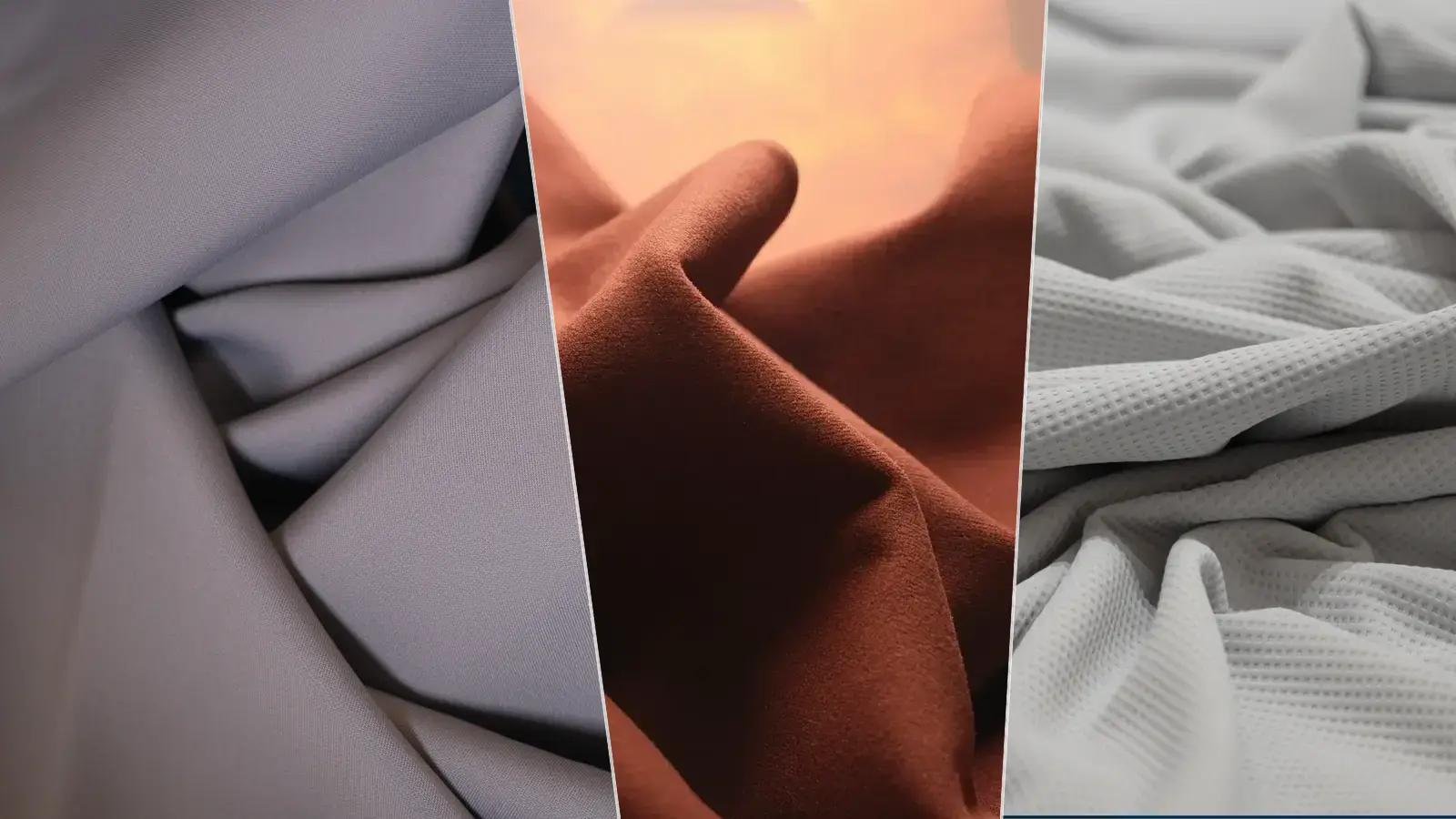
Fabric weight contributes to how a garment hangs, but structure and stiffness decide how that weight moves. A fluid mid-weight knit may follow the body closely, while a fabric of similar GSM with greater bending resistance creates a more structured silhouette.
For skirts, tennis dresses and lifestyle layers, drape may matter more than a higher weight. For close-fitting leggings, the balance between weight, recovery and pattern reduction is more important than drape alone.
Coverage under stretch
Opacity at rest can be misleading. As a knit extends, loops open and the amount of yarn covering a given area changes. A fabric that appears solid on a table may become visibly lighter over the seat, knees or elbows.
Coverage should be reviewed in the relevant direction and at an extension close to the intended garment fit. Colour, surface finish and contrast with the wearer or lining also affect the result.
Support and recovery
Weight can contribute to a substantial hand, but support comes from resistance to extension. Recovery describes how well the material returns after that force is removed. Neither property can be confirmed from GSM.
A lighter, tightly engineered fabric may recover more cleanly than a heavier but relaxed construction. A heavier fabric may feel secure initially yet develop growth after repeated movement. Extension, recovery and growth therefore need separate evaluation.
Thermal and moisture comfort
More mass can slow heat and moisture transfer, but this relationship is not linear. Yarn shape, loop openness, surface area and finishing can change airflow and drying behaviour.
A lightweight compact fabric may feel warmer than expected, while a more open fabric with greater mass can allow useful ventilation. “Breathable” and “quick dry” should be supported by the relevant construction and testing, not assumed from weight.
Yield and commercial planning
GSM also affects fabric yield. When fabric is purchased by weight, the usable metres per kilogram depend on both finished GSM and width. A quotation based only on price per kilogram can therefore hide a meaningful difference in garment output.
Buyers should compare usable width, finished weight, cutting efficiency and expected consumption on the same basis. A cheaper kilogram is not necessarily a cheaper garment.
Select a Weight Profile for the End Use
There is no universal “best GSM” for activewear. The target should begin with the garment and wearing condition.
End use | Useful priorities | Risks to check |
|---|---|---|
Yoga and Pilates leggings | Smooth coverage, multidirectional movement, soft hand and recovery | Show-through, knee growth, waistband relaxation |
Training and cycling bottoms | Stable coverage, abrasion resistance and controlled support | Excess heat, restricted movement, seam stress |
Sports bras | Firm elastic response, stable edges and comfortable recovery | Excess pressure, difficult dressing, rolling bands |
Tennis and golf apparel | Mobility, clean drape and manageable weight | Clinging, hem distortion, slow drying |
Studio and lifestyle layers | Softness, fluid movement and surface appearance | Limp shape, pilling, loss of recovery |
These priorities are more useful than requesting a familiar number from a previous style. A fabric should be approved because its combined properties suit the new garment, not because its GSM looks familiar.
How to Compare GSM and Thickness Reliably
Consistency matters more than a single reading.
- Confirm whether the value refers to greige, dyed or fully finished fabric.
- Condition samples under the agreed laboratory environment.
- Cut specimens from representative areas rather than relying on one location.
- Record finished width and fabric state when the specimen is taken.
- Use the same method and equipment for supplier comparisons.
- State the applied pressure when reporting thickness.
- Check more than one colour or finish where processing risk is material.
- Recheck after the agreed laundering or relaxation procedure.
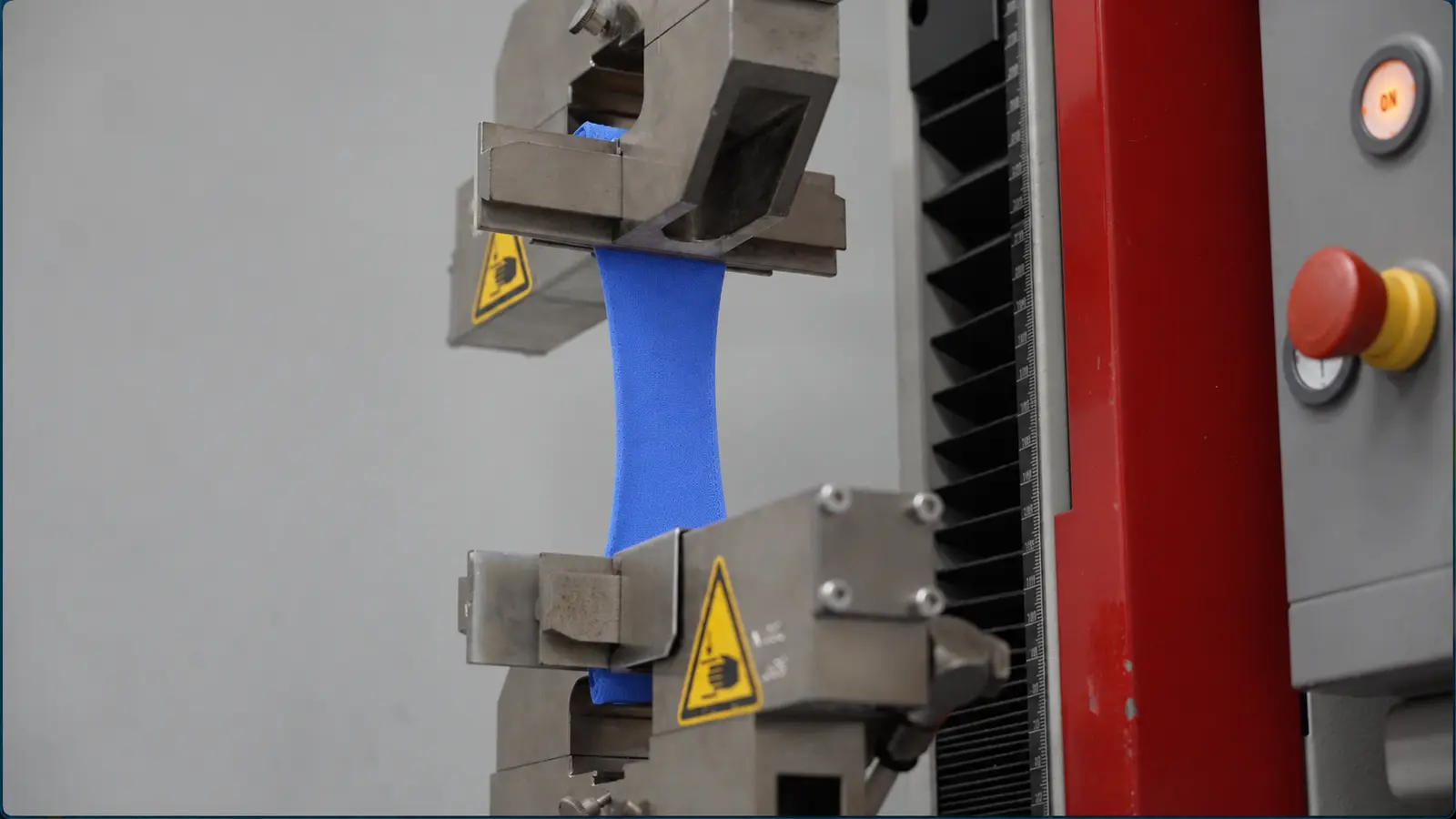
For coverage, inspect the fabric both relaxed and extended. A light box, contrasting background or garment-fit assessment can be useful, provided the extension and viewing conditions are kept consistent.
Common GSM Misunderstandings
Higher GSM means better quality. Quality depends on whether the yarn, construction, finishing and performance meet the intended use.
Higher GSM means squat-proof. Coverage under extension depends on knit geometry, colour, stretch and garment fit.
The same GSM means the same fabric. Different yarns and structures can reach the same mass per area.
GSM and thickness are interchangeable. A bulky raised surface and a compact flat knit can reverse that assumption.
A supplier’s nominal GSM is enough for approval. The buyer should confirm the test method, finished state and agreed tolerance for the actual order.
What to Include in a Development Brief
A useful request goes beyond “please match this GSM.” Include:
- garment type and intended activity;
- preferred hand feel and drape;
- required coverage at the intended extension;
- extension, recovery and holding sensation;
- finished width and weight target;
- surface finish and colour range;
- laundering or care conditions;
- testing method and approval stage.
This gives the mill room to engineer the right yarn and structure while keeping the commercial target clear.
Use GSM as One Coordinate, Not the Destination
GSM is a valuable control point. It helps buyers compare mass, monitor production consistency and estimate yield. It becomes misleading only when it is asked to stand in for properties it does not measure.
The stronger approach is to read GSM alongside thickness, knit density, finished width, stretch profile, coverage and end-use testing. That combination explains how a fabric is likely to cut, wear and recover far better than one number on a specification sheet.
To discuss a fabric weight and construction for yoga, Pilates, cycling, training, tennis or golf apparel, explore the Cofinay fabric collection or contact our technical team with your garment brief.
Technical note: The appropriate test method, conditioning procedure and acceptance criteria should be agreed for the specific fabric and end use. Confirm the current edition of any cited standard before testing.
Written by the Cofinay Technical Team.
About Cofinay
With over 16 years of expertise, Cofinay is a premier manufacturer of high-end activewear fabrics, certified by global ecological standards. We specialize in engineering premium performance knits for yoga, tennis, equestrian, and golf. Backed by our self-operated vertical weaving and dyeing infrastructure, we provide complete end-to-end services to empower global activewear brands to scale.