
Table of Contents
- 1. Begin with the right sourcing route
- 1.1. Existing fabric
- 1.2. Stocked greige fabric with custom dyeing
- 1.3. Fully custom fabric development
- 2. What does activewear fabric MOQ mean?
- 2.1. Why color count matters
- 3. Plan samples as approval stages
- 4. What determines lead time?
- 5. What affects activewear fabric cost?
- 6. Compare quotations on the same basis
- 7. Prepare these details before requesting a quote
- 8. Frequently asked questions
- 8.1. Can several colors share one MOQ?
- 8.2. Is stocked greige the same as finished in-stock fabric?
- 8.3. Does a lab dip represent the final fabric?
- 8.4. When should a buyer confirm the final price?
- 8.5. How much extra fabric should be ordered?
- 9. Source for the collection, not only the swatch
The price shown on a fabric quotation is only one part of a sourcing decision. Minimum order quantity, color allocation, sampling route, greige availability, testing and delivery requirements can all affect whether a fabric is commercially workable for a collection.
For an emerging activewear brand, ordering too much fabric can tie up cash and leave unused inventory. Ordering too little—or dividing a small quantity across too many colors—may make custom production inefficient or impossible. Larger brands face a different challenge: keeping specifications, shade standards and delivery schedules consistent across repeat orders.
This guide explains how to evaluate activewear fabric MOQ, sampling, lead time and cost before committing to bulk production.
Quick answer: Start by defining the garment, fabric specification, estimated quantity, number of colors and target delivery date. Then determine whether an existing fabric, stocked greige quality or fully custom development offers the most practical balance of flexibility, speed and cost.
Begin with the right sourcing route
Not every project needs a fabric developed from the yarn stage. Choosing the appropriate sourcing route can reduce both cost and development time.
Existing fabric
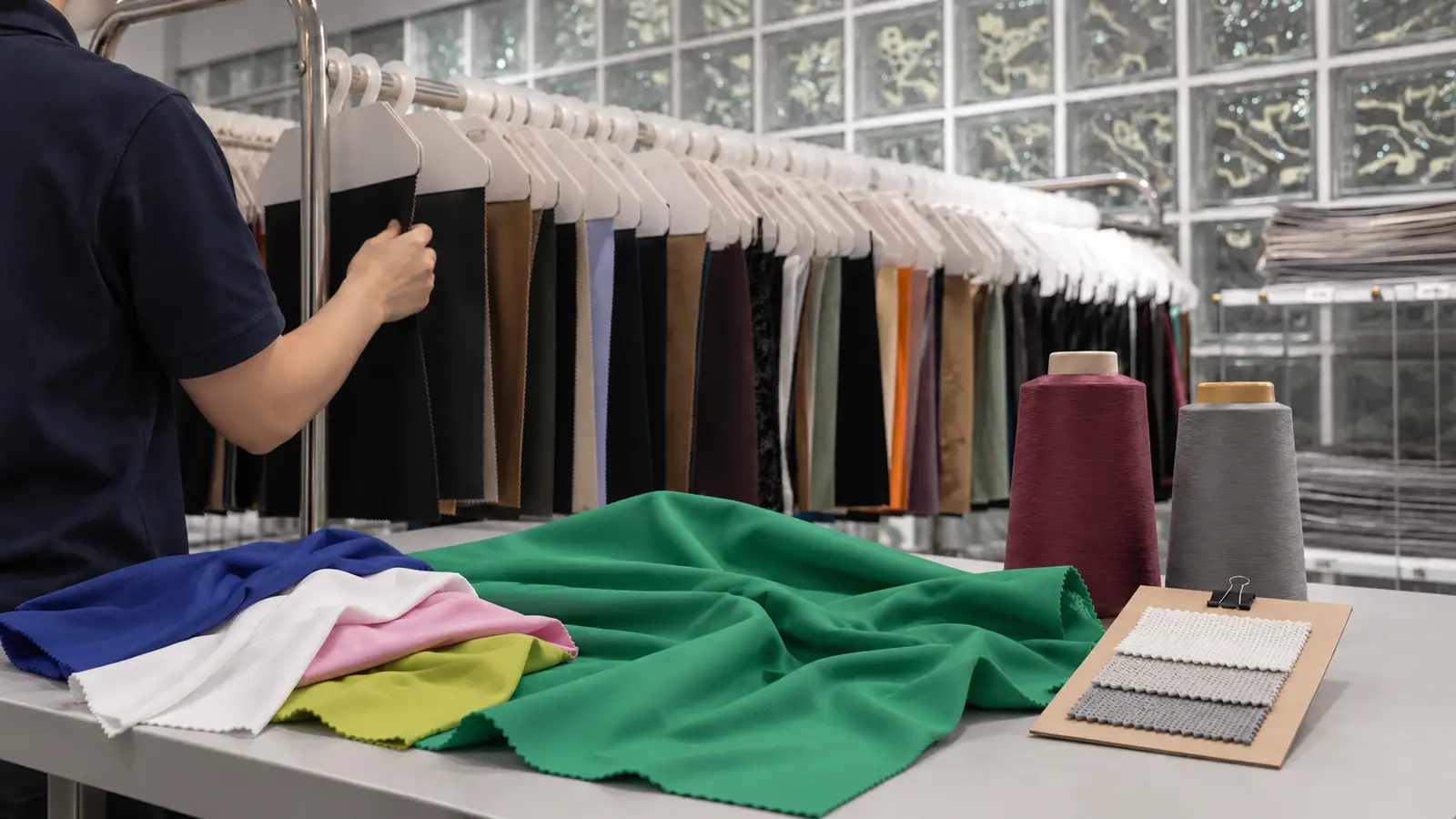
An established fabric quality is usually the most efficient starting point. The construction, composition, weight and finish already exist, allowing the buyer to focus on suitability, color and garment testing.
This route works well when:
- The available specification fits the intended garment;
- The launch schedule is relatively short;
- The brand wants to reduce technical-development risk;
- Custom color is more important than custom construction.
Stocked greige fabric with custom dyeing
Greige fabric has already been knitted but has not yet been dyed and finished in the final color. Using a regularly stocked greige quality removes the weaving or knitting wait and can make smaller trials more practical.
Cofinay maintains more than 500 tons of undyed nylon, polyester and spandex-blend greige fabrics across its stocked programs. For qualifying stocked qualities, custom dyeing can typically be completed in approximately 7–10 days after the required approvals. The actual schedule depends on color, quantity, finish, testing and production planning.
Fully custom fabric development
A new construction may be necessary when the project requires a particular weight, width, stretch profile, surface, compression level, fiber ratio or functional finish that existing qualities cannot provide.
This route offers greater control, but it may also require yarn sourcing, knitting trials, finishing adjustments and additional testing. MOQ, development cost and lead time therefore need to be confirmed against the complete brief rather than estimated from composition alone.
What does activewear fabric MOQ mean?
MOQ is the minimum quantity that can be produced efficiently under a defined specification. It may apply per fabric quality, per color or per production lot.
For Cofinay’s standard custom dyeing service, the typical MOQ is 100 kg per color. For specifications permanently stocked in greige form, qualifying trial orders may be accepted from 50 kg per color. These figures are starting points, not universal terms: a new construction, specialty yarn, functional finish, certification requirement or difficult color may require a different minimum.
Buyers should confirm five details:
- Is the MOQ calculated per article or across the complete order?
- Does each color need to meet the minimum independently?
- Is suitable greige fabric already available?
- Does a special finish create a separate production minimum?
- Is the quoted quantity based on kilograms, meters or usable finished fabric?
Why color count matters
A 300 kg order in one color is not operationally the same as 300 kg divided across six colors. Each color may require separate lab dips, dyeing, machine setup, inspection and records. A wide color range can therefore increase development work even when the total quantity remains unchanged.
For a first collection, it is often more practical to concentrate volume in fewer core colors, validate demand, and expand the palette in later orders. This can improve production efficiency without forcing the brand to compromise on the fabric itself.
Plan samples as approval stages
“Fabric sample” can describe several different materials. Clarifying the purpose of each sample prevents approval confusion.
Sample stage | Main purpose | What the buyer should review |
|---|---|---|
Swatch or hanger | Initial fabric screening | Hand feel, weight, surface, stretch, drape and general suitability |
Lab dip | Color development | Shade under agreed lighting and against the approved color standard |
Sample yardage | Prototype development | Cutting, sewing, coverage, recovery, seams and garment appearance |
Tested sample | Performance confirmation | Required physical tests linked to the exact article, color and finish |
Approved bulk reference | Production control | Final specification, shade, finish and acceptance standard |
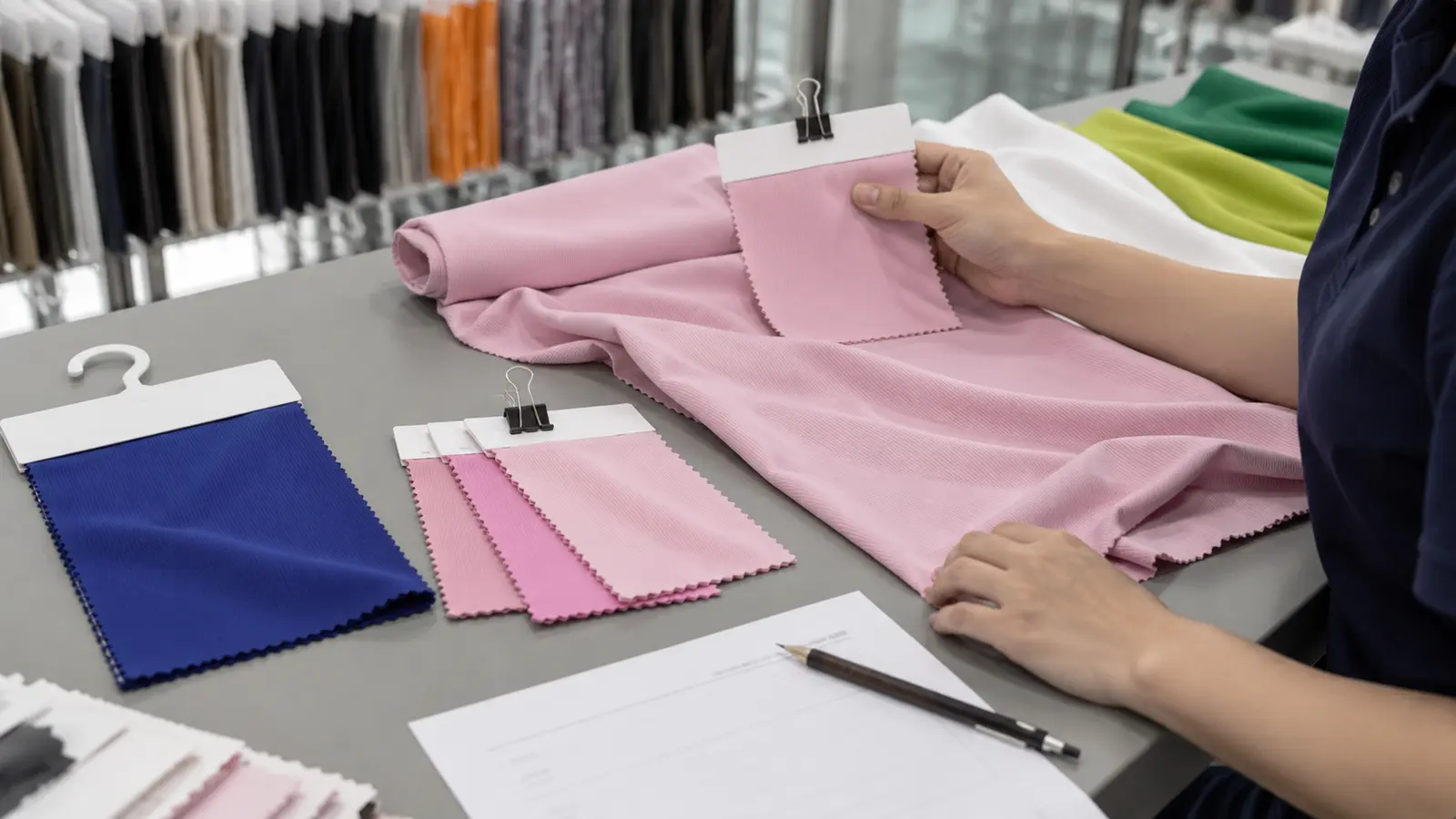
Cofinay provides free activewear fabric swatch catalog hangers to verified sportswear brands. For color matching, buyers can submit a Pantone TCX/TPX reference or a physical color swatch. Standard lab-dip development typically provides three to four shade options within approximately 3–5 working days.
A lab dip approves color only. It does not automatically approve bulk fabric performance, hand feel or garment fit. The selected color should eventually be reviewed on the intended construction and finish, followed by a sewn prototype where the garment carries meaningful fit, opacity or support risks.
What determines lead time?
Lead time should be discussed as a sequence of decisions rather than one factory number.
Typical stages may include:
- Brief and swatch review;
- Fabric selection or construction development;
- Lab-dip preparation and color approval;
- Sample-yardage production;
- Garment trial and technical testing;
- Bulk knitting or greige allocation;
- Dyeing, finishing and inspection;
- Packaging and shipment preparation.
Cofinay’s standard lab dips typically take approximately 3–5 working days. Qualifying bulk orders may require approximately 7–15 working days, while custom dyeing from available greige can typically take around 7–10 days. These periods are not interchangeable and begin only after the necessary specification, color and commercial approvals are in place.
Lead time may increase when:
- A new yarn or knit construction is required;
- The order contains many colors;
- The shade is difficult to reproduce;
- Brushing, bonding or another special finish is added;
- Additional testing or certification documents are required;
- Sample comments change the approved specification;
- The buyer delays color, sample or payment approval.
When planning a launch, include time for review and correction rather than scheduling production from the best-case factory duration alone.
What affects activewear fabric cost?
Two fabrics with the same composition can have different prices because composition does not describe the complete material.
Important cost factors include:
- Fiber type, yarn quality and elastane selection;
- Yarn count, knitting gauge, density and structure;
- Finished GSM and usable width;
- Dye color and dyeing difficulty;
- Brushing, sanding, moisture-management or other finishing;
- Order quantity and number of colors;
- Testing, certification and traceability requirements;
- Packaging, inspection and shipment terms;
- Whether the project uses an established fabric or requires new development.
A lower price per kilogram does not necessarily produce a lower garment cost. Buyers should also consider usable width, cutting yield, shrinkage, defect allowance, recovery and the risk of rejection after garment testing.
Compare quotations on the same basis
Before comparing suppliers, normalize each quotation.
Confirm that every quote refers to the same:
- Fabric construction and fiber composition;
- Finished GSM and usable width;
- Color quantity and total order quantity;
- Surface and functional finish;
- Testing and documentation scope;
- Packaging method;
- Trade term and shipping responsibility;
- Sampling charges and development conditions;
- Payment schedule;
- Delivery point and estimated readiness date.
Cofinay’s currently stated standard terms are EXW, with a 30% deposit before production and the remaining 70% paid after four-point-system quality inspection and before shipment. Final commercial terms should still be confirmed on the individual quotation and proforma invoice.
Prepare these details before requesting a quote
A useful enquiry does not need to answer every technical question. It should give the supplier enough information to recommend the correct route.
Include:
- Garment type and intended activity;
- Fabric application within the garment;
- Preferred composition, weight or reference fabric, if known;
- Required stretch, recovery, opacity, support and hand feel;
- Estimated quantity per fabric and per color;
- Number of colors and color references;
- Target market and required tests or certificates;
- Sample-yardage requirement;
- Target bulk-ready date;
- Shipping destination and requested trade term.
If some specifications are unknown, identify them as open decisions. A clear statement such as “medium-support Pilates leggings with a matte surface and strong recovery” is more useful than filling a tech pack with unverified numbers.
For a detailed request format, see How to Brief an Activewear Fabric Manufacturer. Before bulk approval, use the Activewear Fabric Specification and Testing Checklist.
Frequently asked questions
Can several colors share one MOQ?
Not automatically. Custom dyeing minimums commonly apply to each color because every shade is processed as a separate dye lot. Confirm the allocation before finalizing the collection palette.
Is stocked greige the same as finished in-stock fabric?
No. Stocked greige has already been knitted but still requires dyeing and finishing. It shortens the process by removing the knitting wait, but color approval and production are still required.
Does a lab dip represent the final fabric?
A lab dip is primarily a color reference. Final hand feel, surface, stretch and performance must be evaluated on the intended bulk construction and finish.
When should a buyer confirm the final price?
Confirm it after the fabric, color count, quantity, finish, testing scope, packaging and trade terms are sufficiently defined. If any of these change, the supplier may need to revise the quotation.
How much extra fabric should be ordered?
There is no universal percentage. The allowance depends on garment yield, marker efficiency, shrinkage, cutting loss, quality tolerance, sample needs and replenishment strategy. The garment factory and fabric supplier should review the requirement together.
Source for the collection, not only the swatch
The best fabric is not simply the one that feels most attractive in a sample book. It must also fit the collection’s quantities, color plan, testing requirements, budget and launch schedule.
Start with the garment and commercial constraints, choose the least complex sourcing route that can achieve the required result, and approve each stage against a traceable specification. This produces a more dependable quotation and reduces avoidable changes between sampling and bulk production.
To review suitable stocked qualities or discuss custom development, contact Cofinay’s technical sourcing team with your garment brief, estimated quantity, colors and target timeline.
By Amber, Cofinay
September 2026
About Cofinay
With over 16 years of expertise, Cofinay is a premier manufacturer of high-end activewear fabrics, certified by global ecological standards. We specialize in engineering premium performance knits for yoga, tennis, equestrian, and golf. Backed by our self-operated vertical weaving and dyeing infrastructure, we provide complete end-to-end services to empower global activewear brands to scale.