
Table of Contents
- 1. The short version: what must be confirmed before bulk production?
- 2. Begin with the garment and its failure risks
- 3. Turn the chosen swatch into a traceable reference
- 4. Write a specification that describes the finished fabric
- 4.1. Finished GSM
- 4.2. Usable width
- 5. Separate stretch, recovery and support
- 6. Check coverage at the expected extension
- 7. Approve color and finish as part of performance
- 8. Build the test plan around actual risk
- 8.1. Dimensional stability
- 8.2. Pilling, abrasion and snagging
- 8.3. Colorfastness
- 8.4. Moisture management and drying
- 8.5. UV protection and other claims
- 9. Connect every report to the sample that was tested
- 10. Validate the fabric in a garment
- 11. Put methods and tolerances into the order
- 12. Approve bulk fabric by dye lot and roll
- 13. Review the shipment documents before dispatch
- 14. Common mistakes that create avoidable bulk risk
- 14.1. Approving by hand feel alone
- 14.2. Treating composition as a performance guarantee
- 14.3. Using GSM as a substitute for opacity or support
- 14.4. Testing only black
- 14.5. Accepting a report without identifying its sample
- 14.6. Making a finish change without rechecking performance
- 14.7. Defining quality at final inspection
- 15. A practical swatch-to-bulk approval sequence
- 16. How Cofinay supports specification-based fabric development
- 17. Frequently asked questions
- 17.1. Is an approved swatch enough to place a bulk order?
- 17.2. Should every activewear fabric use the same tests?
- 17.3. When should testing take place?
- 17.4. Can one report cover every color?
- 17.5. Does more spandex always mean better recovery?
- 17.6. Can Cofinay adjust an existing fabric to a new brief?
- 18. Approve the specification, not only the swatch
A fabric swatch can feel right within seconds. Approving it for bulk production takes more work.
The sample may have the softness, stretch and color your team wants, but those first impressions do not answer the questions that tend to surface later. Will a pale color remain sufficiently opaque at the garment’s working stretch? Will the fabric recover at the knees and waistband? Will the finished bulk lot match the approved weight, width and surface? Has the test report been issued for the same construction and finish that you are ordering?
The safest approach is to turn the selected swatch into a traceable specification, then use that specification to evaluate development samples, garment prototypes and bulk fabric.
This checklist is written for buyers, product developers and sourcing teams working with leggings, sports bras, studio wear, running tops, cycling apparel and other stretch garments. It is a working framework rather than a universal pass/fail standard. Test methods, tolerances and documentation must be agreed for the actual product, target market and order.
The short version: what must be confirmed before bulk production?
Approval area | What to define | Evidence to retain |
|---|---|---|
End use | Garment, fit, activity, color and target market | Product brief, sketch or reference garment |
Fabric identity | Article number, color code, finish and sample revision | Labeled swatch or sealed approval sample |
Construction | Fiber content, knit type, face and reverse, surface treatment | Specification sheet and supplier information |
Physical specification | Finished GSM, usable width and tolerances | Conditioned measurements and approved specification |
Stretch performance | Direction, extension, recovery and growth | Agreed test method and garment trial |
Appearance | Shade, texture, gloss, coverage and surface uniformity | Lab dip, color standard and approved swatch |
Durability | Pilling, abrasion, snagging and dimensional stability as relevant | Reports using named methods and conditions |
Color performance | Washing, perspiration and rubbing fastness as required | Reports tied to the relevant color or production lot |
Functional claims | Moisture management, quick drying, UV protection or other required functions | Defined test method and claim requirement |
Bulk control | Dye lot, roll identity, inspection, packaging and traceability | Roll list, inspection record and shipment documents |
The table is deliberately concise. The important part is making every line specific enough that the buyer, fabric supplier, laboratory and garment factory are evaluating the same material.
Begin with the garment and its failure risks
Do not start by asking whether a swatch is “good for activewear.” Start with the garment.
A lightweight running top and a yoga legging may both use stretch, moisture-managing fabric, but they do not carry the same risks. The running top may prioritize low weight, drying and airflow. The legging may need stronger recovery, reliable coverage under extension and resistance to pilling. Cycling shorts face prolonged friction. A softly brushed studio fabric needs careful surface assessment after wear and washing.
A useful development brief should identify:
- the exact garment and intended activity;
- close, regular or loose fit;
- expected movement and working stretch;
- sweat, sunlight, heat, friction and laundering conditions;
- essential properties versus optional preferences;
- the commercial color range, especially pale or high-risk shades;
- the target market and any buyer-specific standards;
- processes that follow fabric production, such as printing, bonding or heat transfer.
This prevents a common sourcing problem: choosing a fabric because it resembles a familiar category, then discovering during sampling that its actual behavior does not suit the pattern or use conditions.
Turn the chosen swatch into a traceable reference
A loose cutting is not a dependable approval standard. If it has no article number, color reference, finish or date, the next team may compare bulk fabric with a different version without realizing it.
Label the retained reference with:
- supplier and article number;
- fiber composition;
- color name and code;
- sample stage, such as catalog swatch, development yardage or trial lot;
- finish or treatment;
- approval date and revision;
- relevant buyer and supplier comments.
For fabrics where hand feel, drape or brushing matters, keep a piece large enough to assess those characteristics. A small color-card cutting may be sufficient for initial selection but is rarely sufficient for bulk comparison. Store the approved reference away from strong light, heat, moisture and contamination.
If the construction or finishing route changes, create a new revision. Two differently finished samples should not circulate under the same approval identity.
Write a specification that describes the finished fabric
Fiber percentages are necessary for labeling and compliance, but they do not fully describe performance. Two nylon-spandex fabrics with the same composition can differ in yarn, filament, knitting density, gauge, elastane feeding, heat setting and surface finish. Those differences can change support, opacity, recovery, hand feel and durability.
The specification should record the finished commercial material, including:
- fiber content and percentages;
- warp-knit, circular-knit or other construction;
- article number and revision;
- finished GSM and tolerance;
- usable width and tolerance;
- face and reverse identification;
- stretch direction;
- color standard and approved lab dip;
- brushing, sueding, napping, bonding or other treatment;
- required functional finish, where applicable;
- applicable test methods and acceptance criteria;
- packaging, labeling and roll requirements.
Finished GSM
Measure weight after the intended dyeing and finishing route and after suitable conditioning. Do not assume that a greige figure or an early unfinished trial represents the final product.
GSM can affect consumption, coverage, drape and cost, but it should not be used as a shortcut for support or opacity. Fabrics with similar weights can behave very differently when extended.
Usable width
Record the width that the garment factory can actually cut, excluding unstable, curled or damaged edges. Marker planning based on nominal edge-to-edge width can produce an inaccurate consumption calculation.
Width, weight, density and hand feel are connected. A request to make a fabric wider or lighter may affect coverage and recovery, so a meaningful adjustment should be resampled and checked rather than treated as an isolated number change.
Separate stretch, recovery and support
“Four-way stretch” is a useful catalog description. It is not a complete approval criterion.
Buyers should distinguish among:
- Extension: how far the fabric stretches under defined conditions.
- Recovery: how closely it returns after the force is removed.
- Growth: the deformation that remains after extension and recovery time.
- Support: the resistance or holding sensation created by the fabric and garment together.
A fabric can extend easily but recover poorly. Another may have less extension yet provide a firmer feel. Spandex percentage alone does not determine the result; yarn selection, structure, density, heat setting and garment pattern also matter.
For a repeatable comparison, agree on specimen direction, size, load or extension level, number of cycles and recovery interval. Hand pulling can help with initial screening, but it cannot replace a defined method.
The final garment still needs to be tried. Waistbands, seams, gussets, bonding and pattern dimensions change how the material works on the body.
Check coverage at the expected extension
Coverage problems often appear only after a fabric is made into a fitted garment.
The result can change with color depth, knit density, GSM, surface treatment, lighting, moisture and the color underneath. It also changes with extension. A fabric that looks solid on a table may open at the hip, seat or knee.
For leggings, fitted shorts and sports bras:
- review the actual commercial color, not only black;
- set a repeatable extension or garment-fit condition;
- examine the fabric under controlled lighting;
- repeat the assessment in a garment during relevant movement;
- document the accepted result or internal assessment method.
Descriptions such as “squat-proof” are difficult to reproduce unless the buyer and supplier agree on how the assessment is made. Where coverage is critical, define the condition instead of relying on the phrase alone.
Approve color and finish as part of performance
Color approval should identify the standard, fabric article, finishing route and viewing conditions. A lab dip viewed only under uncontrolled office lighting can conceal metamerism or make a borderline match appear acceptable.
A practical sequence is:
- provide a physical standard or clearly identified color reference;
- confirm the fabric and finish used for the lab dip;
- review it under the agreed light sources;
- record visual and instrumental comments where required;
- approve one labeled standard;
- compare the identified bulk lot with that same reference.
Color is not only an appearance decision. Deep shades, pale colors and high-contrast combinations may need different checks for rubbing, washing, perspiration, staining or yellowing.
Finishing must also be controlled. Heat setting, brushing, sueding and functional treatments can alter weight, width, surface, stretch and hand feel. If the approved finish changes, the affected properties should be reviewed again.
Build the test plan around actual risk
There is no single laboratory package for every activewear fabric. Select tests because they control a likely failure or substantiate a required claim.
Garment direction | Priority checks | Additional checks to consider |
|---|---|---|
Yoga or Pilates leggings | Stretch and recovery, coverage, dimensional stability, pilling, rubbing fastness | Perspiration fastness, waistband recovery, surface change |
Sports bras | Recovery, garment support, dimensional stability, colorfastness | Perspiration, elastic or bonding compatibility |
Running tops | Drying or moisture management, dimensional stability, colorfastness | Air permeability, UV protection, snagging |
Training leggings | Recovery, coverage, abrasion and pilling | Bursting strength, perspiration, repeated wear trial |
Cycling apparel | Recovery, moisture management, abrasion and colorfastness | UV protection, seam and pad compatibility, snagging |
Light outdoor layers | Drying, dimensional stability, abrasion or snagging | UV protection, warmth or water resistance when specified |
Dimensional stability
Use the intended care procedure and record change in both directions. If tumble drying, heat or repeated washing is relevant to the consumer, include those conditions. A fabric result should still be checked in a garment because seams and panels may distort differently.
Pilling, abrasion and snagging
These are separate risks. Soft brushed fabrics may be sensitive to fuzzing, pilling or nap flattening. Cycling and training products may face concentrated friction. Outdoor layers may be more exposed to snagging. Name the method, cycles and rating requirement rather than asking only for “good durability.”
Colorfastness
Washing, perspiration and rubbing are common considerations, but the required method and grade depend on the market, care label, color and end use. High-risk colors may need individual confirmation.
Moisture management and drying
“Moisture-wicking” can refer to spreading, absorbency, one-way transport or a combination of behaviors. “Quick-dry” requires its own test definition. Decide which property matters to the garment and test the final finished fabric.
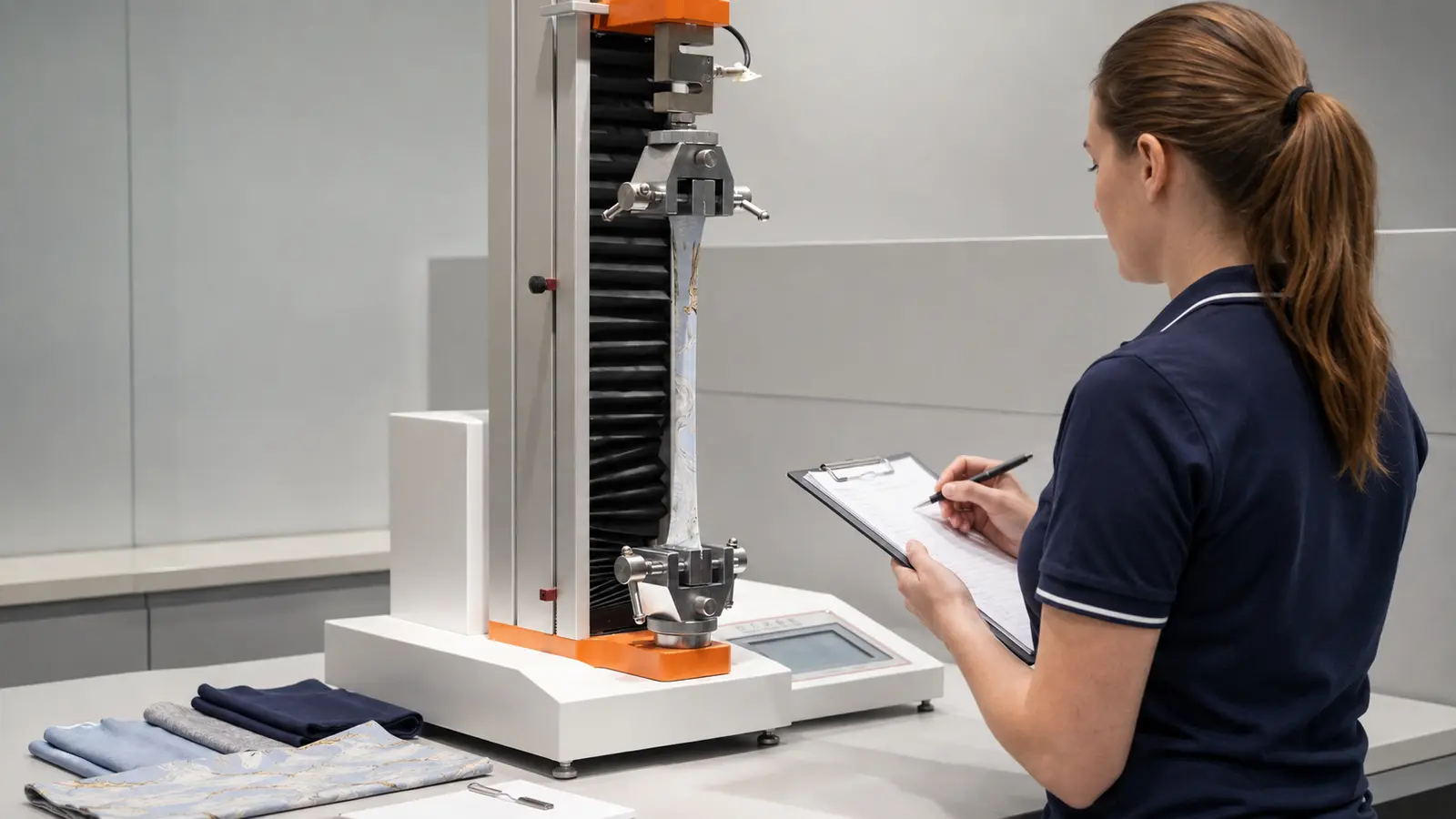
UV protection and other claims
If the product will carry a UPF or other functional claim, test the relevant fabric and color using the required standard. Fiber type alone is not proof of the final rating. Density, stretch, wet condition, color and laundering can all affect the result.
Connect every report to the sample that was tested
A report is useful only when its sample can be identified.
Before relying on a result, confirm whether it covers:
- a standard catalog quality;
- a development sample;
- the approved color and finish;
- a pilot or trial lot;
- the actual bulk production lot.
Early reports are valuable for screening. They should not automatically be treated as evidence for every later color, finish or customized construction.
For a property that is critical to the garment or claim, the most relevant evidence usually comes from the final construction and finish in an appropriate color, or from an identified production lot agreed by the buyer and supplier.
Validate the fabric in a garment
Laboratory results do not predict every production issue. Pattern dimensions, seam type, needle, thread, elastic, bonding temperature and panel direction all affect the finished product.
The garment trial should consider:
- cutting stability and edge curling;
- sewing ease and needle damage;
- seam appearance under extension;
- recovery at the knee, seat and waistband;
- coverage during intended movements;
- chafing at seams and high-contact areas;
- appearance after washing and wear;
- compatibility with printing, heat transfer, bonding and trims.
Use a commercially sensitive color where possible. A black prototype can hide show-through, marking or staining that becomes obvious in a pale production color.
Retain the approved garment or a documented fit and wear review alongside the fabric reference. This gives the fabric supplier and garment factory a shared picture of the intended result.
Put methods and tolerances into the order
Phrases such as “same as sample,” “good recovery” and “no pilling” leave too much room for interpretation. The purchase specification should state what will be measured, how it will be measured and what result will be accepted.
Before production, confirm:
- article number and revision;
- composition, construction and finish;
- color and approved reference;
- finished GSM and usable-width tolerances;
- stretch and recovery requirements;
- dimensional-stability limits;
- relevant durability and colorfastness requirements;
- functional tests and claim wording;
- inspection method and defect allowance;
- roll length, packaging and labeling;
- required certification or traceability documents;
- sample, bulk and shipment approval responsibilities.
Tolerances must be commercially achievable for the selected construction and process. If the brief requires tighter control than a standard article can provide, discuss material or process changes before placing the order.
Approve bulk fabric by dye lot and roll
Bulk approval should not rely on one unidentified cutting.
The inspection and document trail should connect the delivered rolls to the order through:
- purchase order and article number;
- color and dye-lot identity;
- roll numbers;
- measured length, weight or width where specified;
- shade grouping;
- inspection results;
- source of any lot-specific test sample;
- packing and traceability references.
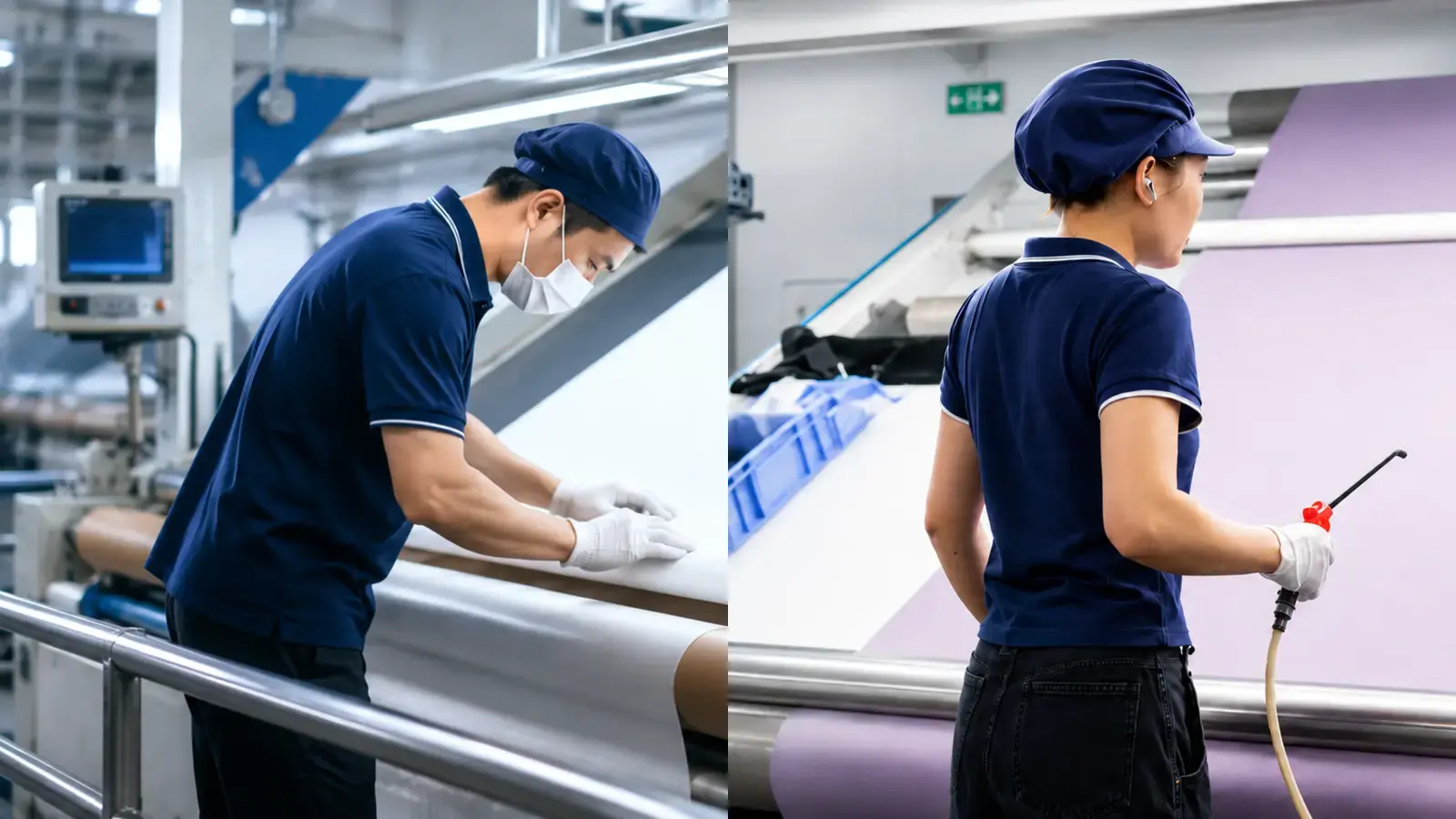
Each finished roll should be inspected using the agreed method. Cofinay’s published manufacturing process includes illuminated inspection under the four-point system before release, together with in-house checks that include shrinkage, pilling resistance and stretch recovery. The acceptance level and any additional third-party testing must still be defined for the individual project.
Shade grouping also matters. When several rolls are used for the same garment order, the cutting plan should respect dye lots and shade groups, particularly for matching sets and large panels.
Review the shipment documents before dispatch
The required package depends on the order, destination and product claims. Check it before shipment, not after the fabric arrives.
Depending on the project, documents may include:
- commercial invoice and packing list;
- roll list and fabric inspection report;
- internal or third-party test reports;
- fiber-content declaration;
- technical or care information;
- applicable certification documents;
- transaction or traceability documents for eligible recycled orders;
- agreed chemical-compliance documentation.
Confirm that each document applies to the correct company, article, color, lot and shipment. A general company certificate or certification logo does not automatically establish product-level coverage for every order.
Common mistakes that create avoidable bulk risk
Approving by hand feel alone
Hand feel is important, but it does not confirm recovery, coverage, dimensional stability or colorfastness. Keep it as one criterion within a documented approval.
Treating composition as a performance guarantee
Composition describes fiber content. Yarn, structure, density, finishing and garment design determine much of the final behavior.
Using GSM as a substitute for opacity or support
Weight influences both, but does not predict either reliably. Check the fabric at the intended extension and evaluate support in the garment.
Testing only black
Dark colors can hide transparency and surface variation. Include commercially sensitive pale or bright colors in the approval plan.
Accepting a report without identifying its sample
A result cannot control production if no one can connect it to the approved construction, color, finish or lot.
Making a finish change without rechecking performance
A softer hand, stronger brushing or additional finish may alter other properties. Treat a meaningful process change as a new revision.
Defining quality at final inspection
Inspection can show whether the goods meet an agreed requirement. It cannot repair a requirement that was never defined.
A practical swatch-to-bulk approval sequence
- Define the garment, fit, activity and market.
- Select and label the fabric reference.
- Confirm construction, composition, finished GSM, usable width and finish.
- Agree on stretch, recovery, coverage and color standards.
- Build a test plan around garment risks and claims.
- Make and review the garment prototype.
- Write methods, tolerances and documents into the order.
- Inspect and test the identified bulk lot before release.
This sequence creates a record of what was approved and why. If a problem appears later, the team can trace whether it came from material selection, color development, finishing, garment construction or bulk production.
How Cofinay supports specification-based fabric development
Cofinay by Xiongqi Textile Technology Co., Ltd. works with buyers from initial fabric comparison through knitting, color development, dyeing, finishing and quality review. The collection includes nylon, polyester, spandex and recycled-fiber blends for yoga, Pilates, cycling, running, training, outdoor and active-lifestyle garments.
When an existing article does not fully match the brief, the discussion can cover yarn and composition, knitting structure, finished weight, usable width, hand feel, color and finishing route. The feasible solution depends on the garment, performance priorities, cost plan, quantity and testing requirements.
To make an initial review more useful, send:
- garment type and intended activity;
- target composition or reference fabric;
- desired GSM and width, if known;
- preferred touch, support and appearance;
- color reference;
- essential tests or market requirements;
- expected order quantity and development schedule;
- a physical sample, garment or technical drawing where available.
The technical team can then compare suitable existing fabrics with a project-specific development route. Final specifications, test scope, MOQ, timing and documentation should be confirmed for the actual article and order.
Frequently asked questions
Is an approved swatch enough to place a bulk order?
No. It is a useful visual and tactile reference, but it should be supported by a written specification covering the article, color, finish, construction, finished GSM, usable width, critical performance requirements and acceptance process.
Should every activewear fabric use the same tests?
No. The plan should follow the garment, market and claim. Leggings, running tops, sports bras and outdoor layers do not have identical failure risks.
When should testing take place?
Use early tests to screen options. Reconfirm critical properties on the approved construction and finish, and use production-lot testing when the risk or buyer standard requires it.
Can one report cover every color?
Not automatically. Color can affect coverage, rubbing, staining, UV performance and appearance. Decide which colors require separate confirmation based on risk.
Does more spandex always mean better recovery?
No. Recovery also depends on elastane quality, yarn arrangement, knitting structure, density, heat setting and garment design.
Can Cofinay adjust an existing fabric to a new brief?
Depending on the article and project, Cofinay can review changes to composition, structure, GSM, width, color, surface treatment or functional finishing. Feasibility, MOQ, timing and retesting are confirmed according to the actual customization details.
Approve the specification, not only the swatch
The purpose of fabric approval is not to create paperwork. It is to make the expected garment outcome clear before bulk production carries the cost of an unresolved decision.
A labeled swatch, concise specification, relevant test plan and real garment trial give the buyer, fabric supplier and garment factory the same reference. When the production lot is ready, the question is no longer whether it “looks close.” The question is whether it meets the requirements agreed for that garment.
Explore the Cofinay performance fabric collection, review our integrated manufacturing and quality-control process, or contact the Cofinay technical team to request swatches and discuss a project-specific specification.
By Cofinay Technical Team Cofinay by Xiongqi Textile Technology Co., Ltd.
About Cofinay
With over 16 years of expertise, Cofinay is a premier manufacturer of high-end activewear fabrics, certified by global ecological standards. We specialize in engineering premium performance knits for yoga, tennis, equestrian, and golf. Backed by our self-operated vertical weaving and dyeing infrastructure, we provide complete end-to-end services to empower global activewear brands to scale.