
Table of Contents
- 1. Quick comparison: what changes from one activity to another?
- 2. Start with the garment specification, not the fibre name
- 3. Yoga fabrics: coverage, soft touch and recovery through deep movement
- 3.1. What buyers should prioritise
- 3.2. Two useful Cofinay directions for yoga development
- 4. Pilates fabrics: controlled stretch and a clean, stable silhouette
- 4.1. What buyers should prioritise
- 4.2. Two useful Cofinay directions for Pilates development
- 5. Cycling fabrics: repeated motion, moisture and high-contact wear
- 5.1. What buyers should prioritise
- 5.2. Two useful Cofinay directions for cycling development
- 6. Outdoor fabrics: define the exposure before choosing the finish
- 6.1. What buyers should prioritise
- 6.2. Two useful Cofinay directions for outdoor development
- 7. Eight featured fabrics at a glance
- 8. The physical tests that should support fabric approval
- 9. A five-step sourcing process for brands and garment teams
- 9.1. 1. Write an end-use brief
- 9.2. 2. Compare constructions within a practical weight range
- 9.3. 3. Confirm colour and finishing together
- 9.4. 4. Test the fabric and a sewn prototype
- 9.5. 5. Lock the commercial and quality documents
- 10. Custom development, MOQ and sampling at Cofinay
- 11. Questions buyers often ask
- 11.1. Is nylon always better than polyester for yoga or Pilates?
- 11.2. Does more spandex always mean more compression?
- 11.3. Can one fabric be used for both yoga and cycling?
- 11.4. Is a DWR-treated fabric waterproof?
- 11.5. Should every outdoor fabric have a UPF claim?
- 12. Choose by movement first, then confirm by testing
Choosing an activewear fabric by fibre content alone is rarely enough. Two fabrics can both be described as nylon–spandex, yet behave very differently once they are cut into leggings, stretched over the body, washed repeatedly or exposed to friction.
The more useful starting point is the garment’s actual job. A yoga legging needs reliable coverage through deep flexion. A Pilates set may require a clean, controlled silhouette and dependable recovery. Cycling apparel has to manage repeated movement, sweat and contact points. Outdoor garments may need quicker drying, greater surface durability, warmth or a project-specific water-repellent finish.
This guide compares those four scenarios from a sourcing perspective. It also shows how composition, fabric weight, construction, finishing and physical testing should be assessed together before a fabric is approved for production.
For a closer look at the fibres themselves, read our guide to polyester, nylon, spandex and recycled polyester activewear blends.
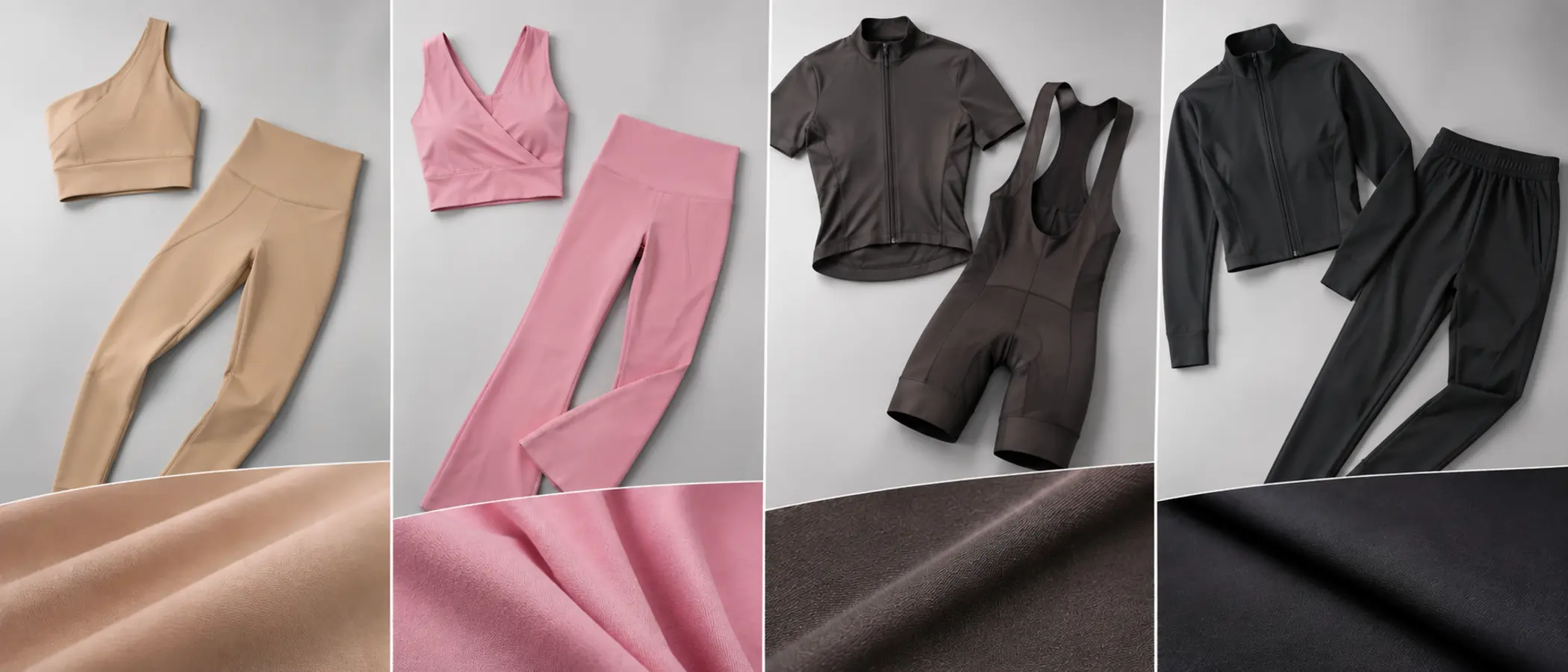
Quick comparison: what changes from one activity to another?
The table below is a practical briefing tool, not a fixed specification. Final targets should reflect the garment pattern, colour, fit, end market and care requirements.
Activity | Main movement and wear conditions | Fabric priorities | Common sourcing risks |
|---|---|---|---|
Yoga | Deep flexion, sustained stretches, close-to-body fit | Multidirectional stretch, recovery, opacity, soft hand feel, low surface irritation | Grinning at the seat or knees, shine when stretched, weak recovery, visible colour change under tension |
Pilates | Controlled movement, repeated flexion, equipment contact | Stable stretch, shape retention, smooth or softly brushed surface, balanced support | Waistband deformation, excessive compression, surface pilling, fabric that feels heavy during studio use |
Cycling | Repetitive leg motion, sweat, saddle contact, longer wear periods | Recovery, moisture handling, abrasion resistance, secure fit, suitable weight by garment zone | Chafing, slow drying, unstable stretch, pilling or wear at high-contact areas |
Outdoor | Variable temperature, sunlight, packs or outer-layer friction, possible light rain | Drying rate, durability, thermal option, UV or water-repellent performance where specified | Treating a DWR fabric as waterproof, insufficient snag resistance, wrong thermal level, unverified UV claims |
The same fabric may work across more than one category, but it should not be approved on an application label alone. The garment and the required test targets still decide whether it is suitable.
Start with the garment specification, not the fibre name
Before comparing swatches, define the finished product in operational terms:
- Garment type: leggings, shorts, bra, fitted top, cycling jersey, base layer or light outer layer.
- Fit and support: relaxed, second-skin, medium support or compressive.
- Movement: the directions and degree of stretch created by the pattern.
- Exposure: sweat, abrasion, sunlight, laundering, equipment contact or light precipitation.
- Surface expectation: matte, smooth, peach-soft, compact, fleece-backed or otherwise.
- Commercial limits: target cost, minimum order quantity, colour plan and development schedule.
Composition is part of this brief, but it cannot describe the complete fabric. Yarn type, knit structure, gauge, weight, finishing and heat-setting all influence the final result. A higher spandex percentage can support stretch, for example, but does not automatically guarantee stronger recovery or greater compression.
Yoga fabrics: coverage, soft touch and recovery through deep movement
Yoga garments are judged most clearly when the body moves into deep flexion. A fabric that looks opaque while flat may become translucent or visibly lighter when stretched. That is why approval should include the actual garment colour, intended size range and realistic stretch conditions.
What buyers should prioritise
- Four-way movement that follows the pattern without restricting the wearer.
- Recovery that limits bagging at the knees, seat and waistband.
- Coverage under tension, especially in pale and high-saturation colours.
- A surface that remains comfortable during sustained skin contact.
- Dimensional stability after the expected laundering cycle.
A brushed finish can create the soft, low-friction feel often associated with studio collections. It also introduces another variable: brushing intensity affects touch, appearance and surface durability. The finish therefore needs to be balanced against pilling and abrasion targets rather than selected by hand feel alone.
Two useful Cofinay directions for yoga development
N91016 Warp-Knit Ultra-Soft is a light, double-brushed direction at 125 GSM, made from 79% nylon and 21% spandex. Its product specification lists moisture-wicking and quick-dry functions. The lower weight and soft finish make it relevant to lightweight yoga tops, layering pieces and second-skin concepts where the pattern and colour can provide the required coverage.
P61001 Semi-Dull Yoga Fabric is a substantially heavier option at 300 GSM, made from 77% polyester and 23% spandex. It is a more structured starting point for leggings, supportive bottoms and garments where a dense hand and controlled silhouette are preferred.
These products illustrate why “yoga fabric” is not one specification. N91016 and P61001 serve different weight, support and garment directions, even though both are listed for yoga use.
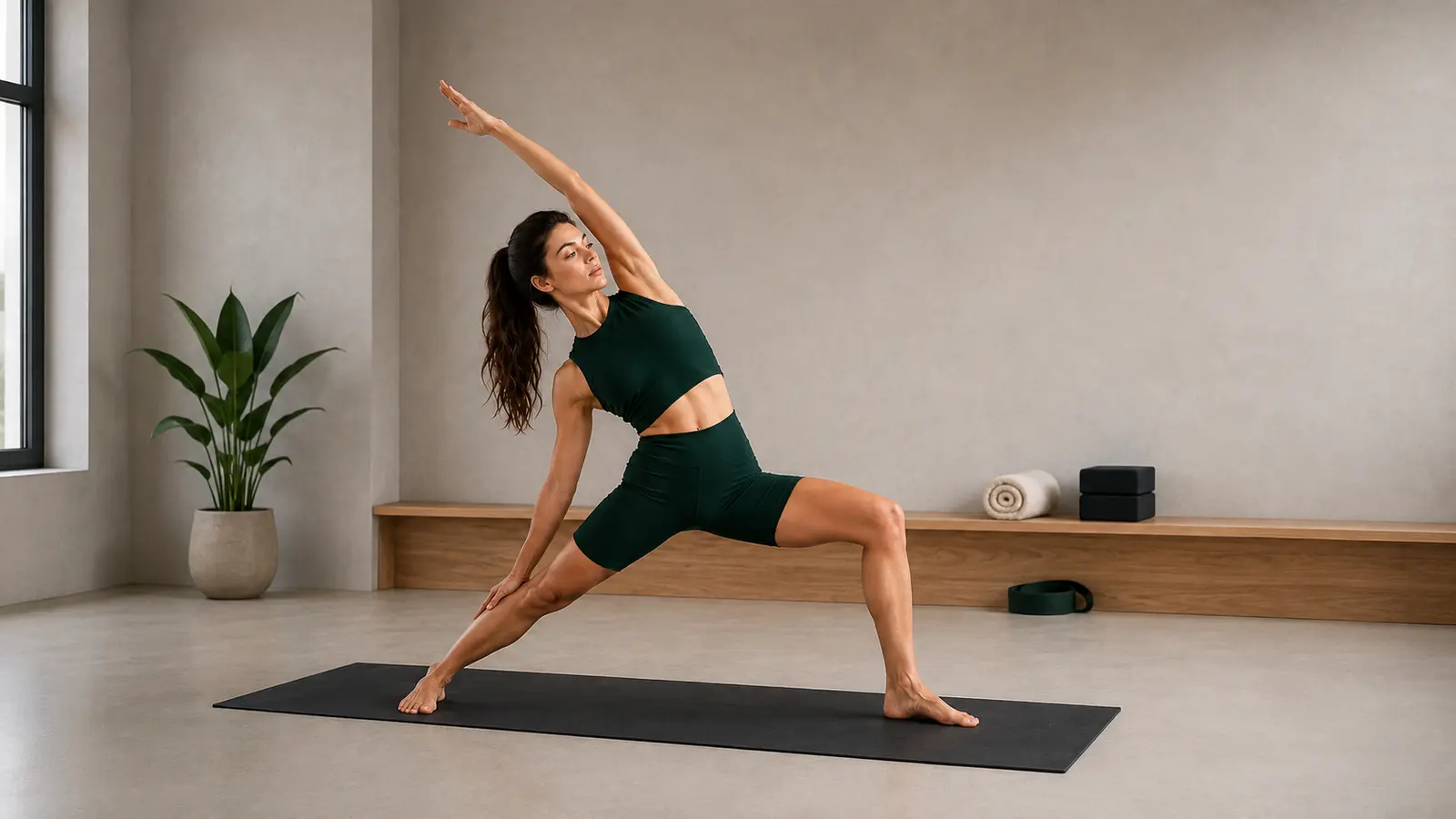
Pilates fabrics: controlled stretch and a clean, stable silhouette
Pilates involves slower, controlled movement, but that does not make fabric selection less technical. Repeated flexion, close-fitting patterns and contact with reformer equipment can expose weak recovery or an overly delicate surface.
For fitted Pilates sets, the fabric should move smoothly without becoming loose after wear. The waistband should remain stable, seams should sit flat, and the surface should retain its intended appearance after equipment contact and washing.
What buyers should prioritise
- Balanced stretch and recovery rather than maximum stretch alone.
- A stable structure for clean lines in fitted garments.
- A comfortable hand that does not feel overly warm during studio use.
- Pilling and abrasion performance appropriate to repeated equipment contact.
- Consistent shade and surface appearance across coordinated sets.
Two useful Cofinay directions for Pilates development
N91007 Cloud-Feel Nylon Double Brushed is made from 75% nylon and 25% spandex at 205 GSM. Its double-brushed construction provides a soft, matte direction for close-to-body sets, while the mid-range weight offers more substance than very light studio fabrics.
N91013 DuPont Nylon 66 is made from 81% micro nylon 66 and 19% Lycra at 220 GSM. Its product specification lists moisture-wicking, quick-dry and warm-keeping functions. It is a firmer development direction for fitted Pilates garments where durability, support and recovery need to be assessed together.
The product page lists both fabrics as having excellent abrasion performance, but bulk approval should still be based on agreed test conditions and acceptance levels. A general product rating is not a substitute for the buyer’s own end-use requirement.
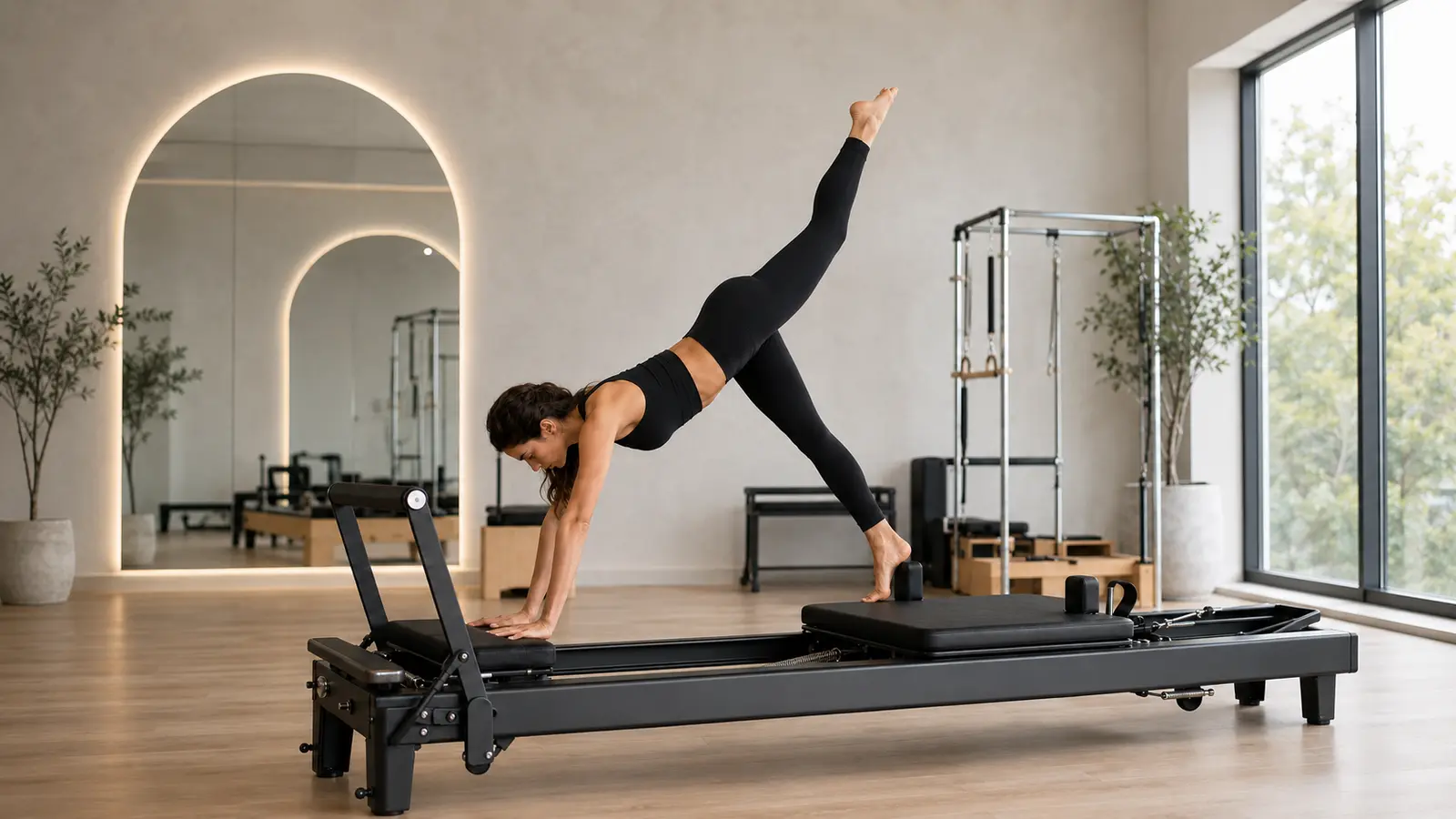
Cycling fabrics: repeated motion, moisture and high-contact wear
Cycling creates a different problem set. The fabric moves continuously, remains close to the body and may stay damp for extended periods. Shorts and bibs also experience concentrated friction at the saddle, while jerseys need a lighter balance of stretch, drying and air exchange.
One fabric does not have to serve the complete garment. A cycling range may use a lighter fabric for the jersey, a denser recovery-focused fabric for the short, and a separate mesh or engineered panel in high-heat zones.
What buyers should prioritise
- Stable recovery during repetitive leg movement.
- Moisture handling and drying appropriate to the garment zone.
- Abrasion and pilling resistance at contact points.
- A surface and seam combination that reduces chafing risk.
- Weight and coverage matched to jerseys, shorts or panels rather than to “cycling” in general.
Two useful Cofinay directions for cycling development
N91034 Nylon Single Brushed is a lightweight 145 GSM knit made from 78% nylon and 22% spandex. Its specification lists moisture-wicking and quick-dry functions. The single-brushed finish and lighter weight make it a useful direction for flexible tops, fitted layers or selected panels, subject to the garment’s coverage and abrasion requirements.
P61008 Recycled Eco-Series is made from 75% recycled polyester and 25% spandex at 180 GSM. Its product page lists antibacterial, moisture-wicking and quick-dry functions. It offers a recycled-polyester direction for cycling, running and fitness programs where the buyer also requires supporting traceability documentation for the recycled input.
Recycled composition and performance should be approved as separate criteria. The fibre claim needs the relevant order documentation, while drying, antibacterial or other functional requirements need agreed test methods and targets.
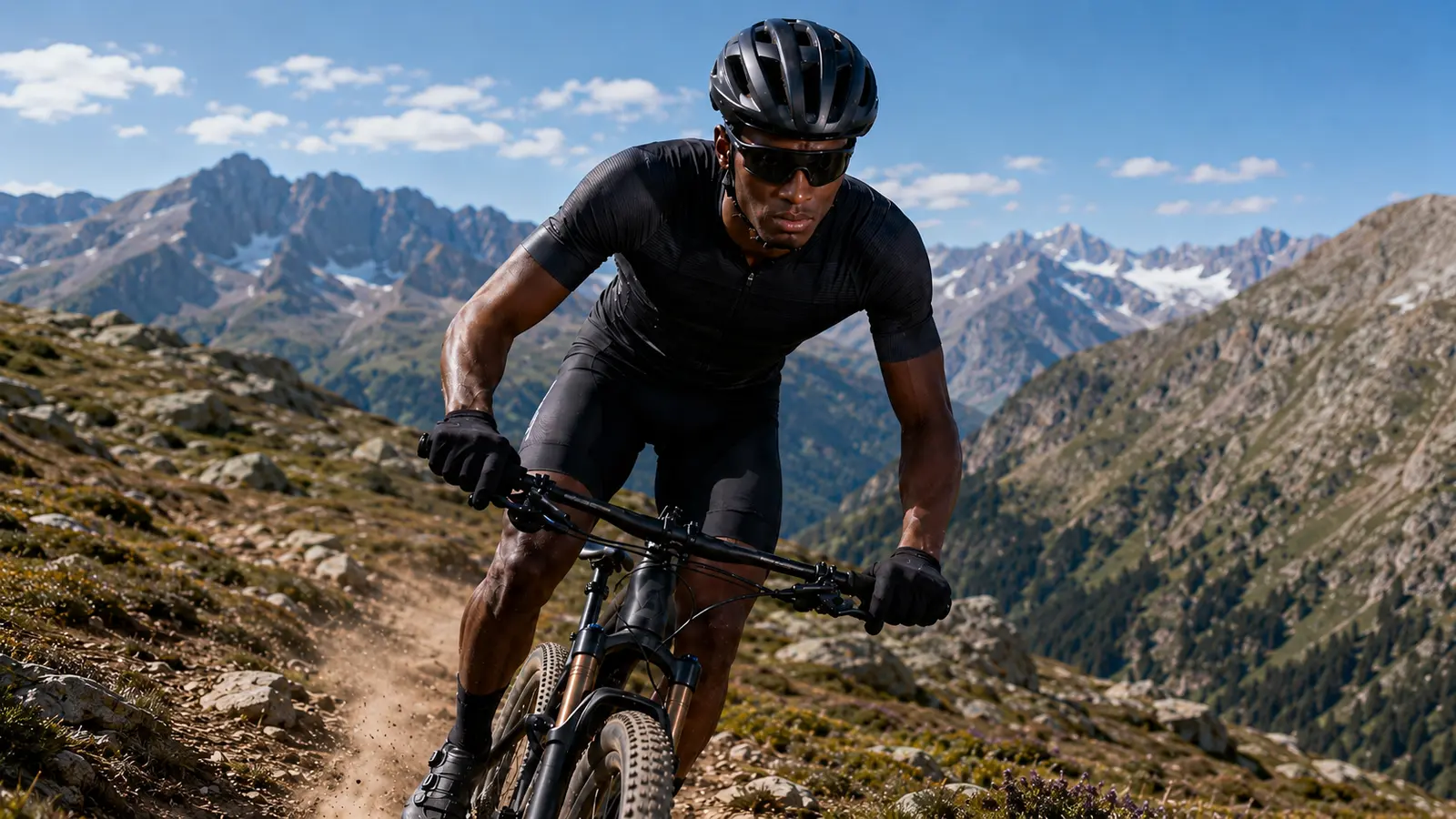
Outdoor fabrics: define the exposure before choosing the finish
“Outdoor” covers too many conditions to function as a complete fabric specification. A stretch hiking pant, thermal base layer and rain shell do not need the same construction. This section therefore focuses on stretch activewear, light outdoor layers and garments that may face sun, changing temperatures or brief light precipitation—not waterproof hard shells.
What buyers should prioritise
- Drying rate and moisture handling for the expected activity level.
- Abrasion and snag resistance appropriate to packs, vegetation and repeated use.
- Thermal level matched to climate and garment layering.
- UV performance only where the project includes a defined UPF target and test.
- Water repellency or water resistance described by the actual finish and test result.
Two useful Cofinay directions for outdoor development
N91021 Woven-Hand Knit is made from 86% nylon and 14% spandex at 180 GSM. It combines knit stretch with a more woven-like hand and is described as having a DWR-treated, water-shedding surface. It can be considered for light outdoor pants or stretch layers where brief exposure to light moisture is expected.
DWR does not make a fabric a waterproof shell. Hydrostatic resistance, seam construction and garment design would need to be specified and tested separately before making a waterproof claim.
P61044 Soft Stretch Fleece is made from 84% polyester and 16% spandex at 330 GSM. It uses single-sided sanding and is listed for outdoor, equestrian, jacket and thermal-wear applications. Its heavier weight makes it a more suitable starting point for cool-weather layers and structured thermal garments than for high-output warm-weather activity.
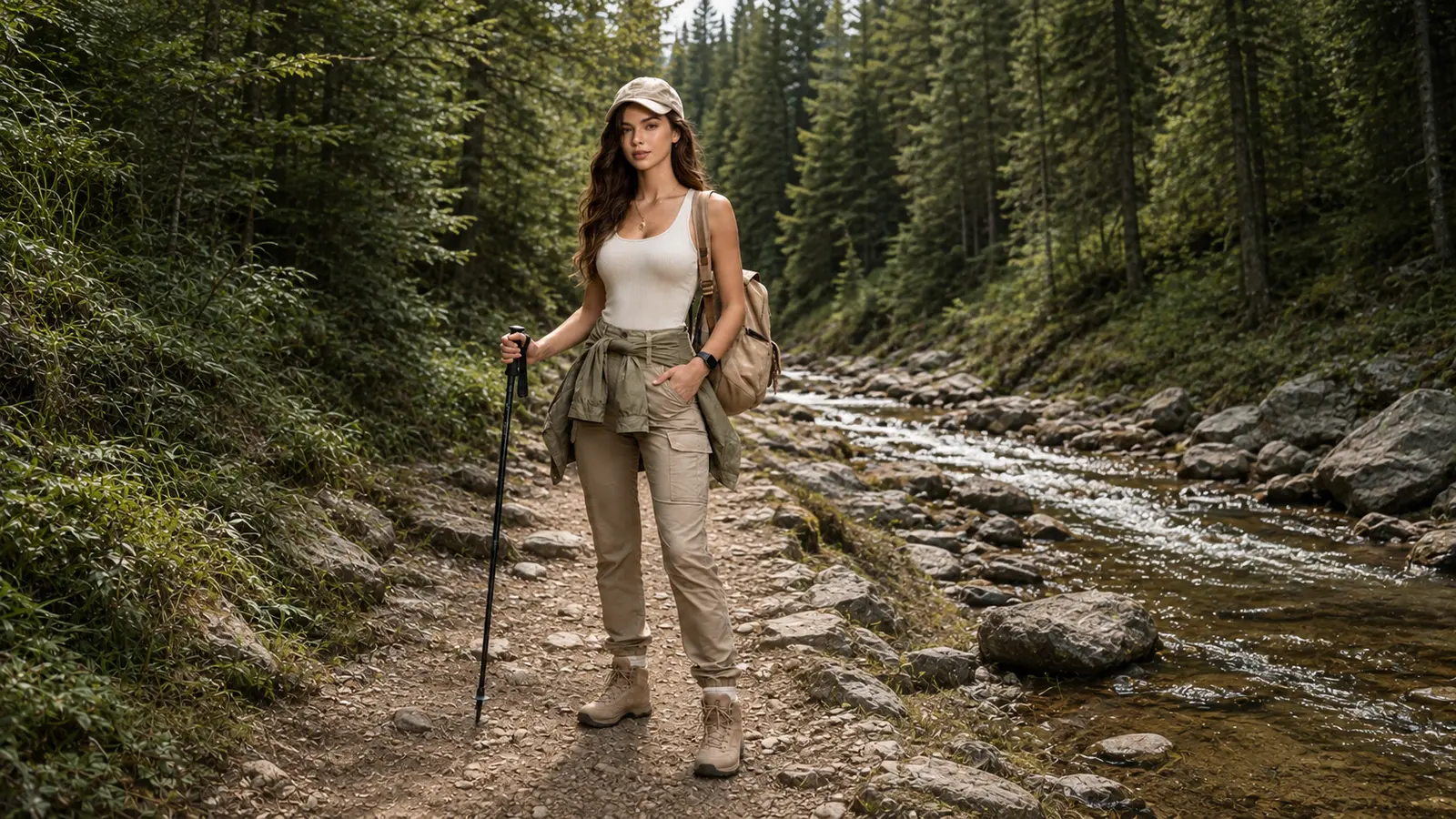
Eight featured fabrics at a glance
Scene | Product | Composition | Weight | Width | Product direction | Listed MOQ |
|---|---|---|---|---|---|---|
Yoga | 79% nylon / 21% spandex | 125 GSM | 148 cm | Lightweight, double-brushed, moisture-wicking and quick-dry | 150 kg | |
Yoga | 77% polyester / 23% spandex | 300 GSM | 160 cm | Dense, structured, moisture-wicking and quick-dry | 150 kg | |
Pilates | 75% nylon / 25% spandex | 205 GSM | 135 cm | Mid-weight, double-brushed, soft and matte | 150 kg | |
Pilates | 81% micro nylon 66 / 19% Lycra | 220 GSM | 135 cm | Durable, supportive, moisture-wicking, quick-dry and warm-keeping | 150 kg | |
Cycling | 78% nylon / 22% spandex | 145 GSM | 160 cm | Lightweight, single-brushed, moisture-wicking and quick-dry | 150 kg | |
Cycling | 75% recycled polyester / 25% spandex | 180 GSM | 160 cm | Recycled-polyester direction with antibacterial, moisture-wicking and quick-dry functions | 150 kg | |
Outdoor | 86% nylon / 14% spandex | 180 GSM | 148 cm | Woven-like knit with DWR-treated, water-shedding direction | 150 kg | |
Outdoor | 84% polyester / 16% spandex | 330 GSM | 152 cm | Heavy, single-sided sanded stretch fleece for thermal layers | 150 kg |
Product-page functions are development references. Colour, finishing recipe, test method and bulk production conditions can affect the final result, so approval should be based on the confirmed order specification and test report.
The physical tests that should support fabric approval
A swatch review establishes hand feel and appearance, but it does not reproduce laundering, repeated movement or long-term wear. The test plan should follow the garment’s actual risk profile.
Cofinay’s manufacturing and quality-control process includes Four-Point inspection and in-house physical testing. Relevant checks may include:
Test or inspection | Why it matters | Typical use in these four scenes |
|---|---|---|
ASTM D5430 Four-Point inspection | Grades visible fabric defects before release | All bulk orders |
AATCC 135 dimensional stability | Checks shrinkage and shape change after laundering | Leggings, fitted sets, jerseys and thermal layers |
AATCC 61, AATCC 15 and AATCC 8 colourfastness | Evaluates resistance to washing, perspiration and rubbing | Dark sets, high-sweat garments and coordinated colourways |
ISO 12945-2 pilling resistance | Assesses surface change caused by repeated rubbing | Brushed yoga/Pilates fabrics and cycling contact areas |
ASTM D3786 bursting strength | Measures resistance to multidirectional pressure in knit fabrics | Close-fitting leggings, shorts and supportive panels |
Stretch and recovery evaluation | Checks extension and residual growth after repeated strain | Yoga, Pilates and cycling garments |
UV transmittance analysis | Supports a defined UPF claim | Outdoor products when UV protection is specified |
Abrasion or snag evaluation | Assesses wear against equipment or rough contact | Cycling shorts, Pilates equipment wear and outdoor layers |
The standard alone is not the acceptance criterion. Buyers and suppliers should agree on the method, conditioning, colour, number of cycles and pass level before bulk production. For squat coverage, fit and chafing risk, a sewn garment trial remains essential because these outcomes also depend on pattern, size, seams and colour.
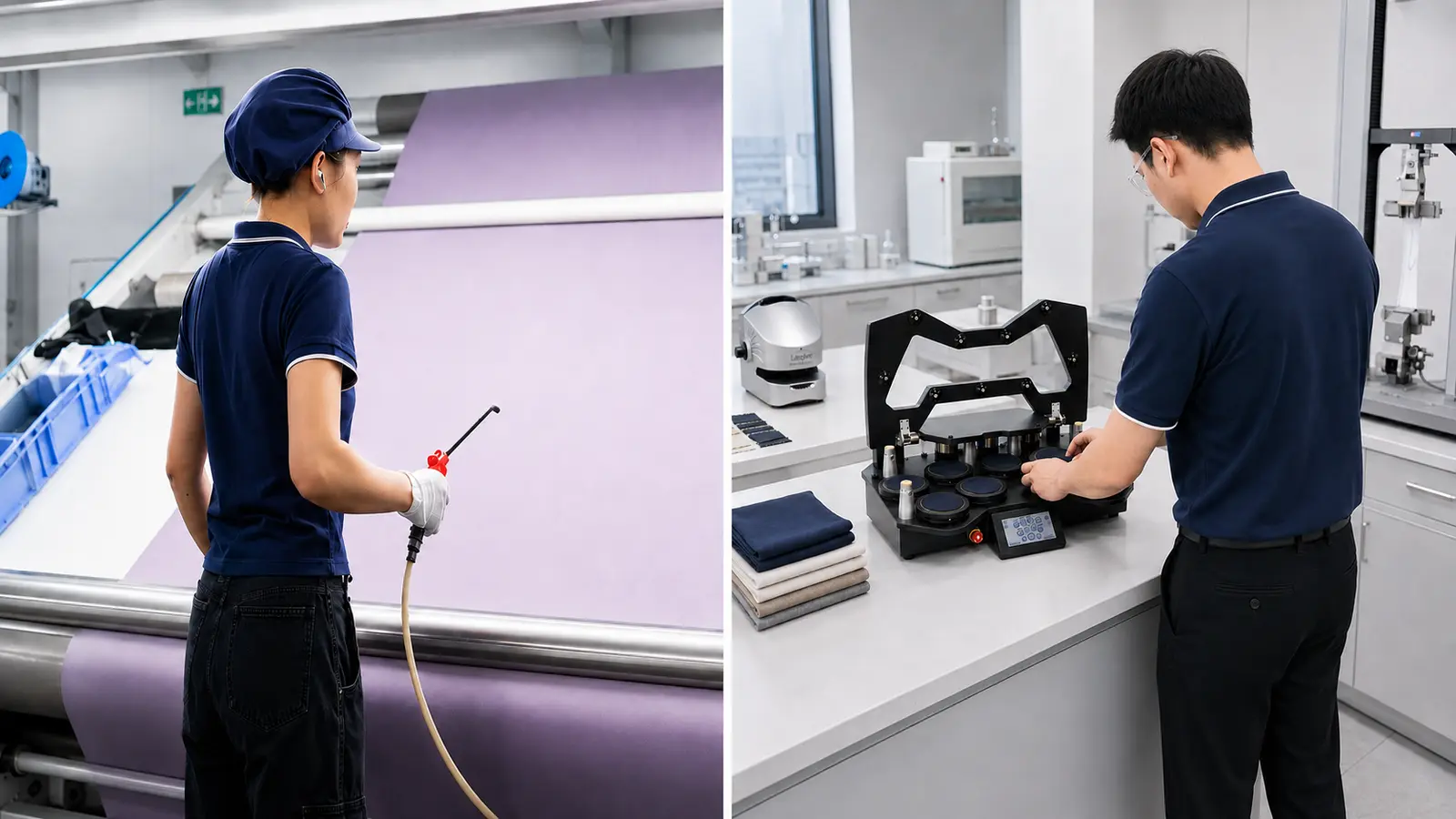
Visual inspection and physical testing answer different quality questions.
A five-step sourcing process for brands and garment teams
1. Write an end-use brief
State the garment, activity, climate, target user, fit, support level, hand feel, colour range, care method and required claims. “Soft yoga fabric” is too broad; “matte 200–220 GSM fabric for fitted Pilates leggings with controlled compression and pilling resistance” gives the mill a usable target.
2. Compare constructions within a practical weight range
Review more than one swatch. Compare surface, stretch direction, recovery, opacity and drape. Weight should be treated as a design variable: a low-GSM fabric may suit a top but not a pale legging, while a high-GSM fabric may provide coverage yet feel excessive for high-output activity.
3. Confirm colour and finishing together
Brushing, heat-setting, moisture-management treatments and DWR finishes can change touch and appearance. Approve the finish on the intended colour rather than assuming that one lab sample represents every shade.
4. Test the fabric and a sewn prototype
Use physical tests for measurable performance and a garment trial for fit, coverage, seam behaviour and comfort. Record any adjustments to weight, width, stretch, finish or colour before the bulk specification is frozen.
5. Lock the commercial and quality documents
The purchase specification should identify the product code, composition, weight and tolerance, usable width, colour standard, finish, test methods, acceptance levels, packaging and traceability documents where relevant. Retain the approved sample as the production reference.
Custom development, MOQ and sampling at Cofinay
Cofinay can adjust fibre ratios, knit construction, weight, width, colour and selected functional finishes around the garment brief. The practical development route depends on the requested change. A colour development on an established greige quality is different from a new construction, weight or hand-feel project.
For the eight fabrics in this guide, the listed MOQ is 150 kg per item. Custom colours, structures, finishes or documentation requirements may change the minimum, sampling cost and timing, so final terms are confirmed against the approved development brief.
Standard stock qualities can be reviewed through physical swatches. Where custom development is required, a sampling charge may apply according to complexity. Standard samples are generally prepared for dispatch within 3–5 business days; custom prototype yardage can require a longer schedule. The development timeline is confirmed after the colour target, construction, finish and testing requirements have been reviewed.
This approach also allows different priorities to be built into the same base direction. A buyer seeking stronger colourfastness, for example, may require a different dyeing and testing plan from a program focused primarily on cost control. The final recipe, tolerances and test package should follow the actual order rather than a generic product description.
Questions buyers often ask
Is nylon always better than polyester for yoga or Pilates?
No. Nylon is often selected for a smooth, soft hand, while polyester can offer strong colour performance, practical moisture handling and a competitive commercial direction. Construction, finishing and garment design can matter as much as the fibre family.
Does more spandex always mean more compression?
No. Spandex percentage influences stretch potential, but compression and recovery also depend on yarn specification, knit density, heat-setting and garment pattern. Compare force and recovery under an agreed test rather than relying on percentage alone.
Can one fabric be used for both yoga and cycling?
Sometimes, especially for tops or versatile studio-to-training ranges. However, a cycling short and a yoga legging expose the fabric to different friction, moisture and fit conditions. Each garment still needs its own approval process.
Is a DWR-treated fabric waterproof?
Not by default. DWR helps water bead and shed from the surface, but waterproof performance requires an appropriate construction, defined test result and garment-level seam solution.
Should every outdoor fabric have a UPF claim?
No. UV protection should be specified when it is relevant to the product and supported by testing on the production-representative fabric. Fibre content or dark colour alone should not be used as the formal claim.
Choose by movement first, then confirm by testing
Yoga, Pilates, cycling and outdoor garments can share fibres, but they do not share one universal fabric specification. The most dependable sourcing decision begins with movement, contact, climate and garment construction. Composition and GSM narrow the options; swatch review, physical testing and sewn prototypes confirm the choice.
If you are developing an activewear range, send Cofinay your garment reference, target composition or hand feel, weight range, colour direction, application scenario and required test standards. The technical team can compare available bases and determine where a custom construction or finish is justified.
Contact Cofinay to request fabric recommendations, swatches or a project-specific development review.
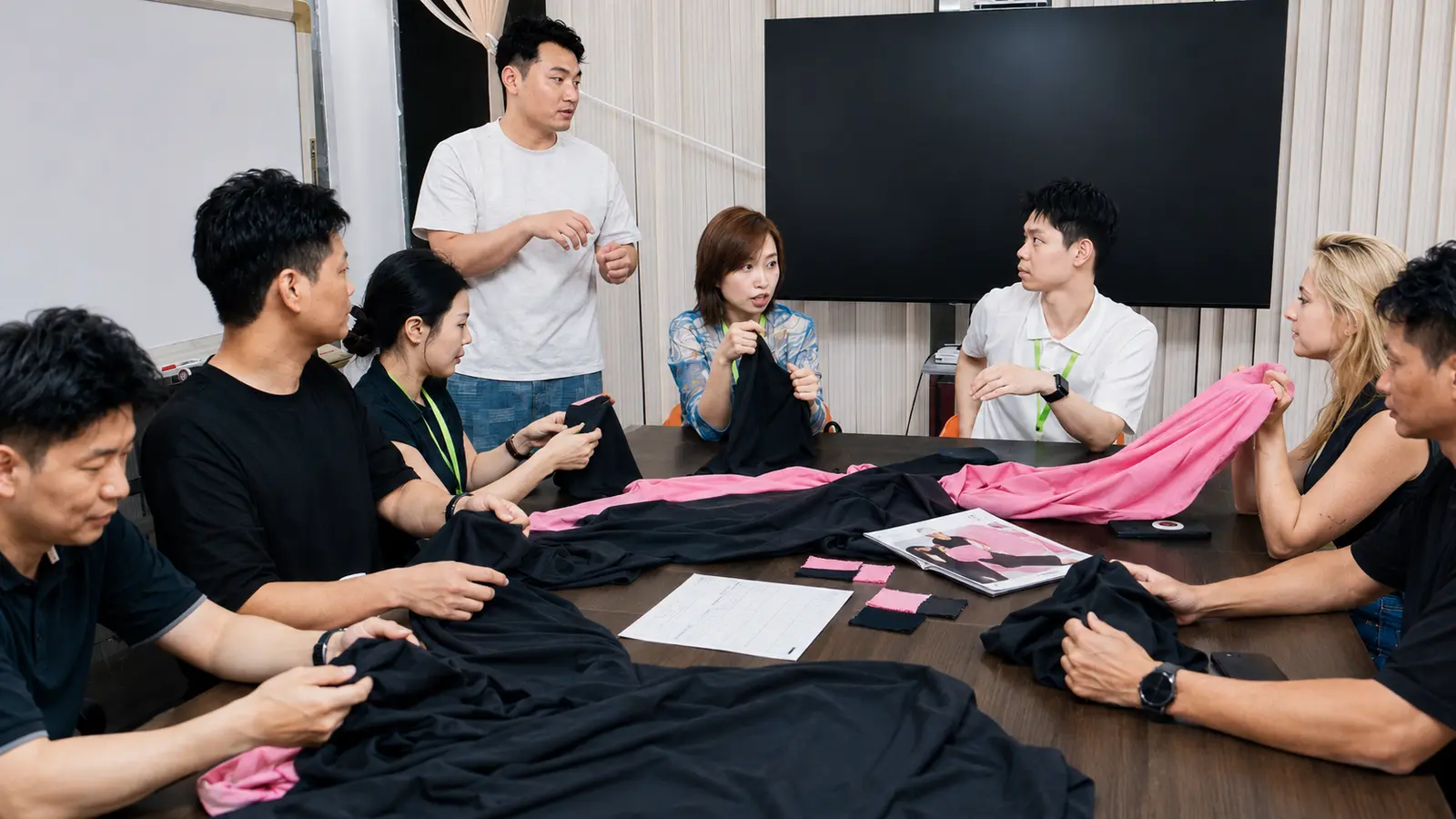
About Cofinay
With over 16 years of expertise, Cofinay is a premier manufacturer of high-end activewear fabrics, certified by global ecological standards. We specialize in engineering premium performance knits for yoga, tennis, equestrian, and golf. Backed by our self-operated vertical weaving and dyeing infrastructure, we provide complete end-to-end services to empower global activewear brands to scale.