
Table of Contents
- 1. Why a fabric can look opaque and still fail in leggings
- 2. What GSM tells you—and what it leaves out
- 3. The variables that change coverage
- 3.1. Stretch and garment fit
- 3.2. Yarn and knit construction
- 3.3. Colour and contrasting layers
- 3.4. Finish and care
- 4. A practical coverage review before bulk approval
- 4.1. Define the conditions before comparing samples
- 4.2. Screen the fabric, then assess the prototype
- 4.3. Include the sensitive colours and care conditions
- 5. Choosing a laboratory assessment
- 6. What to put in a legging fabric enquiry
- 7. Sources
Why a fabric can look opaque and still fail in leggings
A swatch looks solid on the table. The finished leggings look acceptable when the wearer stands upright. During a deep bend, however, the seat becomes visibly lighter or underwear begins to show.
This is why legging fabric opacity needs to be assessed under the conditions created by the garment. Weight is useful information, but it does not describe what happens when a particular colour and construction are stretched over the body.
For buyers, coverage means more than blocking light in a relaxed sample. It includes how well the garment conceals contrasting layers during movement, whether the surface changes noticeably under tension, and whether that behaviour remains acceptable after care.
What GSM tells you—and what it leaves out
GSM is fabric mass per square metre. It helps compare weight, estimate material consumption and narrow a sampling list. It does not directly measure opacity, thickness or support.
Two fabrics with similar GSM can distribute their material differently. Yarn characteristics, stitch arrangement, density and finishing influence the surface and the spaces through which light can pass. Different constructions can therefore produce different coverage even at similar weights.
There is no single GSM that makes every legging fabric suitable for every colour, size and fit. A heavier candidate may be worth sampling for a structured bottom, but it still needs a garment review. Choosing more weight can also change warmth, drape and comfort.
Use GSM to describe the candidate. Use an agreed coverage assessment to decide whether it meets the brief.
The variables that change coverage
Stretch and garment fit
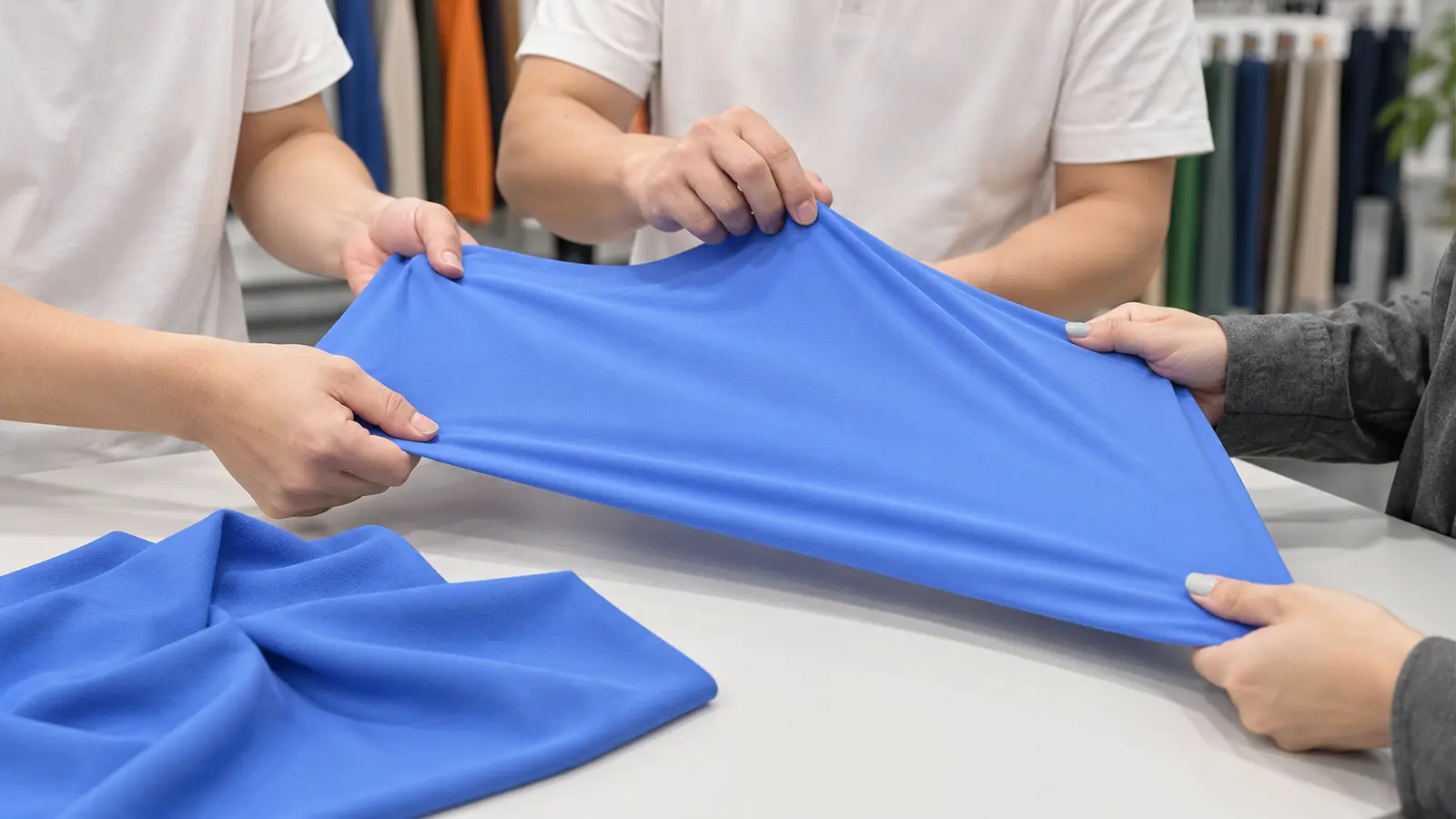
As a knit extends, its loops rearrange and the fabric covers a larger area. Depending on the construction, the spaces between yarns can become more visible. Extension at the seat, hip or thigh may differ substantially from what a buyer creates by pulling a swatch between two hands.
A fabric’s maximum stretch is not the extension it should necessarily experience in wear. Pattern dimensions, size grading and body shape determine the local strain. A very close fit can expose a coverage problem that was absent in a looser prototype.
Evaluate movement in the relevant directions. A one-direction pull cannot represent every area of a fitted garment.
Yarn and knit construction
Yarn size, appearance and the arrangement of stitches affect how much of the background remains visible. A surface that feels substantial may still open under tension. Conversely, a relatively light construction may provide useful coverage within a less demanding fit.
Spandex percentage is not an opacity rating. Its contribution needs to be considered alongside construction, recovery and the extension imposed by the pattern.
Colour and contrasting layers
Do not approve an entire colour range from a black prototype. A pale shade, a bright colour and a dark colour can behave differently in the same fabric base.
The contrast beneath the fabric also matters. Skin tone, underwear colour and printed details can change what the observer notices. Review commercially sensitive colours against defined backgrounds, rather than choosing whichever background makes the sample look best.
Finish and care
A brushed or matte finish can change surface appearance, but a soft hand does not establish coverage. Review the finished fabric that will be supplied, not a different development finish.
Care can alter dimensions and surface condition. Recheck coverage after the agreed laundering procedure when the claim or end use requires it. Recovery deserves attention too: a garment that stretches easily but does not return well may change fit during wear.
A practical coverage review before bulk approval
Define the conditions before comparing samples
Write down the garment type, fit, colour range and intended movement. Identify the areas most likely to experience tension, and agree what will count as an unacceptable result.
Keep the lighting, backing, viewing position and sample presentation consistent. An informal visual screen can help reject unsuitable options, but it is not a substitute for a documented laboratory method where a measurable result is required.
Screen the fabric, then assess the prototype
Start with the relaxed fabric and repeat the comparison under controlled extension appropriate to the project. Record the direction and condition used. Do not assign an arbitrary stretch percentage merely because it is easy to reproduce.
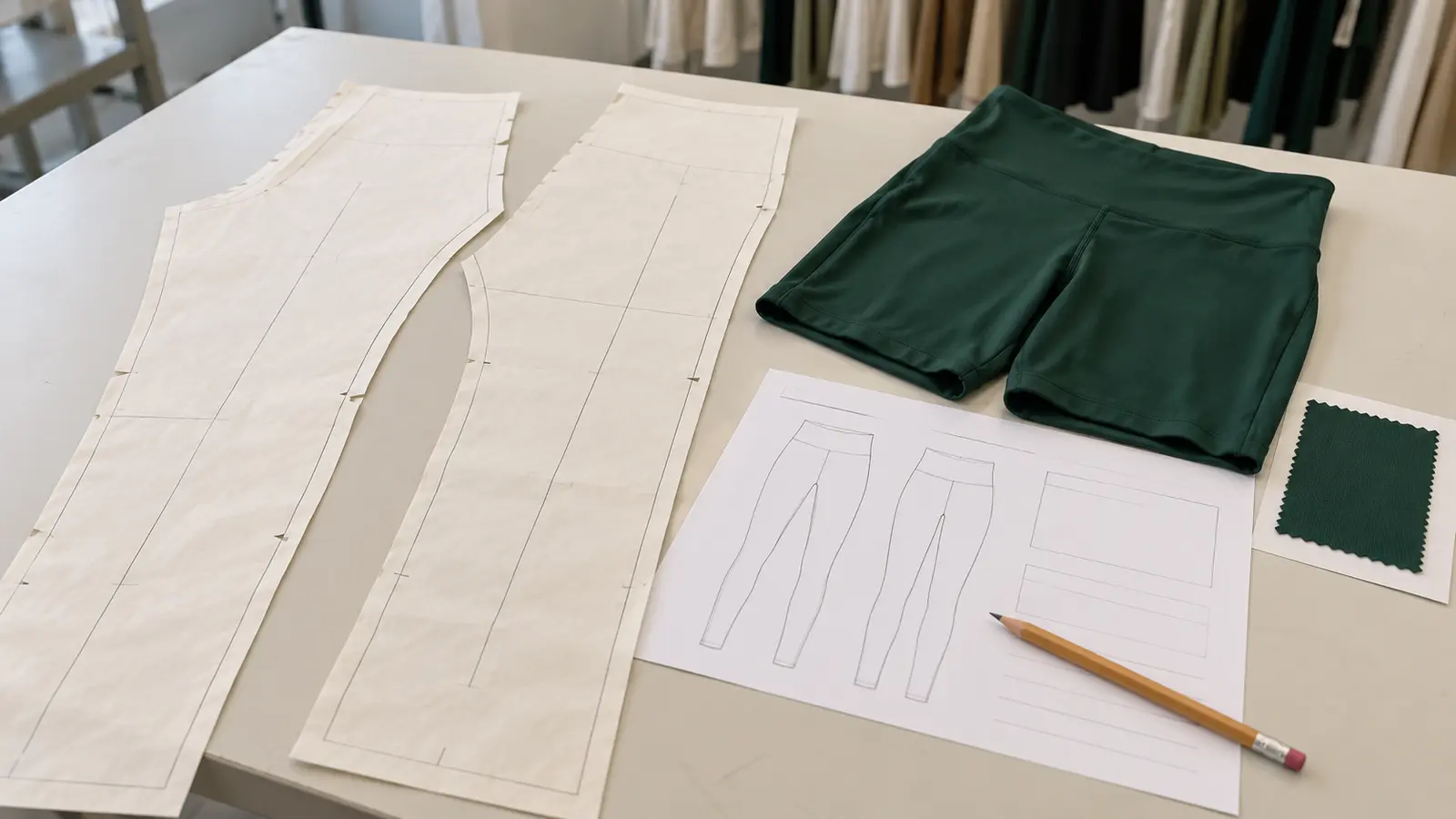
Then review sewn leggings in the intended fit. Include the relevant size range and ordinary movements such as bending, squatting and lunging. Check the seat and thigh as well as seams and areas where layers or panels meet.
A prototype can reveal a pattern problem as well as a material problem. If one area is overstretched, changing the pattern or grading may be more useful than increasing fabric weight across the garment.
Include the sensitive colours and care conditions
Select colours based on the planned range and risk, not convenience. Use new and laundered samples where required. If damp conditions matter to the garment, agree how those conditions will be prepared and evaluated instead of relying on an uncontrolled wet swatch.
Review item | Record in the approval brief |
|---|---|
Fabric identity | Article, composition, finish and sample reference |
Colour | Actual shade and relevant colour reference |
Extension | Direction, degree and how it is maintained |
Viewing conditions | Lighting, backing, distance and sample presentation |
Garment review | Pattern revision, sizes and movements assessed |
Care condition | New, laundered or other agreed preparation |
Acceptance | Defined visual criteria or laboratory result and limit |
Choosing a laboratory assessment
Ask the laboratory what its result actually describes. Visible-light transmission and the visibility of a contrasting layer beneath clothing are related questions, but they are not identical assessments.
Hohenstein describes textile opacity and opaqueness services, including options for evaluating specified backgrounds and additional conditions such as stretching or washing. Buyers should agree the applicable procedure and conditions with the laboratory before submitting samples.[1]
A familiar standard number should not be treated as automatic proof of legging coverage. For example, AATCC TM203 is described as a light-blocking method for window-covering textiles. Its published scope does not itself establish a consumer “squat-proof” approval for leggings.[2]
Request a report that identifies the tested material, colour, preparation and assessment conditions. Avoid applying one result to an untested colour, changed finish or different garment fit.
What to put in a legging fabric enquiry
Instead of asking only for “a high-GSM, squat-proof fabric,” provide:
- the garment reference and intended fit;
- planned colours, including pale or bright shades;
- target weight range and desired hand feel;
- movement, recovery and comfort priorities;
- the proposed coverage assessment and acceptance criteria;
- care requirements and any consumer claim being considered.
Cofinay by Xiongqi Textile Technology Co., Ltd. lists fabrics for different activewear applications. The collection can support an initial shortlist, but application descriptions and catalogue weights do not replace approval of the actual garment.
For a legging project, ask the team to compare suitable bases against your reference and arrange samples in the relevant colours. Confirm which checks are available internally and which require an external laboratory before agreeing the order.
Contact Cofinay to discuss your legging fabric brief.
Sources
- [1] Hohenstein: Opaqueness and Opacity.
- [2] AATCC TM203: Light Blocking Effect of Textiles—Spectrophotometric Method.
- Cofinay activewear fabric catalogue.
Written by Amber, Cofinay Technical Team.
About Cofinay
With over 16 years of expertise, Cofinay is a premier manufacturer of high-end activewear fabrics, certified by global ecological standards. We specialize in engineering premium performance knits for yoga, tennis, equestrian, and golf. Backed by our self-operated vertical weaving and dyeing infrastructure, we provide complete end-to-end services to empower global activewear brands to scale.