
Table of Contents
- 1. Check the claim before comparing the price
- 2. OEKO-TEX® STANDARD 100 and GRS answer different questions
- 3. Verify the OEKO-TEX® certificate against the fabric
- 3.1. Use the official check
- 3.2. Read the product scope
- 3.3. Keep fabric and garment claims separate
- 4. Verify GRS at company and transaction level
- 4.1. A scope certificate establishes certified scope
- 4.2. Ask what evidence will support the shipment
- 4.3. Distinguish recycled fiber content from total fabric content
- 5. Put the requirements into the purchase agreement
- 6. Resolve unclear claims before using them
- 7. Sources
Check the claim before comparing the price
A supplier sends a fabric quotation with two familiar logos: OEKO-TEX® and GRS. The price is competitive, and the sample looks right. What should the buyer verify next?
Start with the exact claim. Is the quoted finished fabric covered by an OEKO-TEX® STANDARD 100 certificate? Is the recycled material being offered through a certified GRS supply chain? Can the supplier provide the evidence needed for this purchase?
These questions belong in sourcing discussions before the order is placed. A certificate attached to a company introduction may be genuine without covering the material you intend to buy.
OEKO-TEX® STANDARD 100 and GRS answer different questions
OEKO-TEX® STANDARD 100 concerns testing textiles for harmful substances. Its product classes reflect intended use and skin contact. Class II covers products with direct skin contact, making it relevant when reviewing next-to-skin activewear; check the actual certified class rather than assuming it from the garment category.[1]
GRS concerns recycled materials and chain of custody, with additional requirements addressing processing, social and environmental conditions, and chemical use.[3]
Neither claim settles whether a fabric has suitable stretch recovery, opacity, shrinkage or surface durability for your garment. Keep the performance specification alongside the certification requirement.
Claim | Main question for the buyer |
|---|---|
OEKO-TEX® STANDARD 100 | Is this material covered by valid harmful-substance certification for the relevant use? |
GRS | Is the recycled material supported by the required certified supply chain and transaction evidence? |
Fabric performance | Does this article meet the garment’s agreed technical requirements? |
Verify the OEKO-TEX® certificate against the fabric
Use the official check
Ask for the complete current certificate and its number. Enter the number in the official OEKO-TEX® Label Check, rather than relying on a cropped logo or a supplier’s screenshot. The tool uses case-sensitive numbers. If no result appears, OEKO-TEX® advises contacting them.[2]
STANDARD 100 certificates are issued for one year.[1] Check current status and dates when reviewing the order, and resolve any renewal question before relying on the claim.
Read the product scope
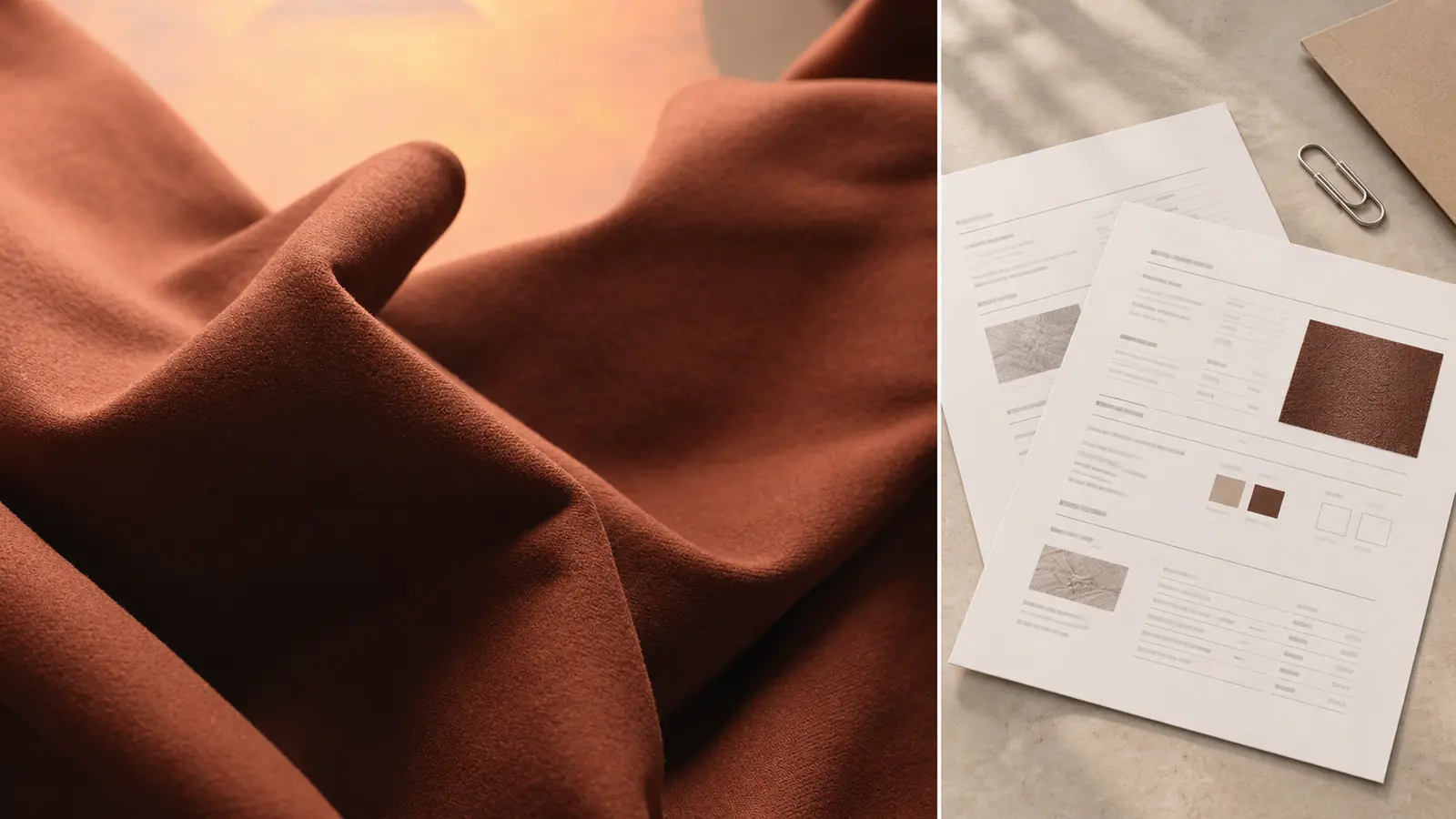
Compare the certificate’s holder and product description with the quoted material. Ask the supplier to explain how the fabric article, composition, color and finish fall within the stated scope. A broad product description may require clarification from the issuing institute.
Pay particular attention when the fabric receives a new coating, print, bonding treatment or other finish. Do not assume that a certificate for a base material covers every subsequent treatment.
Record the certificate reference against the article in your sourcing file. This gives the purchasing team a clearer basis than keeping an unconnected PDF in an email thread.
Keep fabric and garment claims separate
The STANDARD 100 standard applies to products at different production levels, including components. Its mark is not a general quality label.[5]
A finished garment introduces other materials and processes: thread, elastic, labels, prints and trims. Before placing a STANDARD 100 claim on the garment, check the applicable certification and labeling conditions for that finished product. Certification of the purchased fabric alone should not be treated as permission to label every garment made from it.
Verify GRS at company and transaction level
A scope certificate establishes certified scope
Textile Exchange explains that a Scope Certificate lists the products a certified company can offer. Before ordering, confirm that it is valid and that the intended product is within scope.[4]
Use the official Find a Certified Company resource and, where needed, the certification body. Compare the legal company name with the seller named in your quotation. If a trader and a mill have different names, ask how the certified supply chain covers the proposed transaction.
Ask what evidence will support the shipment
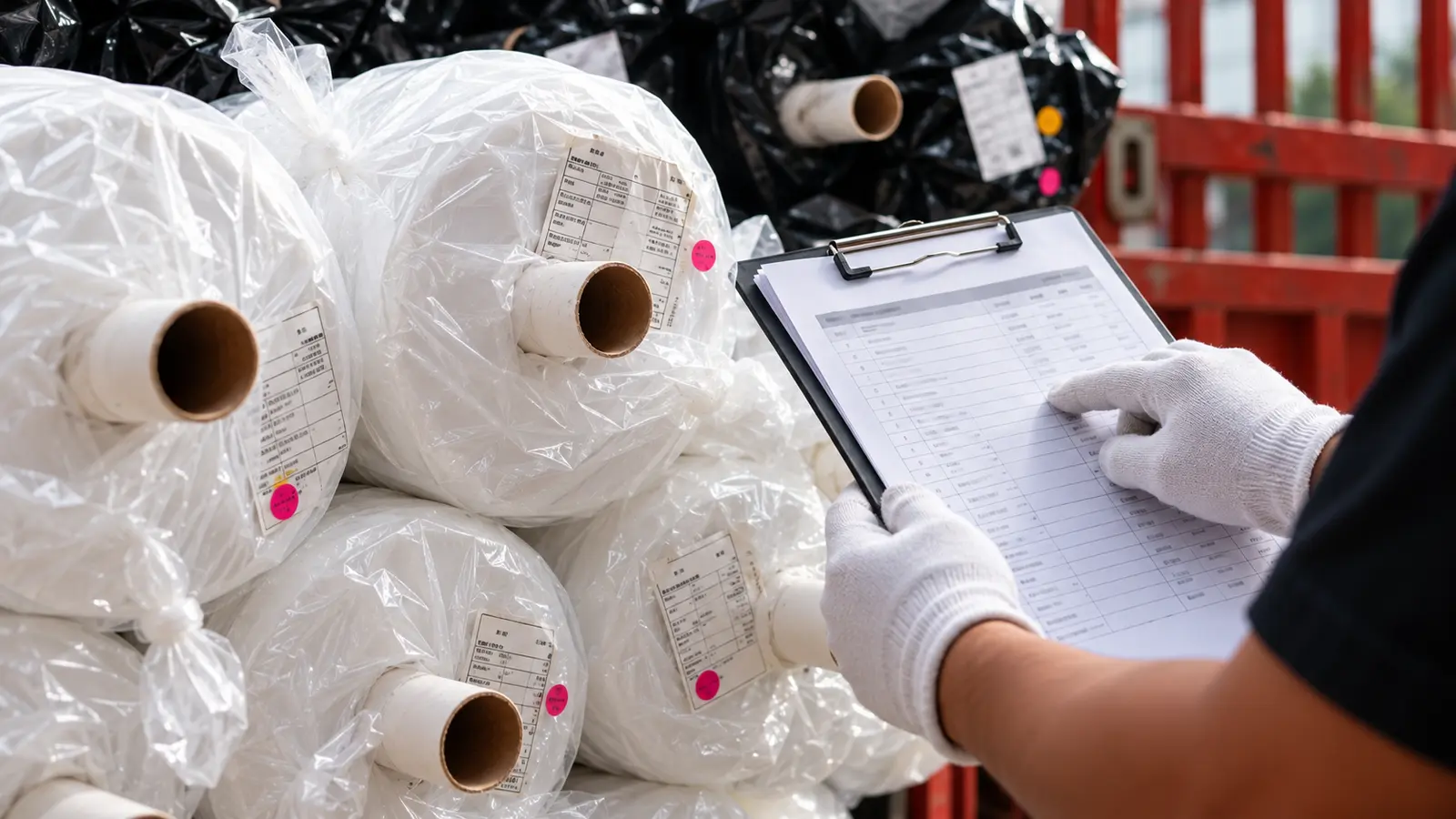
A Transaction Certificate or verified electronic transaction connects certified material to a sale or shipment. Textile Exchange distinguishes this from company scope and states that transaction evidence must be authenticated through the appropriate certification system or Trackit platform.[4]
Agree the documentation route before ordering. Ask who will arrange it, what buyer information is needed and when it will become available. Do not require a document for an uncompleted transaction as though it already exists; equally, do not leave its availability unresolved until after delivery.
When the evidence is available, reconcile the seller, buyer, product description, certified material information and quantity with the relevant commercial records. Ask for an explanation of any mismatch rather than assuming a similar fabric name is sufficient.
Distinguish recycled fiber content from total fabric content
A blend can contain recycled polyester and virgin elastane. “Recycled polyester” does not, by itself, mean that the whole fabric is recycled.
Ask for the full composition and the recycled share of the complete fabric. Keep that wording consistent in the quotation, specification and any proposed product description.
Textile Exchange currently distinguishes a minimum 20% recycled content for GRS use as a business-to-business tool from a minimum 50% for consumer-facing labeling. Meeting a percentage threshold alone does not grant permission to use the logo; the other certification and claims requirements still apply.[3]
Put the requirements into the purchase agreement
A short document checklist can prevent repeated questions later:
Item to agree | What to record |
|---|---|
Material identity | Article, composition, color and finished treatment |
Certification requirement | Exact standard and relevant product scope |
Supplier identity | Seller and certificate holder, with any difference explained |
Order evidence | Required documents, responsible party and expected timing |
Quantity reconciliation | Units and records used to match certified material to the purchase |
Intended claim | Internal sourcing statement, website wording or product label |
Changes | Review required if material, finish or supply route changes |
Ask what happens if the required evidence cannot be supplied. Resolving that before production is easier than discovering that an important claim is unsupported after the garments are made.
Resolve unclear claims before using them
Follow up when a certificate is expired, the holder differs from the seller, the product scope is unclear or the supplier offers only a yarn certificate for a finished-fabric claim. These points require explanation; they are not automatically evidence of misconduct.
Ask for a complete document and an independent verification route. Keep a dated record of what was checked and which article it covered. Revisit the requirement when reordering if the finish, supplier route or certification status changes.
For Cofinay sourcing projects, send the fabric article, intended use and required certification evidence with your enquiry. Ask the team to confirm coverage and document availability for the specific order before finalizing your product claims.
Contact Cofinay to discuss fabric certification and order documentation.
Sources
- [1] OEKO-TEX® STANDARD 100: product classes and certification.
- [2] OEKO-TEX® Label Check.
- [3] Textile Exchange: RCS and GRS.
- [4] Textile Exchange: Standards FAQs, scope certificates and transaction evidence.
- [5] OEKO-TEX® STANDARD 100 standard document.
Written by Amber, Cofinay Technical Team.
About Cofinay
With over 16 years of expertise, Cofinay is a premier manufacturer of high-end activewear fabrics, certified by global ecological standards. We specialize in engineering premium performance knits for yoga, tennis, equestrian, and golf. Backed by our self-operated vertical weaving and dyeing infrastructure, we provide complete end-to-end services to empower global activewear brands to scale.