
Table of Contents
- 1. Buttery-soft is not disappearing
- 2. Why an ultra-soft hand is no longer enough
- 3. Five performance directions likely to shape 2027 development
- 3.1. Durable softness
- 3.2. Wet comfort, not just “moisture-wicking”
- 3.3. Calibrated stretch, recovery and support
- 3.4. Climate comfort and airflow
- 3.5. Performance claims that can be traced
- 4. The winning specification will depend on the activity
- 5. What brands should ask for in a 2027 fabric brief
- 6. Testing should reflect the claim being sold
- 7. What this outlook means for fabric development
- 8. Sources and reading
Buttery-soft is not disappearing
Press a good activewear swatch between your fingers and the first judgement is almost immediate. It feels smooth, dense, cool, dry, brushed or exceptionally soft. That first contact matters. At a sourcing meeting, hand feel can decide which fabrics stay on the table long enough to be discussed.
But it rarely closes the decision.
Once the initial reaction passes, the questions become more practical. Will the fabric recover after repeated stretching? Does it stay opaque when extended? How does it feel after sweat builds up? Will the surface pill where the thighs or underarms rub? Can the same colour and finish be repeated in bulk production?
This is why the buttery-soft trend is unlikely to end in 2027, but it is likely to mature. Softness will remain important, particularly in yoga, Pilates and all-day athleisure. The difference is that brands will increasingly expect the soft hand to survive actual use rather than exist only on a new swatch.
A 2025 Cotton Incorporated consumer survey supports the broader point. Comfort was the leading consideration when buying activewear, followed by fit, quality and stretch. Softness contributes to comfort, but it does not represent the whole of it. Cotton Incorporated reported comfort at 84%, fit at 80%, quality at 78% and stretch at 74%.
Why an ultra-soft hand is no longer enough
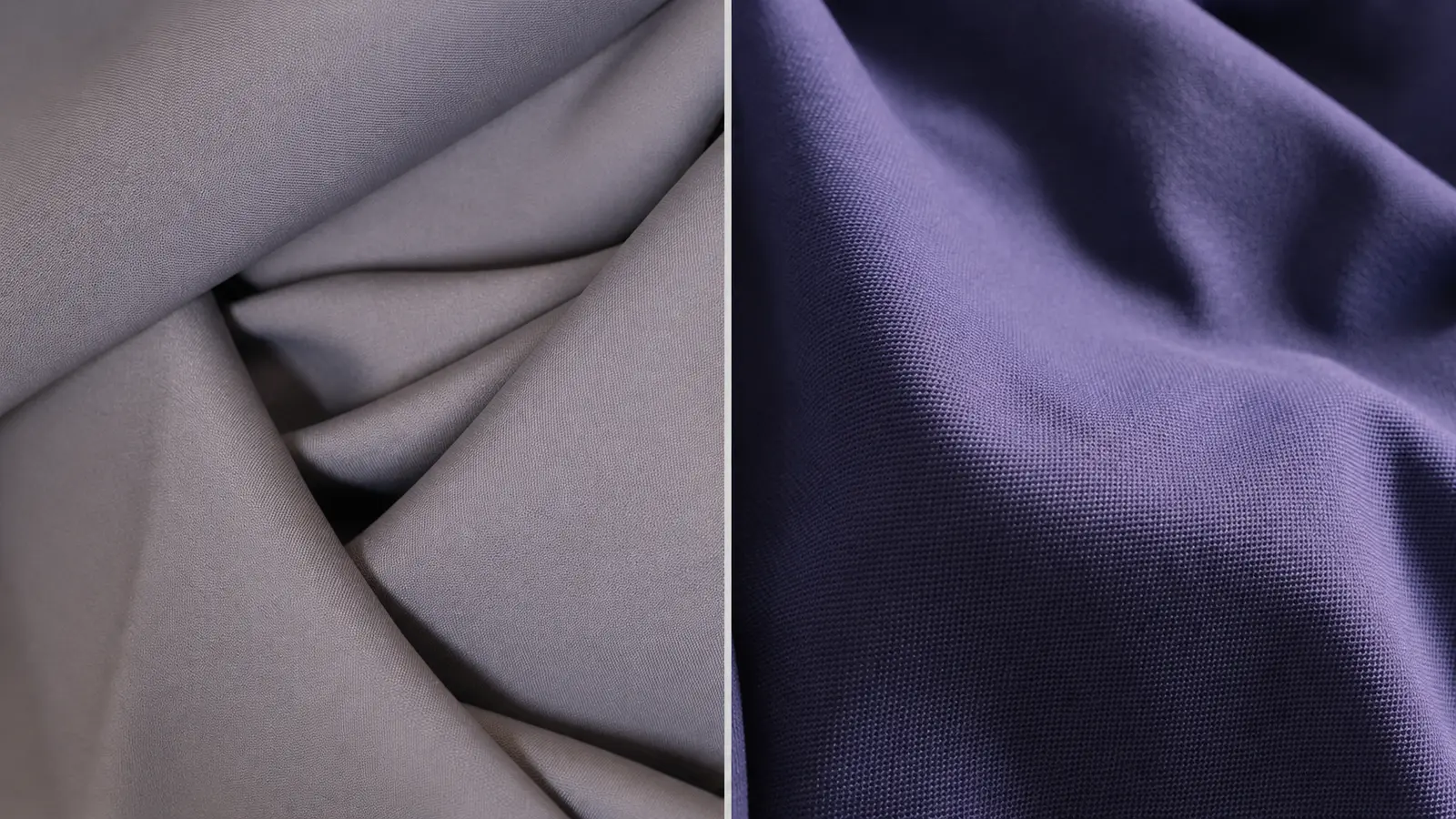
“Buttery soft” is useful consumer language. It describes a sensation without requiring the customer to understand yarn count, filament fineness, knit density or finishing chemistry. The difficulty is that two fabrics carrying the same description may perform very differently.
Softness can come from several places:
- fine-filament yarns;
- a smooth or compact knitted surface;
- brushing, peaching or sanding;
- silicone or other softening treatments;
- a high-elastane construction that sits closely against the body;
- combinations of yarn, structure and finishing.
These routes are not interchangeable. A brushed surface may feel rich and warm but require careful pilling control. A very light, smooth fabric may feel almost weightless but need additional work on opacity. A high-stretch fabric may feel comfortable during the first fitting yet lose shape if its recovery is not well controlled. Heavy softening can also change wet feel, drying behaviour, sewing response or shade consistency.
For 2027 development, the useful question is therefore not “How soft can this fabric become?” It is “What kind of softness suits the garment, and what must remain stable around it?”
Five performance directions likely to shape 2027 development
The following directions are not predictions that every brand will follow. They are practical signals already visible in consumer priorities, performance collections and fabric-development discussions in 2026.
Durable softness
The next step after a soft hand is a soft hand that remains recognisable after wear and washing.
This puts more attention on the source of the sensation. If softness depends mainly on an aggressive surface treatment, the development team needs to understand how that surface changes after abrasion and laundering. If it comes from fine yarns and fabric construction, recovery, snagging and dimensional stability still need to be checked.
For leggings and fitted tops, a useful approval process should compare the original sample with washed and abraded samples rather than judging the untouched swatch alone. Pilling resistance, surface fuzz, shade appearance and hand-feel retention should be reviewed together. A fabric that feels slightly less dramatic on day one may deliver a more premium experience over the life of the garment.
Wet comfort, not just “moisture-wicking”
Moisture-wicking has become a default claim across activewear. The phrase is now too broad to describe what the wearer will actually experience.
During exercise, comfort depends on several connected behaviours: how quickly moisture leaves the skin-side surface, how widely it spreads, how fast it evaporates, how much water the fabric retains and whether the garment becomes heavy or clingy. Humidity, garment fit, fabric thickness and air movement all affect the outcome.
Research continues to treat moisture management as a central sports-textile function because of its effect on both comfort and performance. A 2025 review of textile materials in sports clothing describes moisture management as critical during physical activity, rather than as a single finish added at the end of development. Read the research overview in Alexandria Engineering Journal.
For buyers, this means that a generic wicking statement should not replace a test plan. A running top, a double-knit yoga legging and a cycling jersey may all need moisture management, but they should not be expected to achieve it through the same fabric architecture.
Calibrated stretch, recovery and support
Maximum stretch is easy to demonstrate. Useful stretch is harder to design.
The fabric must extend in the directions required by the garment, return close to its original dimensions and maintain the intended level of support over repeated movement. Too little extension restricts movement. Too much extension with weak recovery can cause bagging at the knees, seat or waistband. High compression may be appropriate for a supportive training or cycling garment but feel unnecessarily restrictive in a low-impact yoga style.
In 2027, clearer separation between stretch, recovery and support should become more valuable than a single “four-way stretch” label. These properties need to be evaluated at the finished-fabric stage and, where possible, in a garment prototype. Construction, panel direction and seam placement can change how the same fabric feels on the body.
Climate comfort and airflow
Hotter training conditions are pushing fabric development beyond simple sweat transport. Air permeability, garment ventilation, low wet weight and heat dissipation are becoming part of the same conversation.
Nike’s Aero-FIT launch is a visible example of this direction. The company positions the technology around airflow in hot and humid conditions, claiming more than twice the airflow of its earlier materials. The collection also connects cooling performance with textile-to-textile recycled input. Nike introduced Aero-FIT for its 2026 federation kits and wider sport-led product strategy.
Not every garment needs an advanced cooling platform. The wider lesson is more useful: thermal comfort must be designed for the activity and climate. A warm, gently brushed Pilates fabric and an open, fast-drying summer training fabric can both be premium. They solve different problems.
Performance claims that can be traced
Recycled content will remain relevant, but a recycled label alone is becoming less persuasive. Brands increasingly need to know the material source, certification route, production consistency and performance trade-offs associated with the claim.
Textile Exchange reported that recycled polyester volume increased in 2024, while its share of the total polyester market slipped from 12.5% to 12% because virgin polyester production grew faster. This shows that availability and adoption are not moving in a straight line. See the Materials Market Report 2025.
Traceability will also become a more practical development issue for companies selling into Europe. The European Commission is preparing Digital Product Passport requirements for textiles under the Ecodesign for Sustainable Products Regulation. The exact information requirements will be defined through product-specific rules, so brands should avoid treating every proposed data field as final. The direction, however, is clear: material and product claims will need more structured evidence. European Commission: Digital Product Passport.
The winning specification will depend on the activity
There will not be one universal “2027 fabric.” The strongest developments will be those with a clear job.
End use | Primary wearer expectation | Fabric priorities | Common development risk |
|---|---|---|---|
Yoga and Pilates | Unrestricted, calm next-to-skin comfort | Soft hand, four-way stretch, controlled recovery, opacity, low friction | Chasing softness while overlooking pilling or shape retention |
Gym and studio training | Dry, secure comfort through repeated movement | Moisture transport, faster drying, recovery, support, abrasion resistance | Using high stretch as a substitute for stable recovery |
Running and cycling | Low distraction during heat, sweat and repetitive motion | Lightweight construction, airflow, quick drying, low wet cling, friction control | Selecting by dry hand feel without checking wet performance |
Tennis, golf and light outdoor use | Movement, polish and comfort across changing conditions | Breathability, dimensional stability, UV-related requirements where specified, easy care, surface durability | Adding claims without defining the relevant test method |
All-day athleisure | Comfort that remains present for several hours | Softness, balanced stretch, shape retention, low pilling, easy care | Designing for the fitting room rather than extended wear |
This is already visible in how leading brands separate their fabric platforms. Lululemon describes Nulu as buttery-soft and designed for yoga, while Nulux is positioned as smooth, quick-drying and intended for running and training. Everlux combines a soft outer surface with a construction developed for sweaty studio sessions. The important point is not the brand terminology; it is the decision to give different fabrics different roles. Lululemon fabric and technology guide.
What brands should ask for in a 2027 fabric brief
A useful development brief starts with the garment and the conditions of use. Adjectives can remain in the brief, but they should be connected to observable requirements.
Instead of writing only:
We need an extremely buttery-soft fabric with excellent performance.
A clearer brief would state:
The fabric is for a high-rise Pilates legging intended for studio sessions and all-day wear. The priority is a soft, smooth hand with moderate support, reliable recovery at the waistband and knees, full coverage at the expected extension, and a surface that remains clean after repeated washing and friction.
The second version gives the fabric developer a hierarchy. It also makes trade-offs easier to discuss before sampling begins.
At minimum, the brief should confirm:
- End use and garment type — including whether the style is next-to-skin, layered, compressive or relaxed.
- Expected climate and sweat level — indoor studio, summer outdoor training, humid conditions or all-day wear.
- Target hand feel — brushed, peachy, smooth, cool, dry, compact or lightweight.
- Stretch and support requirement — the intended movement and the level of hold, not merely the highest possible extension.
- Coverage expectation — evaluated at the extension likely to occur in the garment.
- Durability priorities — pilling, abrasion, snagging, colourfastness, dimensional stability and appearance after washing.
- Material and compliance requirements — preferred fibre inputs, recycled-content documentation, restricted-substance requirements and destination-market needs.
- Approval references — an identified swatch, approved colour, test report and garment sample linked to the same development version.
Testing should reflect the claim being sold
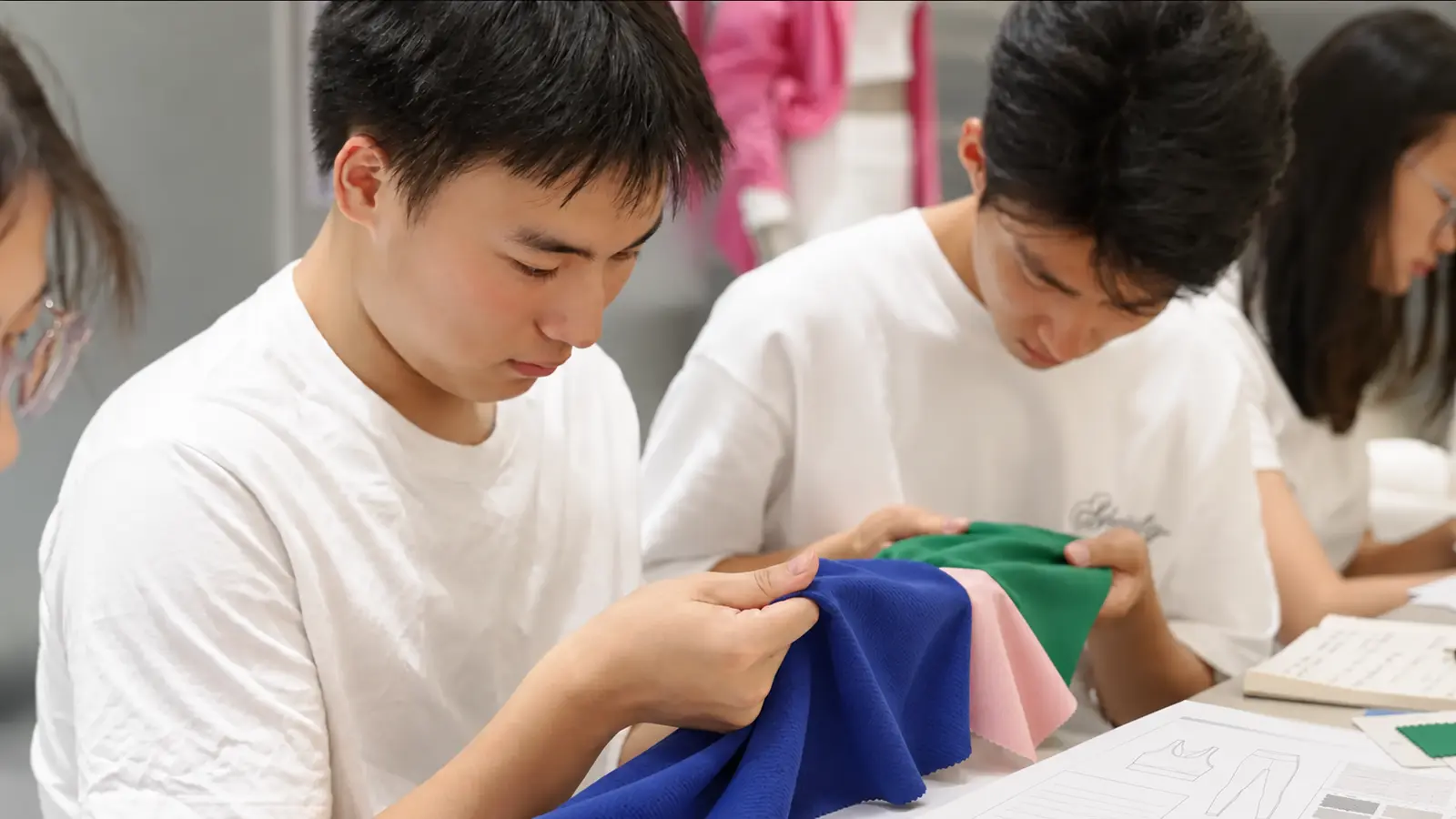
Testing does not make every fabric suitable for every use. It tells the development team whether a fabric meets the requirement that was actually set.
For a soft yoga fabric, the relevant plan may place more weight on stretch recovery, opacity, pilling and dimensional stability. For a running fabric, moisture behaviour, drying, air permeability and chafe-related construction may move higher on the list. A tennis or light-outdoor style may require additional attention to colourfastness, UV-related performance or abrasion, depending on the final claim.
Three working rules help keep the process credible:
- Test the finished fabric. Yarn composition alone does not determine the final performance.
- Test the relevant colours and finishes. Dyeing and finishing variables can influence hand feel, stretch, dimensional stability and colourfastness.
- Keep the report connected to the sample. A result has limited value if the tested batch, colour and finishing route cannot be identified.
Claims should also be written at the level supported by the evidence. “Designed for faster drying” and “dries 30% faster” are not equivalent statements. The second requires a defined comparison, method and test condition. Restraint is part of technical credibility.
What this outlook means for fabric development
The next phase of activewear will not reject softness. It will place more responsibility around it.
For yoga and Pilates, the opportunity is a second-skin hand that retains coverage and shape. For training, it is soft comfort without sacrificing sweat handling or abrasion resistance. For running and cycling, it is low wet cling, airflow and recovery delivered without a harsh technical feel. Across categories, durability and traceable material claims will increasingly affect whether a fabric remains viable beyond the first presentation.
At Cofinay, development discussions begin with the intended garment, wearer experience and commercial priorities. Yarn selection, blend ratio, knitting structure, dyeing and finishing details can then be adjusted around the project rather than forcing every customer into one standard definition of performance. Final specifications and processing conditions remain subject to the actual development brief, selected colour, testing requirements and approved sample.
That is the more useful 2027 outlook: not the end of buttery soft, but the end of treating softness as a complete specification.
Sources and reading
- Cotton Incorporated — Reaching 2025’s Health-Minded Consumer with Plant-Based Apparel
- Lululemon — Our Fabric and Technology
- Alexandria Engineering Journal — Applications and Development Trends of Textile Materials in Sports Clothing
- Nike — Aero-FIT Performance Apparel Innovation
- Textile Exchange — Materials Market Report 2025
- European Commission — Digital Product Passport
Written by Amber, Cofinay Technical Team.
About Cofinay
With over 16 years of expertise, Cofinay is a premier manufacturer of high-end activewear fabrics, certified by global ecological standards. We specialize in engineering premium performance knits for yoga, tennis, equestrian, and golf. Backed by our self-operated vertical weaving and dyeing infrastructure, we provide complete end-to-end services to empower global activewear brands to scale.